Pinaceae
Oriental spruce: Full Sun Plant
Picea orientalis
Oriental spruce thrives best in full sun and nutrient-rich, well-drained soil with a slightly acidic pH level. It is hardy and drought-tolerant once established, but should be protected from harsh winds during its first years. Water regularly but avoid waterlogged soil, and fertilize twice a year to support its slow, healthy growth.
Every 7 days
Direct sun
° - °C
% - %
Categories
What is Oriental spruce?
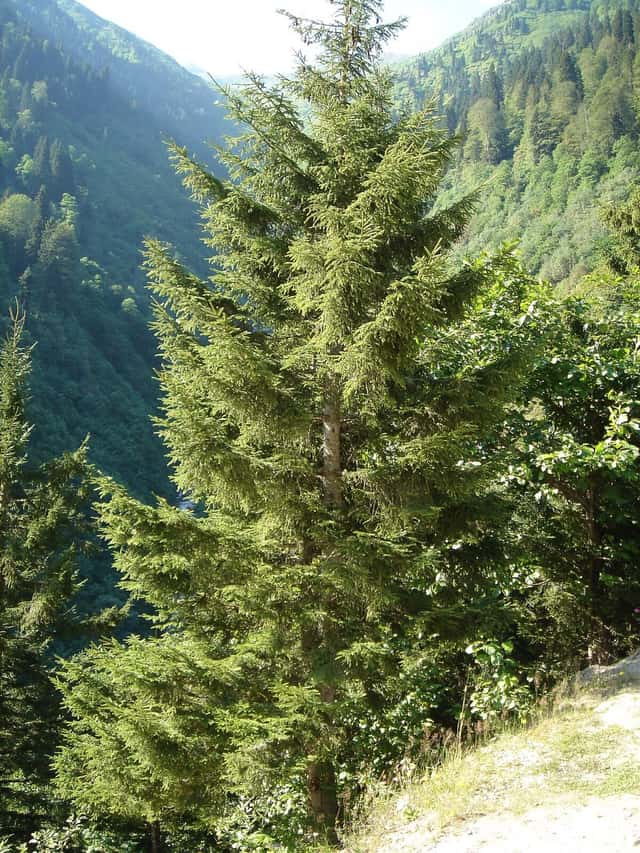
Oriental spruce (Picea orientalis) is a easy-care plant from the Pinaceae family. Oriental spruce (Picea orientalis) is an evergreen conifer from the Pinaceae family, native to northeastern Turkey and the Caucasus region of Georgia. The tree forms a dense, narrow, pyramidal crown with pendulous side branches and short, glossy, dark green needles that lie close to the shoots. In s...
Oriental spruce grows up to 18.0m, spread of 700cm, watering every 7 days. It is not suitable for indoor environments and safe for pets.
Unlike many tropical plants, Oriental spruce tolerates watering mistakes. Best for beginners. Unlike many popular species, Oriental spruce is safe to keep around pets.
How to Care for Oriental spruce?
TLDR: Oriental spruce needs Direct sun, watering every 7 days, and temperatures between 15-30°C with 40-70% humidity.
How Often Should You Water Oriental spruce?
Water deeply and thoroughly once a week during the growing season so the water reaches all the way down to the roots. Let the soil surface dry slightly between waterings, and significantly reduce watering in winter, as overly wet soil easily leads to root rot.
How Much Light Does Oriental spruce Need?
Place the Oriental spruce where it receives at least 6 hours of direct sun daily. The tree can tolerate light shade but grows densest and healthiest in full sun.
What Is the Best Soil for Oriental spruce?
Use well-drained, nutrient-rich soil with a slightly acidic pH level (approx. 4-6). Add compost or coniferous bark to improve soil structure, and avoid heavy, waterlogged soil types.
What Pot Should You Use for Oriental spruce?
Young trees can be grown in a large, deep pot with ample drainage holes to avoid waterlogged roots. Choose a frost-resistant pot if the tree is to overwinter outdoors, and transplant to open ground as soon as the root system allows.
Care Schedule
Fertilize
Every 180 days
What Is Oriental spruce and Where Does It Come From?
Oriental spruce (Picea orientalis) is an evergreen conifer from the Pinaceae family, native to northeastern Turkey and the Caucasus region of Georgia. The tree forms a dense, narrow, pyramidal crown with pendulous side branches and short, glossy, dark green needles that lie close to the shoots. In spring, the tree bears conspicuous reddish-purple male cones, which later mature into brown seed cones in the fall. In gardens and parks, the species typically reaches 15-18 meters in height with a width of 4-7 meters after many years of growth, while wild specimens can grow even taller. It is known for its slow but steady growth and is often used as an ornamental tree, windbreak, or specimen plant in large gardens and parks.
How to Propagate Oriental spruce?
Propagation by seed
- Seeds should be cold stratified as they have natural dormancy.
- Sow in the fall in a cold frame for natural stratification over the winter.
- 1 Collection
Collect mature seed cones in the fall and let them dry until they open and release the seeds.
- 2 Stratification
Cold stratify the seeds for approximately 4-6 weeks in moist sand or sow them directly in a cold frame in the fall.
- 3 Sowing
Sow the seeds in a light, well-drained mixture of perlite, peat moss, and sand, and keep the soil evenly moist.
- 4 Transplanting
Transplant the seedlings into larger pots once they have developed true needles, and plant out in the open ground after a couple of seasons.
Materials needed:
Semi-ripe stem cuttings
- Use shoots from healthy, young side branches for the best root development.
- Maintain high humidity around the cutting during root development.
- 1 Taking the cutting
Cut 5-10 cm semi-ripe tip shoots from healthy branches in summer or fall.
- 2 Treatment
Remove the needles from the lower third and dip the cut surface in rooting hormone.
- 3 Planting
Place the cutting in a moist mixture of perlite and peat moss, and cover with plastic to retain moisture.
- 4 Root development
Keep the substrate evenly moist and warm; root development can take up to 12 months.
Materials needed:
How Big Does Oriental spruce Grow?
TLDR: Oriental spruce can reach up to 18.0m tall with Slow growth rate.
Max height
18.0m
Spread
7.0m
Growth rate
Slow
Foliage
Evergreen
Plant Uses
Ornamental
Great for decoration
Culinary Uses
- Young male cones can be used as a spice
- Immature female cones can be roasted and have a sweet, syrupy flavor
- Young shoot tips can be used for a tea rich in Vitamin C
- The inner bark can be dried and ground into flour in emergencies
Is your plant showing symptoms?
Click on the symptom to discover possible causes:
What Diseases Commonly Affect Oriental spruce?
TLDR: Oriental spruce is susceptible to 3 known diseases. Monitor regularly for early detection.
Canker
Canker is a disease caused by various fungi and bacteria that create necrotic, sunken areas on bark of branches, stems, and trunks. Pathogens enter through wounds and natural openings, especially when plants are stressed. Canker can gradually weaken or kill branches by disrupting water and nutrient flow.
Spider Mites
Spider mites are tiny arachnids (less than 1/20 inch long) related to spiders and ticks that feed on plant sap. They thrive in hot, dry conditions and can cause significant damage to ornamental and vegetable plants. During severe infestations, crop losses can reach 14% or higher as these pests disrupt vital plant processes including photosynthesis, carbon dioxide absorption, and transpiration.
Root Rot
Root rot is a serious fungal disease that affects the root system of plants, causing them to decay and die. It is primarily caused by overwatering, poor drainage, or soil-borne fungi such as Pythium, Phytophthora, Rhizoctonia, and Fusarium. The disease thrives in waterlogged conditions where roots are deprived of oxygen, making them susceptible to fungal infection.
Meaning & Symbolism
Like many evergreen conifers, the Oriental spruce symbolizes endurance, eternity, and vitality through the dark months of the year. In Nordic tradition, spruce trees are often associated with Christmas, hope, and renewal.
Compare with similar plants
| Attribute | Difficulty | Light | Watering | Pet Safe |
|---|---|---|---|---|
| Field Maple | Easy | Bright indirect | 14d | ✓ |
| Silver Birch | Easy | Direct sun | 14d | ✓ |
| Common Blanketflower | Easy | Direct sun | 10d | ✓ |
| Cushion Bush | Easy | Direct sun | 14d | ✓ |





