Berberidaceae
Ottawa Barberry – Berberis × ottawensis
Berberis × ottawensis
Easy to grow in full sun to partial shade in well-drained soil. Drought tolerant once established. Prune in late winter to encourage fresh growth. No regular feeding needed.
Every 14 days
Bright indirect
-25° - 35°C
30% - 70%
Categories
What is Ottawa Barberry?
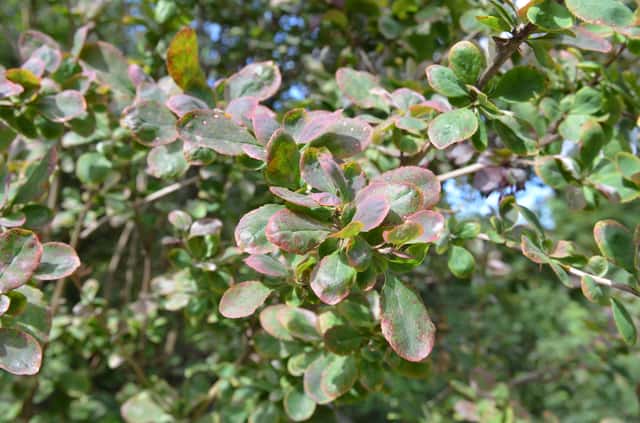
Ottawa Barberry (Berberis × ottawensis) is a easy-care plant from the Berberidaceae family. Berberis × ottawensis is a vigorous deciduous hybrid shrub, a natural cross between Berberis thunbergii and Berberis vulgaris. Known for its ornamental deep red-purple foliage in summer that turns vivid red in autumn, clusters of small yellow spring flowers, and bright red berries. Widely grown as a...
Ottawa Barberry grows up to 2.5m, spread of 250cm, watering every 14 days, -25°C – 35°C, 30–70% humidity. It is not suitable for indoor environments and safe for pets.
Unlike many tropical plants, Ottawa Barberry tolerates watering mistakes. Best for beginners. Unlike many popular species, Ottawa Barberry is safe to keep around pets.
How to Care for Ottawa Barberry?
TLDR: Ottawa Barberry needs Bright indirect, watering every 14 days, and temperatures between -25-35°C with 30-70% humidity.
How Often Should You Water Ottawa Barberry?
Water regularly for the first year after planting. Once established, only water during prolonged dry periods — this shrub is drought tolerant.
How Much Light Does Ottawa Barberry Need?
Grows best in full sun, which encourages the richest foliage colour and best flowering. Tolerates partial shade but colour may be less intense.
What Is the Best Soil for Ottawa Barberry?
Thrives in most well-drained soils including chalk, clay, loam, and sand. Avoid waterlogged conditions. pH range 5.5–8.0.
What Is Ottawa Barberry and Where Does It Come From?
Berberis × ottawensis is a vigorous deciduous hybrid shrub, a natural cross between Berberis thunbergii and Berberis vulgaris. Known for its ornamental deep red-purple foliage in summer that turns vivid red in autumn, clusters of small yellow spring flowers, and bright red berries. Widely grown as a hardy hedge or specimen shrub.
How Big Does Ottawa Barberry Grow?
TLDR: Ottawa Barberry can reach up to 2.5m tall with Slow growth rate.
Max height
2.5m
Spread
2.5m
Growth rate
Slow
Foliage
Deciduous
Warning: Toxic Plant
This plant can be toxic if ingested. Keep out of reach of:
Plant Uses
Ornamental
Great for decoration
Is your plant showing symptoms?
Click on the symptom to discover possible causes:
What Diseases Commonly Affect Ottawa Barberry?
TLDR: Ottawa Barberry is susceptible to 6 known diseases. Monitor regularly for early detection.
Aphids
Aphids are small, soft-bodied, pear-shaped insects (1/16 to 1/8 inch long) that feed by sucking nutrient-rich sap from plants. They reproduce rapidly and can quickly weaken plants, causing distorted growth and transmitting plant viruses. Aphids come in various colors including green, black, red, yellow, brown, and gray. They secrete honeydew, a sticky substance that attracts ants and encourages sooty mold growth.
Powdery Mildew
Powdery mildew is a common fungal disease caused by various fungi species including Erysiphe, Podosphaera, Oïdium, and Leveillula. It affects over 10,000 plant species worldwide. The disease thrives in warm, dry climates with high humidity and appears as a distinctive white powdery coating on plant surfaces.
Rust
Rust is a common fungal disease caused by fungi in the order Pucciniales that affects a wide variety of plants. The disease gets its name from the characteristic orange, yellow, or reddish-brown pustules that appear on leaves, resembling metal rust. This obligate fungal parasite requires living plants to survive and can cause significant economic losses in agricultural crops.
Verticillium Wilt
Verticillium wilt is a soil-borne fungal disease caused primarily by the fungi Verticillium dahliae and V. albo-atrum. These pathogens infect plant roots and grow within the vascular tissues, blocking water and nutrient transport, resulting in wilting and eventual plant death. The disease affects over 350 plant species including vegetables, fruits, ornamental flowers, and trees. The fungi can survive in soil for more than 10 years as resistant structures called microsclerotia.
Fun Facts
Berberis × ottawensis is a hybrid between Japanese barberry (B. thunbergii) and common barberry (B. vulgaris), first identified near Ottawa, Canada.
The stems are armed with sharp spines, making it an excellent defensive hedge plant.
Its berries are attractive to birds in autumn, providing important seasonal food.
This species is significant in wheat disease research as it can host Puccinia graminis (black stem rust).
Compare with similar plants
| Attribute | Difficulty | Light | Watering | Pet Safe |
|---|---|---|---|---|
| Field Maple | Easy | Bright indirect | 14d | ✓ |
| Silver Birch | Easy | Direct sun | 14d | ✓ |
| Common Blanketflower | Easy | Direct sun | 10d | ✓ |
| Cushion Bush | Easy | Direct sun | 14d | ✓ |





