Polygonaceae
Oval-leaf Knotweed (Polygonum arenastrum)
Polygonum arenastrum
Oval-leaf knotweed is an extremely low-maintenance annual that thrives with minimal care. It prefers full sun and tolerates a wide range of soil types, including compacted and poor soils. Water weekly during dry spells; it tolerates short dry periods but grows best with consistent moisture. No fertilizing needed. It self-seeds prolifically and can become invasive if not managed.
Every 7 days
Direct sun
5° - 32°C
30% - 70%
Categories
What is Oval-leaf Knotweed?
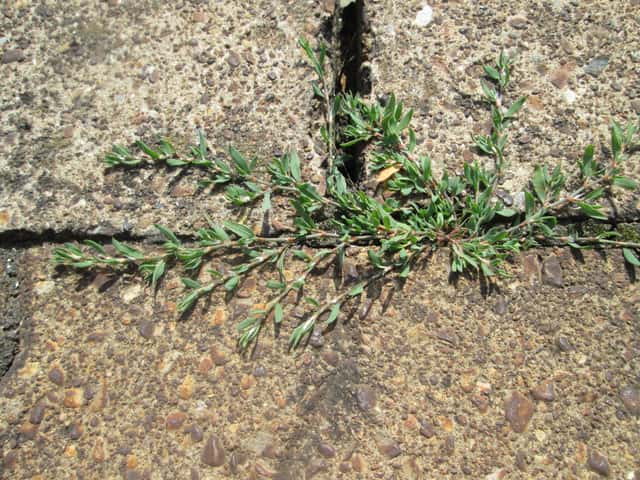
Oval-leaf Knotweed (Polygonum arenastrum) is a easy-care plant from the Polygonaceae family. Polygonum arenastrum, commonly known as oval-leaf knotweed or common knotweed, is a low-growing annual weed in the family Polygonaceae. Native to Eurasia and naturalized worldwide, it forms dense, mat-like colonies on compacted soils, roadsides, paths, and disturbed ground. Its small, oval leaves ar...
Oval-leaf Knotweed grows up to 30cm, spread of 100cm, watering every 7 days, 5°C – 32°C, 30–70% humidity. It is not suitable for indoor environments and safe for pets.
Unlike many tropical plants, Oval-leaf Knotweed tolerates watering mistakes. Best for beginners. Unlike many popular species, Oval-leaf Knotweed is safe to keep around pets.
How to Care for Oval-leaf Knotweed?
TLDR: Oval-leaf Knotweed needs Direct sun, watering every 7 days, and temperatures between 5-32°C with 30-70% humidity.
How Often Should You Water Oval-leaf Knotweed?
Water once a week during dry periods, allowing the soil to partially dry out between waterings. This plant is drought-tolerant once established and does not tolerate waterlogged conditions.
How Much Light Does Oval-leaf Knotweed Need?
Provide full sun to partial shade. Oval-leaf knotweed thrives in open, sunny locations and can tolerate light semi-shade, though growth may be reduced in shadier conditions.
What Is the Best Soil for Oval-leaf Knotweed?
Grows well in a wide range of soils including sandy, loamy, and clay. It is particularly well-adapted to compacted, poor soils with pH ranging from 5.5 to 8.0. No special soil amendments are needed.
Care Schedule
Fertilize
Every 14 days
Misting
Every 3 days
Rotate
Every 7 days
Repot
Every 365 days
What Is Oval-leaf Knotweed and Where Does It Come From?
Polygonum arenastrum, commonly known as oval-leaf knotweed or common knotweed, is a low-growing annual weed in the family Polygonaceae. Native to Eurasia and naturalized worldwide, it forms dense, mat-like colonies on compacted soils, roadsides, paths, and disturbed ground. Its small, oval leaves are nearly equal in size along the stem, giving it the name "equal-leaved knotgrass." Tiny pink or white flowers bloom from summer through autumn, attracting beneficial insects.
How to Propagate Oval-leaf Knotweed?
Seed Sowing
How Big Does Oval-leaf Knotweed Grow?
TLDR: Oval-leaf Knotweed can reach up to 30cm tall with Fast growth rate.
Max height
30cm
Spread
1.0m
Growth rate
Fast
Foliage
Deciduous
Plant Uses
Edible
Can be consumed
Medicinal
Medicinal properties
Ground Cover
Soil coverage
Medicinal Uses
- Traditional astringent for treating diarrhea and dysentery
- Diuretic properties used in folk medicine
- Applied externally to wounds and hemorrhoids
- Used as a mild anti-inflammatory remedy
Culinary Uses
- Young leaves can be eaten raw or cooked as a pot herb
- Seeds can be ground into flour and used similarly to buckwheat
- Very rich in zinc and used as a nutritious wild food
Is your plant showing symptoms?
Click on the symptom to discover possible causes:
What Diseases Commonly Affect Oval-leaf Knotweed?
TLDR: Oval-leaf Knotweed is susceptible to 4 known diseases. Monitor regularly for early detection.
Powdery Mildew
Powdery mildew is a common fungal disease caused by various fungi species including Erysiphe, Podosphaera, Oïdium, and Leveillula. It affects over 10,000 plant species worldwide. The disease thrives in warm, dry climates with high humidity and appears as a distinctive white powdery coating on plant surfaces.
Aphids
Aphids are small, soft-bodied, pear-shaped insects (1/16 to 1/8 inch long) that feed by sucking nutrient-rich sap from plants. They reproduce rapidly and can quickly weaken plants, causing distorted growth and transmitting plant viruses. Aphids come in various colors including green, black, red, yellow, brown, and gray. They secrete honeydew, a sticky substance that attracts ants and encourages sooty mold growth.
Slugs and Snails
Slugs and snails are mollusks that feed on plant tissue, causing irregular holes in leaves and damage to young seedlings. They are most active at night and in moist conditions, leaving characteristic silvery slime trails. These pests can quickly devastate gardens, especially during wet seasons.
Root Rot
Root rot is a serious fungal disease that affects the root system of plants, causing them to decay and die. It is primarily caused by overwatering, poor drainage, or soil-borne fungi such as Pythium, Phytophthora, Rhizoctonia, and Fusarium. The disease thrives in waterlogged conditions where roots are deprived of oxygen, making them susceptible to fungal infection.
Fun Facts
Produces so many seeds that a single plant can colonize an entire path in one season
The plant yields a blue dye comparable to indigo from its leaves
Completely immune to rabbit browsing — rabbits avoid it entirely
Serves as a larval host plant for several butterfly and moth species
Compare with similar plants
| Attribute | Difficulty | Light | Watering | Pet Safe |
|---|---|---|---|---|
| Field Maple | Easy | Bright indirect | 14d | ✓ |
| Silver Birch | Easy | Direct sun | 14d | ✓ |
| Common Blanketflower | Easy | Direct sun | 10d | ✓ |
| Cushion Bush | Easy | Direct sun | 14d | ✓ |





