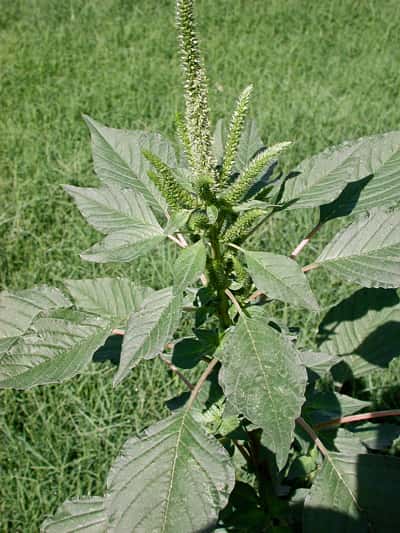
Amaranthaceae
Palmer Amaranth (Amaranthus palmeri)
Amaranthus palmeri
Not a cultivated houseplant - a wild, fast-growing annual weed. Give it full sun and well-draining soil; it tolerates drought once established and needs little intervention. Because it accumulates nitrates, avoid over-fertilizing if grown intentionally, and keep away from livestock and pets.
Every 10 days
Direct sun
10° - 42°C
% - %
Categories
What is Palmer amaranth?
Palmer amaranth (Amaranthus palmeri) is a easy-care plant from the Amaranthaceae family. Palmer amaranth (Amaranthus palmeri) is a fast-growing, dioecious annual weed native to the desert regions of the southwestern United States and northern Mexico. It is one of the most aggressive agricultural weeds in North America, capable of growing several inches per day and reaching 6-10 feet tal...
Palmer amaranth grows up to 2.5m, watering every 10 days, 10°C – 42°C. It is not suitable for indoor environments and not safe for pets.
Unlike many tropical plants, Palmer amaranth tolerates watering mistakes. Best for beginners. Without precautions, ingestion can cause irritation in pets. Keep out of reach of cats and dogs.
How to Care for Palmer amaranth?
TLDR: Palmer amaranth needs Direct sun, watering every 10 days, and temperatures between 10-42°C with 40-70% humidity.
How Often Should You Water Palmer amaranth?
Water regularly while seedlings establish, then let soil dry between waterings - established plants are highly drought tolerant.
How Much Light Does Palmer amaranth Need?
Needs full, direct sun (6+ hours daily); insufficient light produces leggy, weak growth.
What Is the Best Soil for Palmer amaranth?
Adapts to most soils but performs best in sandy, well-draining ground; avoid waterlogged soil.
What Is Palmer amaranth and Where Does It Come From?
Palmer amaranth (Amaranthus palmeri) is a fast-growing, dioecious annual weed native to the desert regions of the southwestern United States and northern Mexico. It is one of the most aggressive agricultural weeds in North America, capable of growing several inches per day and reaching 6-10 feet tall. It thrives in full sun, disturbed soils, and hot, dry conditions, and has developed resistance to multiple herbicide classes.
How to Propagate Palmer amaranth?
Seed sowing
Seeds remain viable in soil for years, so germination is often unintentional in cultivated land.
- 1 Scatter seeds on disturbed, sunny soil after last frost
- 2 Keep soil lightly moist until germination
- 3 Thin seedlings once true leaves appear
Materials needed:
How Big Does Palmer amaranth Grow?
TLDR: Palmer amaranth can reach up to 2.5m tall with Fast growth rate.
Max height
2.5m
Growth rate
Fast
Foliage
Deciduous
Warning: Toxic Plant
This plant can be toxic if ingested. Keep out of reach of:
Plant Uses
Edible
Can be consumed
Culinary Uses
- Leaves and seeds edible, cooked or ground into flour (historically used by Native Americans)
Is your plant showing symptoms?
Click on the symptom to discover possible causes:
What Diseases Commonly Affect Palmer amaranth?
TLDR: Palmer amaranth is susceptible to 9 known diseases. Monitor regularly for early detection.
Damping Off
Damping off is a soil-borne fungal disease that affects seeds and young seedlings, causing rotting of stem and root tissues at and below the soil line. It is caused by several fungi including Pythium, Rhizoctonia, Fusarium, and Phytophthora. The disease thrives in cold, wet conditions with poor air circulation.
Root Rot
Root rot is a serious fungal disease that affects the root system of plants, causing them to decay and die. It is primarily caused by overwatering, poor drainage, or soil-borne fungi such as Pythium, Phytophthora, Rhizoctonia, and Fusarium. The disease thrives in waterlogged conditions where roots are deprived of oxygen, making them susceptible to fungal infection.
Leaf Spot
Leaf spot is a common fungal disease caused by various pathogens including Alternaria, Ascochyta, Colletotrichum, Septoria, and Venturia. It primarily affects leaves, causing discolored spots that can lead to premature leaf drop if left untreated.
Aphids
Aphids are small, soft-bodied, pear-shaped insects (1/16 to 1/8 inch long) that feed by sucking nutrient-rich sap from plants. They reproduce rapidly and can quickly weaken plants, causing distorted growth and transmitting plant viruses. Aphids come in various colors including green, black, red, yellow, brown, and gray. They secrete honeydew, a sticky substance that attracts ants and encourages sooty mold growth.
Meaning & Symbolism
As a member of the amaranth genus, it is loosely associated with themes of resilience and persistence, reflecting its reputation as an extraordinarily hardy, fast-spreading survivor.
Fun Facts
Can grow up to an inch (2-5 cm) per day under ideal conditions
Individual female plants can produce hundreds of thousands of seeds
Considered one of the most herbicide-resistant weeds in US agriculture
Is dioecious - unlike most amaranths, it has separate male and female plants
Frequently asked questions
Is Palmer amaranth toxic?
How much light does Palmer amaranth need?
Is Palmer amaranth drought tolerant?
Can you eat Palmer amaranth?
Compare with similar plants
| Attribute | Difficulty | Light | Watering | Pet Safe |
|---|---|---|---|---|
| Field Maple | Easy | Bright indirect | 14d | ✓ |
| Silver Birch | Easy | Direct sun | 14d | ✓ |
| Common Blanketflower | Easy | Direct sun | 10d | ✓ |
| Cushion Bush | Easy | Direct sun | 14d | ✓ |
Choose & Compare
Sources & References
- Amaranthus palmeri - Wikipedia
- Amaranthus palmeri | NC State Extension Plant Toolbox
- Palmer Amaranth Biology and Management | NMSU
- Dioecious Amaranth (Amaranthus Palmeri) Care Guide - Plantiary
- Amaranth Pests and Diseases - NAFIS
- Organic Mulch Increases Insect Herbivory by Flea Beetle on Amaranthus spp





