Pandanaceae
Pandan (Pandanus amaryllifolius) Care Guide
Pandanus amaryllifolius
Pandan thrives in warm, humid conditions with bright indirect light and consistently moist, well-draining soil. Protect it from temperatures below 15°C and avoid direct harsh sun, which can scorch the leaf tips.
Every 6 days
Partial shade
15° - 32°C
60% - 90%
Categories
What is Pandan?
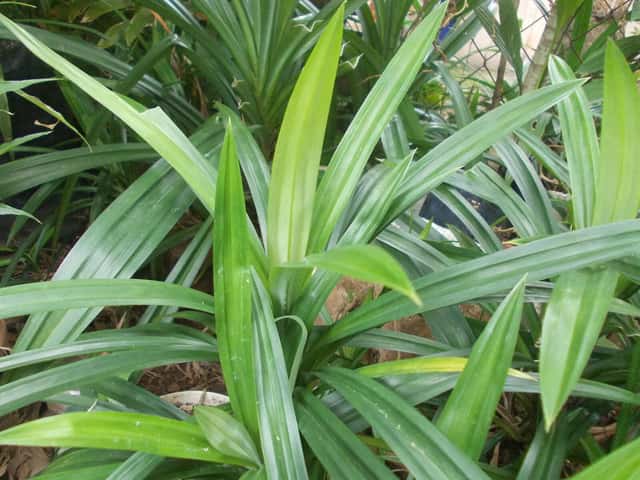
Pandan (Pandanus amaryllifolius) is a medium-care plant from the Pandanaceae family. Pandanus amaryllifolius, commonly known as pandan, is a tropical evergreen shrub prized for its long, blade-like aromatic leaves. Native to Southeast Asia, this sterile cultivar rarely flowers and is propagated entirely from suckers. Its leaves are a staple flavoring and coloring agent in Southeast...
Pandan grows up to 3.0m, watering every 6 days, 15°C – 32°C, 60–90% humidity. It is suitable for indoor environments and safe for pets.
Unlike many popular species, Pandan is safe to keep around pets. Without adequate drainage, root rot can develop within 12 days.
How to Care for Pandan?
TLDR: Pandan needs Partial shade, watering every 6 days, and temperatures between 15-32°C with 60-90% humidity.
How Often Should You Water Pandan?
Keep the soil evenly moist but never waterlogged. Water thoroughly when the top few centimeters begin to dry, and reduce frequency in cooler months.
How Much Light Does Pandan Need?
Provide bright, indirect light for 4-6 hours daily. Pandan tolerates partial shade well but will grow more slowly in low light.
What Is the Best Soil for Pandan?
Use a moderately fertile, well-draining potting mix. A blend of loam with organic compost and perlite works well to retain moisture without waterlogging.
What Pot Should You Use for Pandan?
A wide, deep plastic or terracotta pot with generous drainage holes suits pandan well, allowing room for its spreading root system and suckers.
Care Schedule
Fertilize
Every 35 days
Repot
Every 365 days
What Is Pandan and Where Does It Come From?
Pandanus amaryllifolius, commonly known as pandan, is a tropical evergreen shrub prized for its long, blade-like aromatic leaves. Native to Southeast Asia, this sterile cultivar rarely flowers and is propagated entirely from suckers. Its leaves are a staple flavoring and coloring agent in Southeast Asian cuisine, often called the "vanilla of Asia" for their sweet, nutty fragrance.
How to Propagate Pandan?
Sucker Division
Suckers with existing roots establish much faster than rootless ones. Keep humidity high during the first few weeks.
- 1 Locate a sucker (offset) growing at the base of the mother plant with its own small roots
- 2 Use a clean, sharp knife to separate the sucker from the parent, keeping as many roots attached as possible
- 3 Let the cut end callus for a day in a shaded, airy spot
- 4 Pot the sucker in moist, well-draining potting mix
- 5 Keep in bright indirect light and consistently moist soil until new growth appears
Materials needed:
Lateral Shoot Cutting
Rooting hormone can improve success rates. Keep the cutting warm and humid throughout rooting.
- 1 Cut a lateral shoot with a few leaves attached, angling the cut obliquely
- 2 Remove the lowest leaves to expose a bare section of stem
- 3 Insert the cut end into moist potting mix or water
- 4 Place in a warm, humid, brightly lit spot out of direct sun
- 5 Transplant to soil once roots reach a few centimeters long
Materials needed:
How Big Does Pandan Grow?
TLDR: Pandan can reach up to 3.0m tall with Slow growth rate.
Max height
3.0m
Growth rate
Slow
Foliage
Evergreen
Plant Uses
Edible
Can be consumed
Aromatic
Pleasant fragrance
Medicinal
Medicinal properties
Ornamental
Great for decoration
Medicinal Uses
- Traditionally used as a diuretic
- Used in folk medicine to support cardiovascular health
- Applied in traditional remedies for diabetes management
Culinary Uses
- Used to flavor and color rice dishes like nasi lemak
- Wrapped around chicken or glutinous rice before steaming or grilling (pandan chicken)
- Infused into desserts, custards, and cakes for a sweet, nutty aroma
- Used to make pandan-flavored syrups, juices, and beverages
- Ground into paste as a natural green food coloring
Is your plant showing symptoms?
Click on the symptom to discover possible causes:
What Diseases Commonly Affect Pandan?
TLDR: Pandan is susceptible to 7 known diseases. Monitor regularly for early detection.
Scale Insects
Scale insects are small sap-sucking pests that appear as brown, shell-like bumps on plant stems and leaves. There are over 25 species, divided into armored (hard) and unarmored (soft) scales. They feed by piercing plant tissue and extracting sap, which weakens the plant and can lead to yellowing, stunted growth, and even death if left untreated. They also excrete honeydew, which attracts ants and promotes sooty mold growth.
Mealybugs
Mealybugs are small, soft-bodied insects covered with a white, waxy, cottony material. They are common pests of houseplants and outdoor plants in mild climates. These sap-sucking insects feed on plant tissue, causing damage, stunted growth, and can lead to plant death if left untreated. They produce sticky honeydew which attracts sooty mold.
Spider Mites
Spider mites are tiny arachnids (less than 1/20 inch long) related to spiders and ticks that feed on plant sap. They thrive in hot, dry conditions and can cause significant damage to ornamental and vegetable plants. During severe infestations, crop losses can reach 14% or higher as these pests disrupt vital plant processes including photosynthesis, carbon dioxide absorption, and transpiration.
Aphids
Aphids are small, soft-bodied, pear-shaped insects (1/16 to 1/8 inch long) that feed by sucking nutrient-rich sap from plants. They reproduce rapidly and can quickly weaken plants, causing distorted growth and transmitting plant viruses. Aphids come in various colors including green, black, red, yellow, brown, and gray. They secrete honeydew, a sticky substance that attracts ants and encourages sooty mold growth.
Meaning & Symbolism
In Southeast Asian cultures, pandan symbolizes purity, freshness, and blessing. Its fragrant leaves are woven into ceremonies and used to welcome good fortune, prosperity, and protection into the home.
Fun Facts
Pandan is often called the vanilla of Southeast Asia because of its sweet, nutty fragrance used in desserts.
The cultivated pandan plant is sterile - it almost never flowers and spreads only through offsets.
Pandan signature aroma comes largely from a compound called 2-acetyl-1-pyrroline, the same compound found in jasmine rice.
Beyond the kitchen, pandan leaves are woven into baskets, mats, and used in traditional Southeast Asian ceremonies for good luck.
Frequently asked questions
Is pandan toxic to cats or dogs?
Why will my pandan plant not flower?
How do I harvest pandan leaves?
Why are my pandan leaf tips turning brown?
Can pandan be grown indoors?
Compare with similar plants
| Attribute | Difficulty | Light | Watering | Pet Safe |
|---|---|---|---|---|
| Dark Fieldcap | Medium | Low light | 2d | ⚠️ |
| Azalea | Medium | Partial shade | 3d | ⚠️ |
| Muriel's Bamboo | Medium | Partial shade | 3d | ✓ |
| Bougainvillea | Medium | Direct sun | 7d | ⚠️ |
Choose & Compare
Sources & References
- Pandanus Plant (Pandanus amaryllifolius): Essential Indoor Care Guide
- Pandan Care 101: Water, Light and Growing Tips
- Pandanus amaryllifolius - Useful Tropical Plants
- Pandans (Pandanus) Care Guide: Pests, Diseases, Watering, Fertilizing and Toxicity
- Pests of Pandanus amaryllifolius
- Pandanus amaryllifolius - Propagate One
- Symbolism and Benefits of the Pandan
- Pandan, Southeast Asia Humble Leaf Set to Take the World by Storm




