Annonaceae
Pawpaw: Edible Plant
Asimina triloba
Provide the pawpaw with a sheltered location with plenty of light, consistently moist but well-drained, nutrient-rich soil, and protection from harsh afternoon sun during its first few years. It is best to plant two genetically distinct trees to ensure successful fruit set, as the tree is largely self-sterile.
Every 7 days
Bright indirect
-25° - 35°C
50% - 80%
Categories
What is Pawpaw?
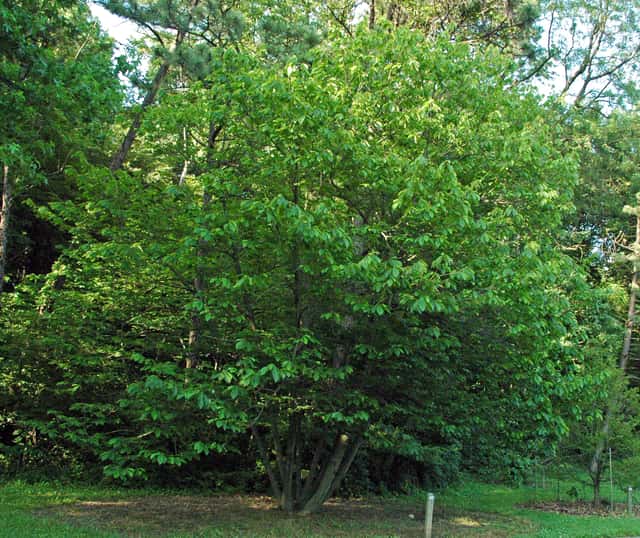
Pawpaw (Asimina triloba) is a medium-care plant from the Annonaceae family. The pawpaw (Asimina triloba) is a deciduous tree in the Annonaceae family, native to the eastern United States and Canada. It is the largest edible fruit tree native to North America. The species naturally grows as an understory tree in forests and produces striking, cup-shaped purple-brown flowers...
Pawpaw grows up to 9.0m, spread of 600cm, watering every 7 days, -25°C – 35°C, 50–80% humidity. It is not suitable for indoor environments and not safe for pets.
Without precautions, ingestion can cause irritation in pets. Keep out of reach of cats and dogs.
How to Care for Pawpaw?
TLDR: Pawpaw needs Bright indirect, watering every 7 days, and temperatures between -25-35°C with 50-80% humidity.
How Often Should You Water Pawpaw?
Keep the soil consistently moist, especially for young trees and during fruit development; never allow the soil to dry out completely, but also avoid waterlogged soil to prevent root rot.
How Much Light Does Pawpaw Need?
For the best fruit yield, plant the pawpaw in full sun, though young trees actually grow better in partial shade or filtered light, mimicking their natural habitat as understory plants.
What Is the Best Soil for Pawpaw?
Use rich, humus-heavy soil with a slightly acidic to neutral pH (5.5-7) and good drainage; the tree can tolerate short periods of drought but does not like 'wet feet'.
What Pot Should You Use for Pawpaw?
When growing in a pot, choose a deep, narrow container of at least 15-20 inches due to the long taproot, and transplant young trees to their permanent location early to minimize root damage.
Care Schedule
Fertilize
Every 90 days
Repot
Every 730 days
What Is Pawpaw and Where Does It Come From?
The pawpaw (Asimina triloba) is a deciduous tree in the Annonaceae family, native to the eastern United States and Canada. It is the largest edible fruit tree native to North America. The species naturally grows as an understory tree in forests and produces striking, cup-shaped purple-brown flowers in the spring before the leaves emerge. The large, greenish-yellow fruits have a creamy texture with a flavor reminiscent of a blend of banana, mango, and vanilla.
How to Propagate Pawpaw?
How Big Does Pawpaw Grow?
TLDR: Pawpaw can reach up to 9.0m tall with Medium growth rate.
Max height
9.0m
Spread
6.0m
Growth rate
Medium
Foliage
Deciduous
Warning: Toxic Plant
This plant can be toxic if ingested. Keep out of reach of:
Plant Uses
Edible
Can be consumed
Ornamental
Great for decoration
Medicinal Uses
- Traditionally, the fruit pulp was used as a mild laxative.
- Leaves were applied as a diuretic and used topically on boils, ulcers, and abscesses.
- The bark was used as a bitter tonic.
- Note: seeds and skin contain acetogenins and are not suitable for internal use.
Culinary Uses
- The ripe fruit pulp is eaten fresh, with a flavor profile suggesting banana, mango, and vanilla.
- Commonly used in pies, ice cream, jams, smoothies, and other sweet desserts.
- Seeds and skin are not edible and must be removed before consumption.
Is your plant showing symptoms?
Click on the symptom to discover possible causes:
What Diseases Commonly Affect Pawpaw?
TLDR: Pawpaw is susceptible to 5 known diseases. Monitor regularly for early detection.
Root Rot
Root rot is a serious fungal disease that affects the root system of plants, causing them to decay and die. It is primarily caused by overwatering, poor drainage, or soil-borne fungi such as Pythium, Phytophthora, Rhizoctonia, and Fusarium. The disease thrives in waterlogged conditions where roots are deprived of oxygen, making them susceptible to fungal infection.
Leaf Spot
Leaf spot is a common fungal disease caused by various pathogens including Alternaria, Ascochyta, Colletotrichum, Septoria, and Venturia. It primarily affects leaves, causing discolored spots that can lead to premature leaf drop if left untreated.
Anthracnose
Anthracnose is a fungal disease caused by fungi in the genus Colletotrichum that affects many plants, including vegetables, fruits, and trees. The disease thrives in cool, wet conditions, causing dark, sunken lesions on leaves, stems, flowers, and fruits.
Powdery Mildew
Powdery mildew is a common fungal disease caused by various fungi species including Erysiphe, Podosphaera, Oïdium, and Leveillula. It affects over 10,000 plant species worldwide. The disease thrives in warm, dry climates with high humidity and appears as a distinctive white powdery coating on plant surfaces.
Meaning & Symbolism
As a native North American tree, the pawpaw symbolizes resilience and hidden abundance: a rare, tropical-tasting fruit concealed beneath the forest canopy that has been valued by indigenous peoples for centuries.
Compare with similar plants
| Attribute | Difficulty | Light | Watering | Pet Safe |
|---|---|---|---|---|
| Dark Fieldcap | Medium | Low light | 2d | ⚠️ |
| Azalea | Medium | Partial shade | 3d | ⚠️ |
| Muriel's Bamboo | Medium | Partial shade | 3d | ✓ |
| Bougainvillea | Medium | Direct sun | 7d | ⚠️ |
Choose & Compare
Sources & References
- Asimina triloba (Common Pawpaw) | NC State Extension Gardener Plant Toolbox
- Asimina triloba - Papaw | PFAF Plant Database
- Asimina triloba (Pawpaw) | Native Plants of North America
- Pawpaw | Asimina triloba | The Morton Arboretum
- Is Pawpaw Poisonous - Toxic | PictureThis
- Pawpaw | Ohio Department of Natural Resources
- Asimina triloba - Indianenbanaan, PawPaw | Bomenzoeker




