Asteraceae
Pearly everlasting: Medicinal Uses & Care Tips
Anaphalis margaritacea
An easy, low-maintenance plant for a sunny border, meadow or wild garden. Give it full sun or light shade and well-drained soil; poor, sandy or rocky ground suits it better than rich soil, and it does not need fertilizer. It tolerates drought once established but flowers best if the soil does not dry out completely in summer. Very cold hardy (USDA zones 3 to 8, below -20 °C); warm, wet winters and heavy soils are its weak points. Cut it back in winter or early spring and divide it every few years to keep it in bounds.
Every 7 days
Bright indirect
-20° - °C
% - %
Categories
What is Pearly everlasting?
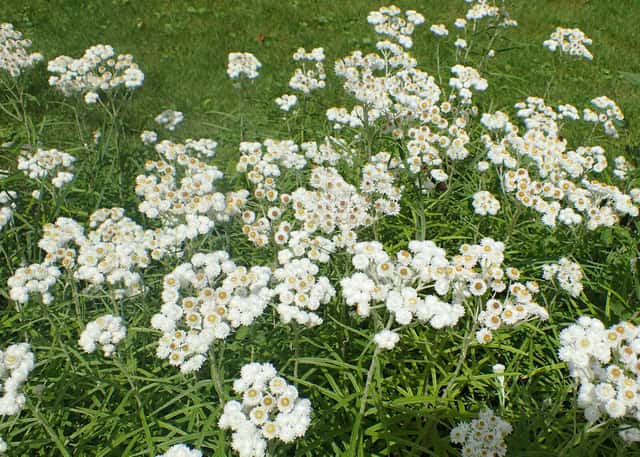
Pearly everlasting (Anaphalis margaritacea) is a easy-care plant from the Asteraceae family. Pearly everlasting (Anaphalis margaritacea) is a hardy perennial wildflower in the daisy family (Asteraceae), native to most of North America from Alaska and northern Canada to northern Mexico, and also to eastern Asia. Upright, unbranched stems 25 to 90 cm tall carry narrow grey-green leaves with a...
Pearly everlasting grows up to 90cm, spread of 60cm, watering every 7 days. It is not suitable for indoor environments and safe for pets.
Unlike many tropical plants, Pearly everlasting tolerates watering mistakes. Best for beginners. Unlike many popular species, Pearly everlasting is safe to keep around pets.
How to Care for Pearly everlasting?
TLDR: Pearly everlasting needs Bright indirect, watering every 7 days, and temperatures between -20-30°C with 40-70% humidity.
How Often Should You Water Pearly everlasting?
Water new plants when the top 2-3 cm of soil is dry until they are established. After that, water about once a week in long dry spells; it prefers moderately moist soil but copes with drought. Avoid soggy soil, which leads to stem and root rot.
How Much Light Does Pearly everlasting Need?
Full sun gives the most compact plants and the most flowers. It accepts light or partial shade, such as the shade of a building, but becomes floppy and flowers less under trees.
What Is the Best Soil for Pearly everlasting?
Any well-drained soil: sandy, rocky, chalky or loamy, acid to alkaline. It thrives in poor soil and needs no compost or fertilizer; extra feeding gives weak, lanky growth. Heavy, wet clay is the one thing to avoid.
What Pot Should You Use for Pearly everlasting?
Best grown in the ground. If you grow it in a container, use a wide pot (at least 30 cm) with drainage holes and a gritty, free-draining mix, since it spreads by rhizomes and dislikes wet roots.
What Is Pearly everlasting and Where Does It Come From?
Pearly everlasting (Anaphalis margaritacea) is a hardy perennial wildflower in the daisy family (Asteraceae), native to most of North America from Alaska and northern Canada to northern Mexico, and also to eastern Asia. Upright, unbranched stems 25 to 90 cm tall carry narrow grey-green leaves with a woolly white underside. From late summer into early autumn the stems end in flat clusters of small round flower heads: dry, papery, pearl-white bracts around a yellow centre. The flowers keep their shape and colour when dried, which made it a classic for dried arrangements and wreaths. Plants are male or female, and they spread slowly by underground rhizomes into loose colonies. It feeds bees and butterflies and is a host plant for painted lady and American lady caterpillars.
How to Propagate Pearly everlasting?
Division
- Division is the easiest method and also keeps spreading colonies in check.
- 1 Lift the clump
In spring, dig up a clump at least 15 cm across and shake off the excess soil.
- 2 Split
Pull or cut the rhizomes apart into sections, each with at least three shoots and healthy roots.
- 3 Replant
Replant the sections at the same depth in well-drained soil, or pot them up to share.
- 4 Settle in
Water well and keep the soil lightly moist for the first few weeks.
Materials needed:
Seed
- The species is dioecious: only female plants set seed, and a male plant must be nearby for the seed to be viable.
- 1 Collect seed
In early autumn, gather the fluffy seed heads from female plants.
- 2 Sow
Sow from late autumn to late winter, directly outdoors or in containers left outside, barely covering the seed.
- 3 Cold period
Leave the seed outside over winter; it germinates as the weather warms in spring.
- 4 Transplant
Move seedlings to their final spot once they have a few true leaves.
Materials needed:
How Big Does Pearly everlasting Grow?
TLDR: Pearly everlasting can reach up to 90cm tall with Medium growth rate.
Max height
90cm
Spread
60cm
Growth rate
Medium
Foliage
Deciduous
Plant Uses
Ornamental
Great for decoration
Medicinal
Medicinal properties
Medicinal Uses
- Traditionally used by Indigenous peoples of North America as a poultice for sores and swellings
- Historically boiled into tea or used in steam baths for rheumatism, and smoked for colds (traditional use, not clinically validated)
Is your plant showing symptoms?
Click on the symptom to discover possible causes:
What Diseases Commonly Affect Pearly everlasting?
TLDR: Pearly everlasting is susceptible to 4 known diseases. Monitor regularly for early detection.
Root Rot
Root rot is a serious fungal disease that affects the root system of plants, causing them to decay and die. It is primarily caused by overwatering, poor drainage, or soil-borne fungi such as Pythium, Phytophthora, Rhizoctonia, and Fusarium. The disease thrives in waterlogged conditions where roots are deprived of oxygen, making them susceptible to fungal infection.
Leaf Spot
Leaf spot is a common fungal disease caused by various pathogens including Alternaria, Ascochyta, Colletotrichum, Septoria, and Venturia. It primarily affects leaves, causing discolored spots that can lead to premature leaf drop if left untreated.
Rust
Rust is a common fungal disease caused by fungi in the order Pucciniales that affects a wide variety of plants. The disease gets its name from the characteristic orange, yellow, or reddish-brown pustules that appear on leaves, resembling metal rust. This obligate fungal parasite requires living plants to survive and can cause significant economic losses in agricultural crops.
Caterpillars
Caterpillars are the larval stage of moths and butterflies that feed voraciously on plant foliage, stems, flowers, and fruits. Common species include cabbage loopers, tomato hornworms, armyworms, and cutworms. These pests can cause extensive damage by consuming large amounts of plant tissue in a short time. They vary in size from small (1/4 inch) to large (5 inches), with colors ranging from green to brown, often featuring stripes or spots. Caterpillars are highly mobile and can quickly spread throughout gardens, making them one of the most destructive common pests.
Compare with similar plants
| Attribute | Difficulty | Light | Watering | Pet Safe |
|---|---|---|---|---|
| Field Maple | Easy | Bright indirect | 14d | ✓ |
| Iberian Houseleek | Easy | Direct sun | 14d | ✓ |
| Silver Birch | Easy | Direct sun | 14d | ✓ |
| Common Blanketflower | Easy | Direct sun | 10d | ✓ |
Choose & Compare
Sources & References
- NC State Extension Plant Toolbox — Anaphalis margaritacea (Pearly Everlasting)
- RHS — Anaphalis margaritacea (pearly everlasting)
- Epic Gardening — How to Plant, Grow, and Care for Pearly Everlasting
- USDA Forest Service — Plant of the Week: Western Pearly Everlasting
- Temperate Plants Database — Anaphalis margaritacea (Known hazards: none known)





