Crassulaceae
Penwiper Plant (Kalanchoe marmorata)
Kalanchoe marmorata
A drought-tolerant succulent that thrives on neglect: bright light, infrequent watering, and gritty soil are all it needs to put on a show of mottled foliage and winter blooms.
Every 14 days
Bright indirect
12° - 27°C
20% - 40%
Categories
What is Penwiper Plant?
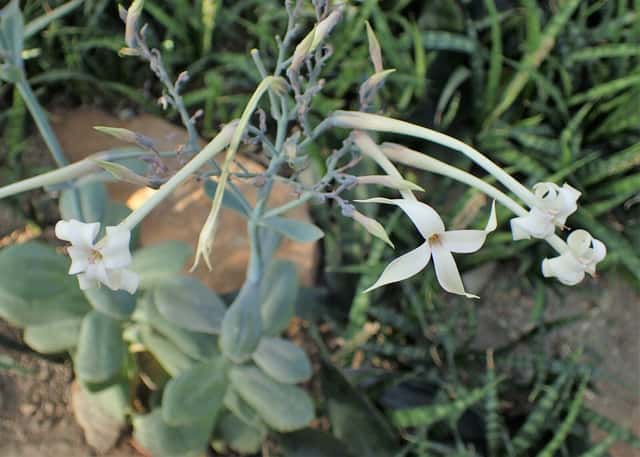
Penwiper Plant (Kalanchoe marmorata) is a easy-care plant from the Crassulaceae family. The Penwiper Plant (Kalanchoe marmorata) is an easy-care succulent from Madagascar and East Africa, prized for its broad, scalloped, blue-green leaves marked with irregular purple-brown blotches that resemble a marble pattern. In late winter to early spring it sends up tall stems topped with cluster...
Penwiper Plant grows up to 60cm, spread of 45cm, watering every 14 days, 12°C – 27°C, 20–40% humidity. It is suitable for indoor environments and not safe for pets.
Unlike many tropical plants, Penwiper Plant tolerates watering mistakes. Best for beginners. Without precautions, ingestion can cause irritation in pets. Keep out of reach of cats and dogs. Without adequate drainage, root rot can develop within 28 days.
How to Care for Penwiper Plant?
TLDR: Penwiper Plant needs Bright indirect, watering every 14 days, and temperatures between 12-27°C with 20-40% humidity.
How Often Should You Water Penwiper Plant?
Let the soil dry out completely between waterings. Water sparingly in fall and winter during active growth, and cut back further during the hottest summer months and deepest winter dormancy.
How Much Light Does Penwiper Plant Need?
Give it bright, indirect to direct light, ideally within a foot of a south-facing window. Some direct sun is tolerated, but shield the plant from intense midday rays to avoid scorched leaf tips.
What Is the Best Soil for Penwiper Plant?
Use a fast-draining cactus or succulent mix, boosted with extra perlite. Good drainage is essential since this plant is very sensitive to wet, soggy soil.
What Pot Should You Use for Penwiper Plant?
Terracotta pot with drainage holes, sized just slightly larger than the root ball
Care Schedule
Fertilize
Every 30 days
What Is Penwiper Plant and Where Does It Come From?
The Penwiper Plant (Kalanchoe marmorata) is an easy-care succulent from Madagascar and East Africa, prized for its broad, scalloped, blue-green leaves marked with irregular purple-brown blotches that resemble a marble pattern. In late winter to early spring it sends up tall stems topped with clusters of white or pinkish tubular flowers.
How to Propagate Penwiper Plant?
Stem Cutting
Avoid direct sun until roots establish, and hold off watering until the cut end has fully callused to prevent rot.
- 1 Using sterilized shears, snip a healthy stem section with several leaves at a 45-degree angle just below a leaf node.
- 2 Let the cutting callus over in a dry, shaded spot for 1-2 days.
- 3 Plant the calloused end in well-draining succulent soil.
- 4 Place in bright, indirect light and water lightly only once the soil has dried out.
Materials needed:
Leaf Cutting
Kalanchoe marmorata roots readily from leaves, but growth is slow at first - be patient and keep the soil barely moist.
- 1 Gently twist off a healthy, mature leaf close to the stem.
- 2 Let the leaf dry in a shaded spot for a few days until the cut end calluses.
- 3 Lay the leaf on top of well-draining succulent soil without burying it.
- 4 Mist lightly and wait for roots and a tiny plantlet to form at the base.
Materials needed:
How Big Does Penwiper Plant Grow?
TLDR: Penwiper Plant can reach up to 60cm tall with Medium growth rate.
Max height
60cm
Spread
45cm
Growth rate
Medium
Foliage
Evergreen
Warning: Toxic Plant
This plant can be toxic if ingested. Keep out of reach of:
Plant Uses
Ornamental
Great for decoration
Is your plant showing symptoms?
Click on the symptom to discover possible causes:
What Diseases Commonly Affect Penwiper Plant?
TLDR: Penwiper Plant is susceptible to 9 known diseases. Monitor regularly for early detection.
Root Rot
Root rot is a serious fungal disease that affects the root system of plants, causing them to decay and die. It is primarily caused by overwatering, poor drainage, or soil-borne fungi such as Pythium, Phytophthora, Rhizoctonia, and Fusarium. The disease thrives in waterlogged conditions where roots are deprived of oxygen, making them susceptible to fungal infection.
Crown Rot
Crown rot is a serious fungal disease that attacks the crown (base) of the plant where the stem meets the soil. It is caused by various fungal pathogens including Phytophthora, Fusarium, and Rhizoctonia. The disease thrives in waterlogged conditions and can quickly spread to kill the entire plant if not addressed promptly.
Powdery Mildew
Powdery mildew is a common fungal disease caused by various fungi species including Erysiphe, Podosphaera, Oïdium, and Leveillula. It affects over 10,000 plant species worldwide. The disease thrives in warm, dry climates with high humidity and appears as a distinctive white powdery coating on plant surfaces.
Leaf Spot
Leaf spot is a common fungal disease caused by various pathogens including Alternaria, Ascochyta, Colletotrichum, Septoria, and Venturia. It primarily affects leaves, causing discolored spots that can lead to premature leaf drop if left untreated.
Meaning & Symbolism
In Kalanchoe folklore the plant is tied to endurance and lasting affection; in Chinese culture it is called the "longevity flower" and gifted at Lunar New Year to symbolize wealth and prosperity.
Fun Facts
The marbled purple-brown blotches on its leaves are the source of both its scientific name (marmorata means "marbled" in Latin) and its common name.
Its old, dried flower stalks were historically used to wipe pen nibs clean, giving rise to the name "Penwiper Plant".
Like other Kalanchoe, it is a "false" biennial bloomer, flowering once a season after enough cool nights trigger bud formation.
Frequently asked questions
How often should I water my Penwiper Plant?
Is the Penwiper Plant toxic to cats and dogs?
How do I propagate Kalanchoe marmorata?
Why are the leaf tips turning brown?
Compare with similar plants
| Attribute | Difficulty | Light | Watering | Pet Safe |
|---|---|---|---|---|
| Field Maple | Easy | Bright indirect | 14d | ✓ |
| Silver Birch | Easy | Direct sun | 14d | ✓ |
| Common Blanketflower | Easy | Direct sun | 10d | ✓ |
| Cushion Bush | Easy | Direct sun | 14d | ✓ |
Choose & Compare
Sources & References
- Penwiper Plant Care | Greg App
- Kalanchoe marmorata (Penwiper) - Gardenia.net
- Kalanchoe marmorata (Penwiper Plant) - World of Succulents
- Penwiper Plant Care & Growing Basics - MyPlantIn
- Toxic and Non-toxic Plants: Kalanchoe - ASPCA
- How to Propagate Kalanchoe in 4 Easy Steps
- The History and Symbolism of Kalanchoe in Different Cultures
- Common Diseases Affecting Kalanchoe Plants
- Kalanchoe Marmorata (The Penwiper Plant) - Succulent City





