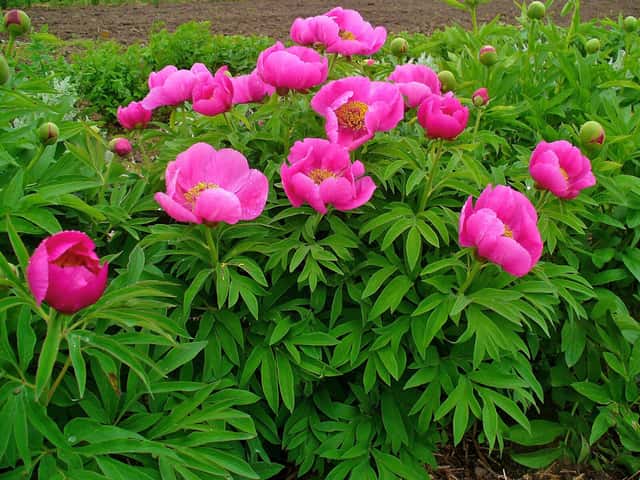
Paeoniaceae
Peony: Full Sun Plant
Paeonia
Give peonies full sun (6-8 hours daily), fertile well-draining soil, and consistent moisture without waterlogging. They need a winter chill period to bloom well and take 2-3 years to establish after planting or division.
Every 7 days
Direct sun
-37° - 35°C
40% - 60%
Categories
What is Peony?
Peony (Paeonia) is a medium-care plant from the Paeoniaceae family. Paeonia is a genus of herbaceous perennial and shrubby flowering plants in the family Paeoniaceae, native to Asia, Europe, and western North America. Cultivated for centuries for their large, fragrant blooms, garden peonies (herbaceous types) die back to the ground each winter and re-emerge in sprin...
Peony grows up to 90cm, spread of 90cm, watering every 7 days, -37°C – 35°C, 40–60% humidity. It is not suitable for indoor environments and not safe for pets.
Without precautions, ingestion can cause irritation in pets. Keep out of reach of cats and dogs.
How to Care for Peony?
TLDR: Peony needs Direct sun, watering every 7 days, and temperatures between -37-35°C with 40-60% humidity.
How Often Should You Water Peony?
Water at the base of the plant to keep foliage dry, providing about 1 inch (2-3 cm) per week; avoid soggy soil, which invites rot.
How Much Light Does Peony Need?
Plant in full sun; tree peonies benefit from light afternoon shade to extend bloom life.
What Is the Best Soil for Peony?
Use fertile, organic-rich soil with excellent drainage and a near-neutral pH (6.5-7.5); never plant the root eyes deeper than 2 inches (5 cm), or the plant may fail to bloom.
What Pot Should You Use for Peony?
Best grown directly in garden soil; if potted, use a large, deep container (at least 16 in / 40 cm) with generous drainage holes.
Care Schedule
Fertilize
Every 180 days
What Is Peony and Where Does It Come From?
Paeonia is a genus of herbaceous perennial and shrubby flowering plants in the family Paeoniaceae, native to Asia, Europe, and western North America. Cultivated for centuries for their large, fragrant blooms, garden peonies (herbaceous types) die back to the ground each winter and re-emerge in spring, flowering from late spring into early summer.
How to Propagate Peony?
Root division
Avoid dividing too often; established clumps can thrive for decades without division. Planting the eyes too deep is the most common cause of peonies that fail to bloom.
- 1 In fall, once foliage dies back, cut stems down to ground level
- 2 Carefully dig up the clump with a garden fork
- 3 Divide the root into pieces with 3-5 eyes (buds) each using a clean, sharp knife
- 4 Replant immediately with eyes no deeper than 2 inches (5 cm)
Materials needed:
How Big Does Peony Grow?
TLDR: Peony can reach up to 90cm tall with Slow growth rate.
Max height
90cm
Spread
90cm
Growth rate
Slow
Foliage
Deciduous
Warning: Toxic Plant
This plant can be toxic if ingested. Keep out of reach of:
Plant Uses
Ornamental
Great for decoration
Medicinal
Medicinal properties
Medicinal Uses
- Root historically used in Traditional Chinese Medicine for pain and inflammation (traditional use only, not clinically proven; not a substitute for medical care)
Is your plant showing symptoms?
Click on the symptom to discover possible causes:
What Diseases Commonly Affect Peony?
TLDR: Peony is susceptible to 3 known diseases. Monitor regularly for early detection.
Gray Mold (Botrytis Blight)
Gray mold, caused by the fungus Botrytis cinerea, is one of the most common fungal diseases in plants. It affects over 200 plant species, including ornamentals, vegetables, fruits, and houseplants. The disease thrives in cool, humid conditions with poor air circulation, causing grayish spots and soft rot on infected tissues.
Powdery Mildew
Powdery mildew is a common fungal disease caused by various fungi species including Erysiphe, Podosphaera, Oïdium, and Leveillula. It affects over 10,000 plant species worldwide. The disease thrives in warm, dry climates with high humidity and appears as a distinctive white powdery coating on plant surfaces.
Leaf Spot
Leaf spot is a common fungal disease caused by various pathogens including Alternaria, Ascochyta, Colletotrichum, Septoria, and Venturia. It primarily affects leaves, causing discolored spots that can lead to premature leaf drop if left untreated.
Meaning & Symbolism
A symbol of romance, prosperity, honor, and marital happiness; traditionally associated with good fortune.
Compare with similar plants
| Attribute | Difficulty | Light | Watering | Pet Safe |
|---|---|---|---|---|
| Dark Fieldcap | Medium | Low light | 2d | ⚠️ |
| Azalea | Medium | Partial shade | 3d | ⚠️ |
| Muriel's Bamboo | Medium | Partial shade | 3d | ✓ |
| Bougainvillea | Medium | Direct sun | 7d | ⚠️ |
Choose & Compare
Sources & References
- Peonies Plant - Comprehensive Guide to Paeonia Care, Facts & FAQs
- Common Peony: How Much Water & Light Does it Need to Thrive?
- Toxic and Non-toxic Plants: Peony | ASPCA
- Peony Common Problems, Pests and Diseases
- Peony Diseases | Matthaei Botanical Gardens & Nichols Arboretum
- Botrytis, Powdery Mildew, or Leaf Blotch? The 3-Symptom Check That Saves Your Peonies




