Poaceae
Perennial ryegrass: Ground Cover Plant
Lolium perenne
Perennial ryegrass requires full sun (at least 6 hours daily), well-fertilized, well-aerated, slightly acidic to neutral soil (pH 5.8–7.0), and regular, deep watering. It should be watered 2–3 times per week (receiving a total of 25–38 mm of water), with early morning watering recommended. It is a fast-growing, quick-establishing grass that can be cultivated across a wide temperature range (−28°C to 35°C), though 15–25°C is optimal for development. It is moderately sensitive to drought and unsuitable for heavy shade. Maintaining the stand requires regular mowing (every 7–10 days), fertilizing 3–4 times a year, and annual overseeding to maintain density.
Every 3 days
Bright indirect
-28° - 35°C
50% - 80%
Categories
What is Perennial ryegrass?
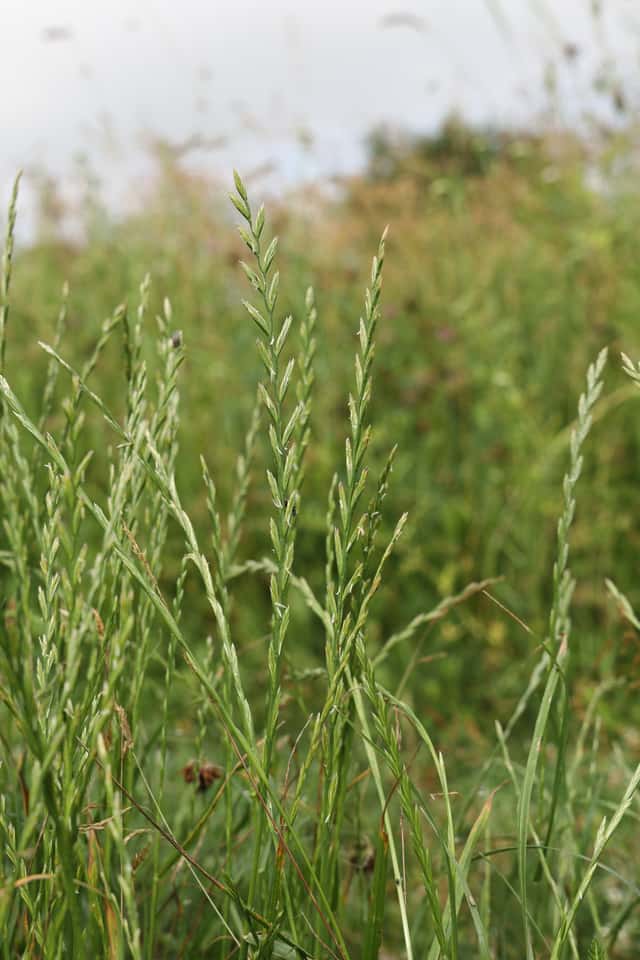
Perennial ryegrass (Lolium perenne) is a easy-care plant from the Poaceae family. Perennial ryegrass (Lolium perenne) is one of the most widespread and important perennial turfgrasses in the world. A member of the Poaceae (grass) family, it is a bunch-forming perennial with dense, shiny, dark green leaves, growing to a height of 10–80 cm. Due to its outstanding wear tolerance and...
Perennial ryegrass grows up to 80cm, watering every 3 days, -28°C – 35°C, 50–80% humidity. It is not suitable for indoor environments and safe for pets.
Unlike many tropical plants, Perennial ryegrass tolerates watering mistakes. Best for beginners. Unlike many popular species, Perennial ryegrass is safe to keep around pets.
How to Care for Perennial ryegrass?
TLDR: Perennial ryegrass needs Bright indirect, watering every 3 days, and temperatures between -28-35°C with 50-80% humidity.
How Often Should You Water Perennial ryegrass?
Water in the early morning, 2–3 times per week, providing 12–19 mm of water per session (totaling 25–38 mm weekly). In dry, hot summer conditions, daily watering may become necessary. Avoid keeping the surface wet in the late afternoon or at night, as this increases the risk of fungal diseases. Deep but infrequent watering results in a stronger root system than shallow, daily watering.
How Much Light Does Perennial ryegrass Need?
Perennial ryegrass requires full sun, with at least 6 hours of direct sunlight daily. In shady conditions (less than 4 hours of sunlight per day), it becomes thin, weak, and increasingly susceptible to diseases. If turfing is required in a shaded area, consider more shade-tolerant grass species.
What Is the Best Soil for Perennial ryegrass?
It prefers well-aerated, fertile loam or clay loam soil with a pH between 5.8 and 7.0. Good drainage is essential; flooding and persistent waterlogging can lead to Pythium blight and root rot. Perform core aeration annually to alleviate soil compaction.
Care Schedule
Fertilize
Every 90 days
What Is Perennial ryegrass and Where Does It Come From?
Perennial ryegrass (Lolium perenne) is one of the most widespread and important perennial turfgrasses in the world. A member of the Poaceae (grass) family, it is a bunch-forming perennial with dense, shiny, dark green leaves, growing to a height of 10–80 cm. Due to its outstanding wear tolerance and exceptional recovery capacity, it is extensively used on sports fields, airports, parks, and home lawns. With rapid germination (5–10 days) and a vigorous growth rate, it is one of the most reliable turf-forming grasses, while also serving as an important forage crop in agriculture.
How to Propagate Perennial ryegrass?
How Big Does Perennial ryegrass Grow?
TLDR: Perennial ryegrass can reach up to 80cm tall with Fast growth rate.
Max height
80cm
Growth rate
Fast
Foliage
Evergreen
Plant Uses
Ornamental
Great for decoration
Ground Cover
Soil coverage
Is your plant showing symptoms?
Click on the symptom to discover possible causes:
What Diseases Commonly Affect Perennial ryegrass?
TLDR: Perennial ryegrass is susceptible to 6 known diseases. Monitor regularly for early detection.
Rust
Rust is a common fungal disease caused by fungi in the order Pucciniales that affects a wide variety of plants. The disease gets its name from the characteristic orange, yellow, or reddish-brown pustules that appear on leaves, resembling metal rust. This obligate fungal parasite requires living plants to survive and can cause significant economic losses in agricultural crops.
Pythium Root Rot
Pythium root rot is a serious fungal disease caused by various Pythium species including P. aphanidermatum, P. ultimum, and P. irregulare. These water molds are present in practically all cultivated soils and attack plant roots under wet conditions, causing rapid wet rot that can extend into the stem. The disease is favored by poor drainage, overwatering, and specific temperatures depending on the species.
Leaf Spot
Leaf spot is a common fungal disease caused by various pathogens including Alternaria, Ascochyta, Colletotrichum, Septoria, and Venturia. It primarily affects leaves, causing discolored spots that can lead to premature leaf drop if left untreated.
Powdery Mildew
Powdery mildew is a common fungal disease caused by various fungi species including Erysiphe, Podosphaera, Oïdium, and Leveillula. It affects over 10,000 plant species worldwide. The disease thrives in warm, dry climates with high humidity and appears as a distinctive white powdery coating on plant surfaces.
Meaning & Symbolism
A symbol of perennial endurance: perennial ryegrass regenerates even after the most intense foot traffic and constantly renews itself. In garden tradition, it represents resilience, reliability, and healthy community spaces.
Compare with similar plants
| Attribute | Difficulty | Light | Watering | Pet Safe |
|---|---|---|---|---|
| Field Maple | Easy | Bright indirect | 14d | ✓ |
| Muriel's Bamboo | Medium | Partial shade | 3d | ✓ |
| Silver Birch | Easy | Direct sun | 14d | ✓ |
| Common Blanketflower | Easy | Direct sun | 10d | ✓ |
Choose & Compare
Sources & References
- Perennial Ryegrass Complete Care Guide
- Lolium perenne: A comprehensive guide to growing and maintaining English ryegrass
- Complete Guide to Planting and Caring for Perennial Ryegrass - Planet Natural
- Perennial ryegrass Lolium perenne L. - Oregon State University
- Turfgrass Diseases: Red Thread - Penn State Extension





