Apocynaceae
Persian Carpet Flower: Low Water Needs
Edithcolea grandis
A challenging plant to cultivate that requires full sun, extremely well-draining mineral soil, and minimal watering. Highly sensitive to rot caused by excessive moisture.
Every 14 days
Bright indirect
15° - 32°C
20% - 40%
Categories
What is Persian Carpet Flower?
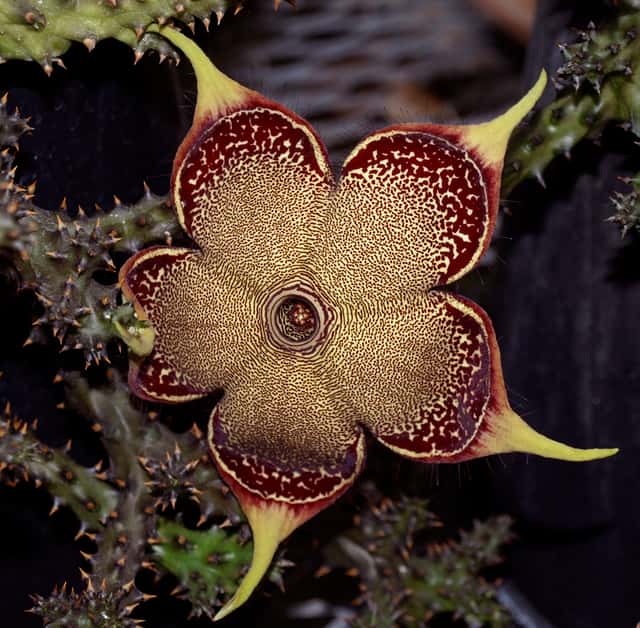
Persian Carpet Flower (Edithcolea grandis) is a medium-care plant from the Apocynaceae family. Edithcolea grandis, known as the Persian Carpet Flower, is an extraordinary creeping succulent native to the arid regions of East Africa. Its stems are branched, spiny, and range in color from grayish-green to brown. The highlight of this species is its magnificent flowers, which can reach up to 13...
Persian Carpet Flower grows up to 15cm, spread of 45cm, watering every 14 days, 15°C – 32°C, 20–40% humidity. It is suitable for indoor environments and not safe for pets.
Without precautions, ingestion can cause irritation in pets. Keep out of reach of cats and dogs. Without adequate drainage, root rot can develop within 28 days.
How to Care for Persian Carpet Flower?
TLDR: Persian Carpet Flower needs Bright indirect, watering every 14 days, and temperatures between 15-32°C with 20-40% humidity.
How Often Should You Water Persian Carpet Flower?
Water only when the stem begins to show slight dehydration wrinkles. In winter, suspend watering almost completely.
How Much Light Does Persian Carpet Flower Need?
Requires direct sunlight to develop its colors and bloom, but should be protected from the scorching midday sun in extremely hot climates.
What Is the Best Soil for Persian Carpet Flower?
Use a highly mineral mix, composed of 70% inorganic material (pumice, coarse sand, ceramic shards) and 30% organic matter.
What Pot Should You Use for Persian Carpet Flower?
Shallow terracotta pots with excellent drainage holes are essential to allow the substrate to dry quickly.
Care Schedule
Fertilize
Every 30 days
Repot
Every 730 days
What Is Persian Carpet Flower and Where Does It Come From?
Edithcolea grandis, known as the Persian Carpet Flower, is an extraordinary creeping succulent native to the arid regions of East Africa. Its stems are branched, spiny, and range in color from grayish-green to brown. The highlight of this species is its magnificent flowers, which can reach up to 13 cm in diameter, displaying complex geometric patterns and vibrant colors reminiscent of a Persian carpet weave. It is a highly sought-after plant for collectors but requires precise care due to its sensitivity to overwatering.
How to Propagate Persian Carpet Flower?
Stem cutting
- Avoid propagating during winter, as the risk of rot is very high.
- The use of rooting hormone powder can help, but proper callousing is the most important factor.
- 1 Segment cutting
Cut a healthy stem segment using a sterilized knife.
- 2 Wound healing
Let the cutting dry in a shaded, dry spot for 5 to 7 days until a firm callus forms at the base.
- 3 Planting
Place the cutting on a substrate composed mostly of coarse sand and pumice. Do not bury it deeply.
- 4 Rooting
Keep in a bright location but without direct sun, and do not water until you notice the first signs of growth or roots.
Materials needed:
Seeds
- Seeds lose viability quickly; use fresh seeds.
- Use a preventive fungicide to avoid damping-off.
- 1 Bed preparation
Prepare a fine, well-drained substrate for cactus seeds.
- 2 Sowing
Scatter the seeds on the surface and lightly cover with a thin layer of sand.
- 3 Controlled humidity
Keep the substrate slightly moist and at a constant temperature of 25°C.
Materials needed:
How Big Does Persian Carpet Flower Grow?
TLDR: Persian Carpet Flower can reach up to 15cm tall with Slow growth rate.
Max height
15cm
Spread
45cm
Growth rate
Slow
Foliage
Evergreen
Warning: Toxic Plant
This plant can be toxic if ingested. Keep out of reach of:
Plant Uses
Ornamental
Great for decoration
Is your plant showing symptoms?
Click on the symptom to discover possible causes:
What Diseases Commonly Affect Persian Carpet Flower?
TLDR: Persian Carpet Flower is susceptible to 8 known diseases. Monitor regularly for early detection.
Root Rot
Root rot is a serious fungal disease that affects the root system of plants, causing them to decay and die. It is primarily caused by overwatering, poor drainage, or soil-borne fungi such as Pythium, Phytophthora, Rhizoctonia, and Fusarium. The disease thrives in waterlogged conditions where roots are deprived of oxygen, making them susceptible to fungal infection.
Mealybugs
Mealybugs are small, soft-bodied insects covered with a white, waxy, cottony material. They are common pests of houseplants and outdoor plants in mild climates. These sap-sucking insects feed on plant tissue, causing damage, stunted growth, and can lead to plant death if left untreated. They produce sticky honeydew which attracts sooty mold.
Spider Mites
Spider mites are tiny arachnids (less than 1/20 inch long) related to spiders and ticks that feed on plant sap. They thrive in hot, dry conditions and can cause significant damage to ornamental and vegetable plants. During severe infestations, crop losses can reach 14% or higher as these pests disrupt vital plant processes including photosynthesis, carbon dioxide absorption, and transpiration.
Aphids
Aphids are small, soft-bodied, pear-shaped insects (1/16 to 1/8 inch long) that feed by sucking nutrient-rich sap from plants. They reproduce rapidly and can quickly weaken plants, causing distorted growth and transmitting plant viruses. Aphids come in various colors including green, black, red, yellow, brown, and gray. They secrete honeydew, a sticky substance that attracts ants and encourages sooty mold growth.
Meaning & Symbolism
Represents rarity, hidden beauty, and extreme adaptation.
Compare with similar plants
| Attribute | Difficulty | Light | Watering | Pet Safe |
|---|---|---|---|---|
| Dark Fieldcap | Medium | Low light | 2d | ⚠️ |
| Azalea | Medium | Partial shade | 3d | ⚠️ |
| Muriel's Bamboo | Medium | Partial shade | 3d | ✓ |
| Bougainvillea | Medium | Direct sun | 7d | ⚠️ |




