Araceae
Philodendron Goeldii: Complete Care Guide
Thaumatophyllum spruceanum
Thrives in bright indirect light, well-draining organic-rich soil, high humidity and regular watering without waterlogging. Considered easy to grow for anyone with some aroid experience, though it is sensitive to low humidity.
Every 7 days
Bright indirect
18° - 27°C
60% - 80%
Categories
What is Philodendron Goeldii?
Philodendron Goeldii (Thaumatophyllum spruceanum) is a easy-care plant from the Araceae family. Philodendron Goeldii (Thaumatophyllum spruceanum, formerly Philodendron spruceanum) is an aroid native to the Amazon rainforest, found in Brazil, Colombia, Ecuador, French Guiana, Peru, Suriname and Venezuela. It grows either as a terrestrial shrub in sandy soil along riverbanks or as a hemiepiphyte...
Philodendron Goeldii grows up to 2.0m, spread of 150cm, watering every 7 days, 18°C – 27°C, 60–80% humidity. It is suitable for indoor environments and not safe for pets.
Unlike many tropical plants, Philodendron Goeldii tolerates watering mistakes. Best for beginners. Without precautions, ingestion can cause irritation in pets. Keep out of reach of cats and dogs. Without adequate drainage, root rot can develop within 14 days.
How to Care for Philodendron Goeldii?
TLDR: Philodendron Goeldii needs Bright indirect, watering every 7 days, and temperatures between 18-27°C with 60-80% humidity.
How Often Should You Water Philodendron Goeldii?
Water when the top 2-3 cm of soil feel dry to the touch, ensuring the pot drains well to prevent root rot.
How Much Light Does Philodendron Goeldii Need?
Place in bright, indirect light, such as near a sheer-curtained window. Avoid direct sun, which can scorch the leaves.
What Is the Best Soil for Philodendron Goeldii?
Use a light, well-draining, organic-rich aroid mix (bark, perlite and coco coir work well).
What Pot Should You Use for Philodendron Goeldii?
A pot with multiple drainage holes, ideally unglazed terracotta or ceramic, which helps balance substrate moisture.
Care Schedule
Fertilize
Every 30 days
Misting
Every 3 days
Rotate
Every 14 days
Repot
Every 730 days
What Is Philodendron Goeldii and Where Does It Come From?
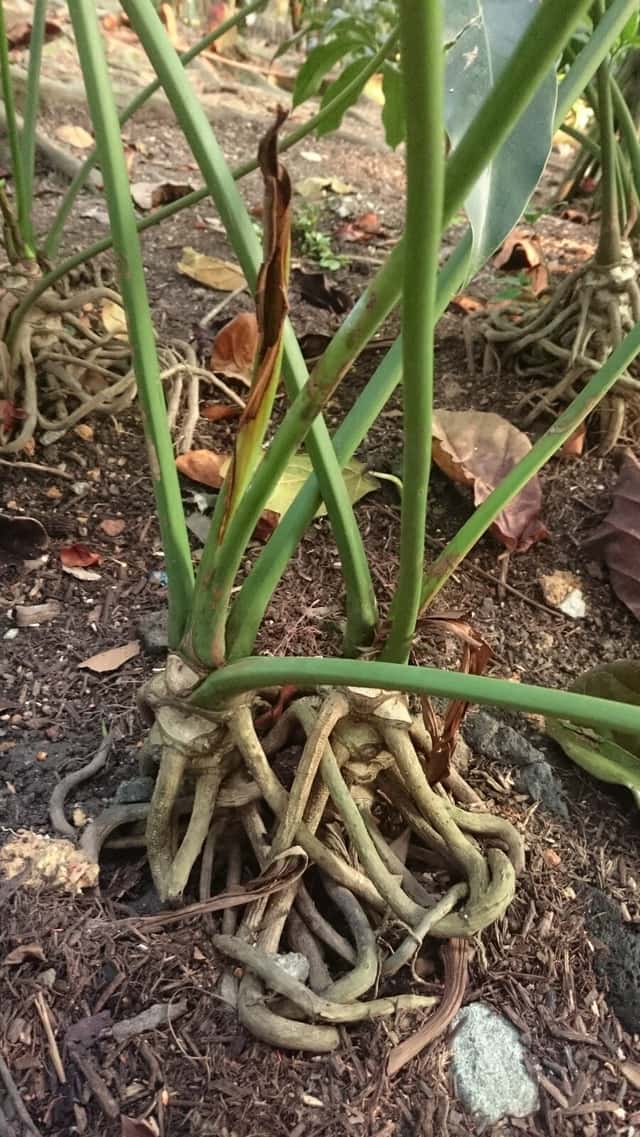
Philodendron Goeldii (Thaumatophyllum spruceanum, formerly Philodendron spruceanum) is an aroid native to the Amazon rainforest, found in Brazil, Colombia, Ecuador, French Guiana, Peru, Suriname and Venezuela. It grows either as a terrestrial shrub in sandy soil along riverbanks or as a hemiepiphyte climbing larger forest trees. Its foliage is highly distinctive: each leaf is pedately divided into 10-20 leaflets arranged in a hoop-like shape, with the central leaflet reaching up to 50 cm. The plant is toxic, containing calcium oxalate crystals in nearly all its tissues (except the ripe fruit), which can irritate the mouth and throat of humans and pets if chewed or ingested.
How to Propagate Philodendron Goeldii?
Stem cutting
Use sterilized tools to avoid contamination and change the water every 4-5 days if rooting in water.
- 1 Cut a healthy stem section with at least one node and one leaf
- 2 Let the cut surface callous for a few hours in a dry, airy spot
- 3 Place the cutting in filtered water or a light, moist substrate
- 4 Keep in bright indirect light and high humidity until roots form
Materials needed:
How Big Does Philodendron Goeldii Grow?
TLDR: Philodendron Goeldii can reach up to 2.0m tall with Medium growth rate.
Max height
2.0m
Spread
1.5m
Growth rate
Medium
Foliage
Evergreen
Warning: Toxic Plant
This plant can be toxic if ingested. Keep out of reach of:
Plant Uses
Ornamental
Great for decoration
Edible
Can be consumed
Culinary Uses
- The ripe fruit is occasionally eaten in its native range for its sweet flavor, but the leaves and stems are toxic and should never be consumed
Is your plant showing symptoms?
Click on the symptom to discover possible causes:
What Diseases Commonly Affect Philodendron Goeldii?
TLDR: Philodendron Goeldii is susceptible to 8 known diseases. Monitor regularly for early detection.
Root Rot
Root rot is a serious fungal disease that affects the root system of plants, causing them to decay and die. It is primarily caused by overwatering, poor drainage, or soil-borne fungi such as Pythium, Phytophthora, Rhizoctonia, and Fusarium. The disease thrives in waterlogged conditions where roots are deprived of oxygen, making them susceptible to fungal infection.
Spider Mites
Spider mites are tiny arachnids (less than 1/20 inch long) related to spiders and ticks that feed on plant sap. They thrive in hot, dry conditions and can cause significant damage to ornamental and vegetable plants. During severe infestations, crop losses can reach 14% or higher as these pests disrupt vital plant processes including photosynthesis, carbon dioxide absorption, and transpiration.
Mealybugs
Mealybugs are small, soft-bodied insects covered with a white, waxy, cottony material. They are common pests of houseplants and outdoor plants in mild climates. These sap-sucking insects feed on plant tissue, causing damage, stunted growth, and can lead to plant death if left untreated. They produce sticky honeydew which attracts sooty mold.
Bacterial Leaf Spot
Bacterial leaf spot is a plant disease caused by bacteria in the Xanthomonas and Pseudomonas genera that affects various ornamental and edible plants. The bacteria infect leaves through wounds or natural openings, causing characteristic lesions that can lead to premature leaf drop and plant weakening.
Meaning & Symbolism
An architectural Amazonian plant associated with strength, abundance and connection to the rainforest; its hoop-shaped, deeply cut leaves symbolize continuous growth and resilience.
Fun Facts
Originally described as Thaumatophyllum spruceanum in 1859, it was moved to Philodendron in 1962 and returned to Thaumatophyllum after 2018 molecular studies
Its hoop-shaped leaves with up to 20 leaflets look like a large perforated wheel
In the wild it grows both rooted in soil and as a hemiepiphyte on larger trees
Its ripe fruit tastes like pineapple or banana, unlike the rest of the toxic plant
Frequently asked questions
Is Philodendron Goeldii toxic to cats and dogs?
How often should I water Philodendron Goeldii?
What light does this plant need?
Is it safe to keep around small children?
Compare with similar plants
| Attribute | Difficulty | Light | Watering | Pet Safe |
|---|---|---|---|---|
| Field Maple | Easy | Bright indirect | 14d | ✓ |
| Silver Birch | Easy | Direct sun | 14d | ✓ |
| Common Blanketflower | Easy | Direct sun | 10d | ✓ |
| Cushion Bush | Easy | Direct sun | 14d | ✓ |
Choose & Compare
Sources & References
- Care Guide Thaumatophyllum spruceanum - Botanical Boys
- Philodendron goeldii - Wikipedia
- How to Care for Thaumatophyllum spruceanum - Greg
- Why Is My Thaumatophyllum spruceanum Not Doing Well? - Greg
- Philodendron Goeldii - Care And Propagation Guide
- What Is Thaumatophyllum Spruceanum (Philodendron Goeldii)?





