Asphodelaceae
Phormium: New Zealand Flax Care Guide
Phormium
Grow Phormium in full sun to light shade in well-draining soil. Water regularly while young plants establish, then taper off to occasional deep watering, since mature clumps are drought tolerant. Trim off dead or damaged leaves at the base each spring to keep clumps looking tidy.
Every 14 days
Direct sun
-9° - 35°C
% - %
Categories
What is New Zealand Flax?
New Zealand Flax (Phormium) is a easy-care plant from the Asphodelaceae family. Phormium is a small genus of evergreen, clump-forming perennials native to New Zealand, grown for their bold, sword-shaped leaves and striking architectural form. The genus contains two main species, Phormium tenax (New Zealand flax) and the smaller Phormium cookianum (mountain flax), plus dozens of...
New Zealand Flax grows up to 3.0m, spread of 150cm, watering every 14 days, -9°C – 35°C. It is not suitable for indoor environments and safe for pets.
Unlike many tropical plants, New Zealand Flax tolerates watering mistakes. Best for beginners. Unlike many popular species, New Zealand Flax is safe to keep around pets.
How to Care for New Zealand Flax?
TLDR: New Zealand Flax needs Direct sun, watering every 14 days, and temperatures between -9-35°C with 40-70% humidity.
How Often Should You Water New Zealand Flax?
Water deeply but infrequently once established, letting the soil dry out between waterings; soggy, waterlogged soil invites root and crown rot.
How Much Light Does New Zealand Flax Need?
Full sun brings out the strongest leaf color and the most upright habit, especially in bronze and variegated cultivars; light shade is tolerated but can make growth floppier and less colorful.
What Is the Best Soil for New Zealand Flax?
Plant in well-draining, humus-rich soil; Phormium tolerates poor, sandy, or coastal soils but struggles in heavy, waterlogged clay.
What Pot Should You Use for New Zealand Flax?
A wide, sturdy terracotta or heavy ceramic pot with generous drainage holes suits Phormium's substantial root mass and helps counterbalance its tall, top-heavy foliage.
What Is New Zealand Flax and Where Does It Come From?
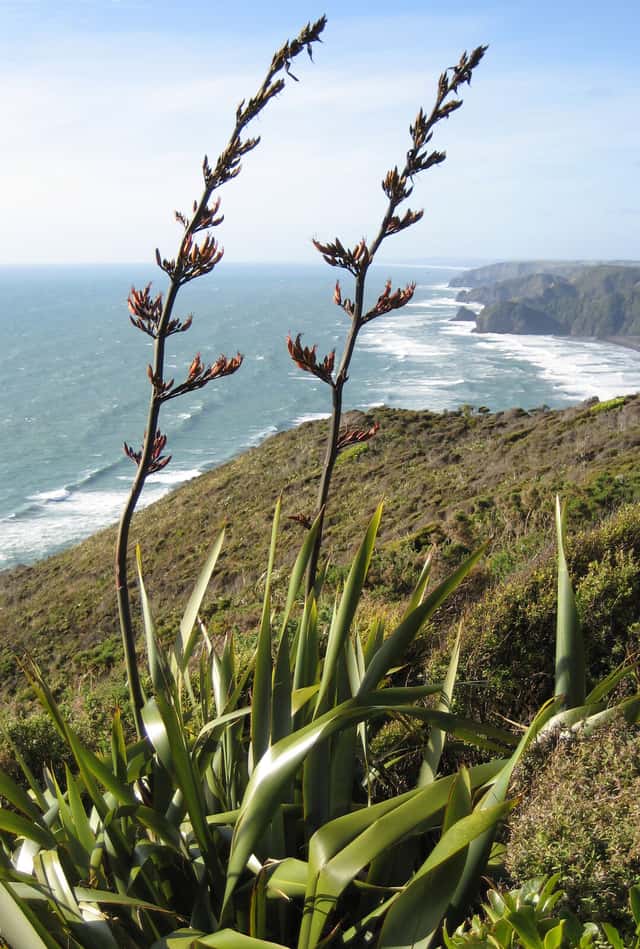
Phormium is a small genus of evergreen, clump-forming perennials native to New Zealand, grown for their bold, sword-shaped leaves and striking architectural form. The genus contains two main species, Phormium tenax (New Zealand flax) and the smaller Phormium cookianum (mountain flax), plus dozens of ornamental cultivars in green, bronze, purple, and variegated striped foliage. Tough, wind- and salt-tolerant, and largely pest-resistant once established, Phormium is a mainstay of coastal gardens, mixed borders, and large containers.
How to Propagate New Zealand Flax?
Clump Division
Divide established clumps every 3-4 years in spring for the best recovery and to keep plants vigorous.
- 1 Lift or expose the clump and separate a leaf fan that has its own roots and a piece of rhizome attached
- 2 Trim the leaf tips back by about one-third to reduce water loss while new roots establish
- 3 Replant the division at the same depth in well-draining soil and water it in well
Materials needed:
Seed Sowing
Seed-grown plants vary in leaf color and form from the parent, so division is preferred for named cultivars.
- 1 Collect ripe brown seed pods and extract the flat black seeds
- 2 Sow seeds thinly on the surface of peat-free seed compost in trays
- 3 Keep under glass or in a cold frame, moist but not waterlogged, until germination
Materials needed:
How Big Does New Zealand Flax Grow?
TLDR: New Zealand Flax can reach up to 3.0m tall with Medium growth rate.
Max height
3.0m
Spread
1.5m
Growth rate
Medium
Foliage
Evergreen
Plant Uses
Ornamental
Great for decoration
Medicinal
Medicinal properties
Medicinal Uses
- Traditionally used by Maori healers: leaf juice applied to toothaches and wounds, leaf fiber used to suture wounds, and root or rhizome preparations used as a purgative
Culinary Uses
- Flower nectar traditionally used as a sweet beverage by Maori
Is your plant showing symptoms?
Click on the symptom to discover possible causes:
What Diseases Commonly Affect New Zealand Flax?
TLDR: New Zealand Flax is susceptible to 7 known diseases. Monitor regularly for early detection.
Mealybugs
Mealybugs are small, soft-bodied insects covered with a white, waxy, cottony material. They are common pests of houseplants and outdoor plants in mild climates. These sap-sucking insects feed on plant tissue, causing damage, stunted growth, and can lead to plant death if left untreated. They produce sticky honeydew which attracts sooty mold.
Rust
Rust is a common fungal disease caused by fungi in the order Pucciniales that affects a wide variety of plants. The disease gets its name from the characteristic orange, yellow, or reddish-brown pustules that appear on leaves, resembling metal rust. This obligate fungal parasite requires living plants to survive and can cause significant economic losses in agricultural crops.
Leaf Spot
Leaf spot is a common fungal disease caused by various pathogens including Alternaria, Ascochyta, Colletotrichum, Septoria, and Venturia. It primarily affects leaves, causing discolored spots that can lead to premature leaf drop if left untreated.
Powdery Mildew
Powdery mildew is a common fungal disease caused by various fungi species including Erysiphe, Podosphaera, Oïdium, and Leveillula. It affects over 10,000 plant species worldwide. The disease thrives in warm, dry climates with high humidity and appears as a distinctive white powdery coating on plant surfaces.
Meaning & Symbolism
In Maori culture, harakeke (Phormium) is a living symbol of whanau (family): the outer leaves (tupuna, ancestors) shelter the middle leaves (matua, parents), which in turn protect the inner shoot (rito, child) - representing generational care, protection, and unity.
Fun Facts
The leaf fiber, called muka, was once one of New Zealand's most important export commodities, used to make rope, sails, and textiles.
Maori weavers select individual harakeke leaves by pliability and color to weave cloaks (kakahu), baskets (kete), and mats (whariki).
A single Phormium tenax clump can send up flower stalks reaching 4-5 meters tall, towering over its 2-3 meter leaf fans.
Frequently asked questions
Is Phormium toxic to cats and dogs?
How often should I water my Phormium?
Why are the leaf tips on my Phormium turning brown?
Can Phormium be grown in pots?
Compare with similar plants
| Attribute | Difficulty | Light | Watering | Pet Safe |
|---|---|---|---|---|
| Field Maple | Easy | Bright indirect | 14d | ✓ |
| Silver Birch | Easy | Direct sun | 14d | ✓ |
| Common Blanketflower | Easy | Direct sun | 10d | ✓ |
| Cushion Bush | Easy | Direct sun | 14d | ✓ |
Choose & Compare
Sources & References
- Phormium tenax - Wikipedia
- Phormium tenax (New Zealand Flax) - NC State Extension
- How to grow Phormium - RHS
- Phormium Mealybug: Identification and Control - RHS
- Harakeke (Phormium tenax) - NZ Native Plants
- 4.3 Harakeke - weaving people together
- Formio, Lino de Nueva Zelanda - Infojardin
- Formio - Phormium tenax - Jardineiro.net





