Orchidaceae
Pigeon Orchid (Dendrobium crumenatum) Care Guide
Dendrobium crumenatum
Grow in bright filtered light or morning sun, with warmth and high humidity. Pot in coarse bark or mount on a log or slab so the roots dry quickly between waterings. Water when the mix is almost dry and feed monthly during the growing season. Avoid temperatures below 15 °C. To encourage flowering, a cold water shower after a spell of hot days mimics the rain that triggers the buds.
Every 4 days
Bright indirect
15° - 38°C
60% - 85%
Categories
What is Pigeon Orchid?
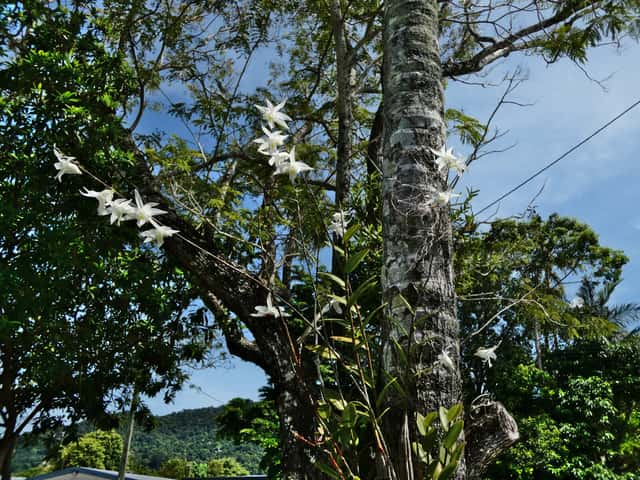
Pigeon Orchid (Dendrobium crumenatum) is a medium-care plant from the Orchidaceae family. Dendrobium crumenatum is an epiphytic orchid in the family Orchidaceae, native to Southeast Asia and ranging from India and Sri Lanka to New Guinea. It grows on tree trunks, including the street trees of Singapore, and forms clumps of long canes swollen at the base, with leathery leaves. The fragran...
Pigeon Orchid grows up to 1.0m, spread of 50cm, watering every 4 days, 15°C – 38°C, 60–85% humidity. It is suitable for indoor environments and safe for pets.
Unlike many popular species, Pigeon Orchid is safe to keep around pets. Without adequate drainage, root rot can develop within 8 days.
How to Care for Pigeon Orchid?
TLDR: Pigeon Orchid needs Bright indirect, watering every 4 days, and temperatures between 15-38°C with 60-85% humidity.
How Often Should You Water Pigeon Orchid?
Water every 3 to 5 days in warm weather, when the mix is almost dry. Water less in cool weather. Never leave the roots in standing water.
How Much Light Does Pigeon Orchid Need?
Likes plenty of light: filtered sun or direct morning sun. In deep shade it grows but rarely flowers.
What Is the Best Soil for Pigeon Orchid?
Use coarse pine bark, charcoal and coconut chips, or mount the plant on a log. The mix must be airy and drain at once.
What Pot Should You Use for Pigeon Orchid?
Terracotta pot or slatted basket with coarse bark, or mounted on a log or cork slab.
Care Schedule
Fertilize
Every 30 days
Misting
Every 3 days
Repot
Every 730 days
What Is Pigeon Orchid and Where Does It Come From?
Dendrobium crumenatum is an epiphytic orchid in the family Orchidaceae, native to Southeast Asia and ranging from India and Sri Lanka to New Guinea. It grows on tree trunks, including the street trees of Singapore, and forms clumps of long canes swollen at the base, with leathery leaves. The fragrant white flowers with a yellow centre look like a dove in flight and last a single day. All the plants in an area bloom together about nine days after a sudden drop in temperature, usually brought by heavy rain.
How to Propagate Pigeon Orchid?
Clump division
Divide when new shoots appear at the base so the plant recovers faster.
- 1 Remove the plant from its pot or mount
- 2 Split into pieces with at least 3 to 4 canes and healthy roots
- 3 Trim rotten roots with sterilised scissors
- 4 Repot in fresh bark or tie onto a mount
- 5 Water sparingly until new roots appear
Materials needed:
Keiki (aerial offshoot)
Keikis with roots that are too short tend to dry out; be patient before separating them.
- 1 Wait until the keiki has roots 3 to 5 cm long
- 2 Cut it off close to the parent cane
- 3 Pot in fine bark or tie to a piece of wood
- 4 Keep in a bright, humid spot
Materials needed:
How Big Does Pigeon Orchid Grow?
TLDR: Pigeon Orchid can reach up to 1.0m tall with Medium growth rate.
Max height
1.0m
Spread
50cm
Growth rate
Medium
Foliage
Evergreen
Plant Uses
Ornamental
Great for decoration
Is your plant showing symptoms?
Click on the symptom to discover possible causes:
What Diseases Commonly Affect Pigeon Orchid?
TLDR: Pigeon Orchid is susceptible to 7 known diseases. Monitor regularly for early detection.
Scale Insects
Scale insects are small sap-sucking pests that appear as brown, shell-like bumps on plant stems and leaves. There are over 25 species, divided into armored (hard) and unarmored (soft) scales. They feed by piercing plant tissue and extracting sap, which weakens the plant and can lead to yellowing, stunted growth, and even death if left untreated. They also excrete honeydew, which attracts ants and promotes sooty mold growth.
Mealybugs
Mealybugs are small, soft-bodied insects covered with a white, waxy, cottony material. They are common pests of houseplants and outdoor plants in mild climates. These sap-sucking insects feed on plant tissue, causing damage, stunted growth, and can lead to plant death if left untreated. They produce sticky honeydew which attracts sooty mold.
Spider Mites
Spider mites are tiny arachnids (less than 1/20 inch long) related to spiders and ticks that feed on plant sap. They thrive in hot, dry conditions and can cause significant damage to ornamental and vegetable plants. During severe infestations, crop losses can reach 14% or higher as these pests disrupt vital plant processes including photosynthesis, carbon dioxide absorption, and transpiration.
Thrips
Thrips are tiny cigar-shaped insects (1/25-inch long) that damage plants by sucking plant juices and scraping at fruits, flowers, and leaves. With over 6,000 species and rapid reproduction (lifecycle as short as 14 days), they can quickly infest plants and transmit viruses like tomato spotted wilt virus.
Fun Facts
All pigeon orchids in an area flower on the same day, about nine days after a temperature drop.
The flowers open in the morning, scent the air and wilt by evening.
It is one of the most common orchids on the street trees of Singapore.
Frequently asked questions
Is pigeon orchid toxic to cats and dogs?
Why won't my pigeon orchid flower?
How often should I water Dendrobium crumenatum?
How long do pigeon orchid flowers last?
Compare with similar plants
| Attribute | Difficulty | Light | Watering | Pet Safe |
|---|---|---|---|---|
| Dark Fieldcap | Medium | Low light | 2d | ⚠️ |
| Azalea | Medium | Partial shade | 3d | ⚠️ |
| Muriel's Bamboo | Medium | Partial shade | 3d | ✓ |
| Bougainvillea | Medium | Direct sun | 7d | ⚠️ |




