Orchidaceae
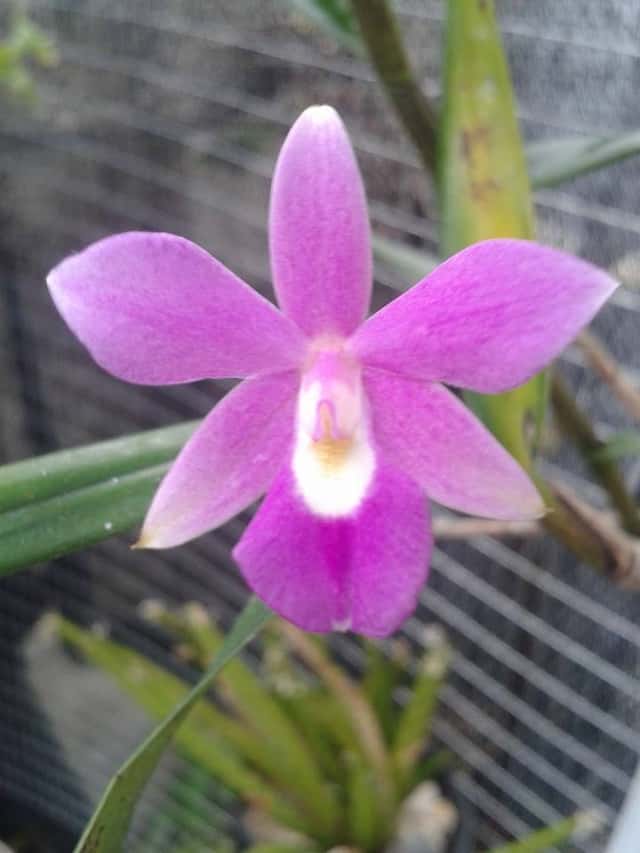
Dimerandra emarginata (Pink Butterfly Orchid)
Dimerandra emarginata
Give this orchid bright, indirect light, high humidity, and good airflow. Let the growing medium dry out nearly completely between waterings to avoid root rot, and feed lightly with a balanced fertilizer during active growth.
Every 7 days
Bright indirect
15° - 30°C
60% - 80%
Categories
What is Pink Butterfly Orchid?
Pink Butterfly Orchid (Dimerandra emarginata) is a medium-care plant from the Orchidaceae family. Dimerandra emarginata is a medium-sized epiphytic orchid native to the rainforests of Central America, northern South America, and the Caribbean, from Mexico south to Brazil. It grows on tree bark or rocks, producing slender, cane-like stems with leathery, notch-tipped leaves. From summer through fa...
Pink Butterfly Orchid grows up to 50cm, watering every 7 days, 15°C – 30°C, 60–80% humidity. It is suitable for indoor environments and safe for pets.
Unlike many popular species, Pink Butterfly Orchid is safe to keep around pets. Without adequate drainage, root rot can develop within 14 days.
How to Care for Pink Butterfly Orchid?
TLDR: Pink Butterfly Orchid needs Bright indirect, watering every 7 days, and temperatures between 15-30°C with 60-80% humidity.
How Often Should You Water Pink Butterfly Orchid?
Water thoroughly only when the bark or moss medium feels nearly dry, then let it drain completely — soggy roots quickly lead to rot in this epiphyte.
How Much Light Does Pink Butterfly Orchid Need?
Provide bright, filtered light such as under 50% shade cloth or near an east-facing window; direct midday sun can scorch the leaves.
What Is the Best Soil for Pink Butterfly Orchid?
Mount on bark or pot in a chunky, fast-draining mix of bark, sphagnum moss, and perlite that lets roots breathe.
What Pot Should You Use for Pink Butterfly Orchid?
Use a slotted plastic orchid pot or mount directly on cork/tree-fern bark to maximize airflow to the roots.
Care Schedule
Fertilize
Every 14 days
Repot
Every 540 days
What Is Pink Butterfly Orchid and Where Does It Come From?
Dimerandra emarginata is a medium-sized epiphytic orchid native to the rainforests of Central America, northern South America, and the Caribbean, from Mexico south to Brazil. It grows on tree bark or rocks, producing slender, cane-like stems with leathery, notch-tipped leaves. From summer through fall, it bears clusters of small but vivid pink flowers with a white-and-pink lip, blooming successively over weeks. Commonly called the Pink Butterfly Orchid, it thrives mounted or in open, well-draining bark mixes that mimic its natural epiphytic habitat.
How to Propagate Pink Butterfly Orchid?
Division
Divide only healthy, well-established plants with at least 3-4 canes per section for reliable establishment; new growth typically appears within a few weeks.
- 1 Wait until the plant has several mature canes and a full root system.
- 2 Using a sterile blade, divide the clump into sections, each with at least 2-3 canes and healthy roots.
- 3 Allow cut surfaces to dry and callous for a few hours before mounting or potting.
- 4 Mount each division on bark or place in a fresh, well-draining orchid mix.
- 5 Keep humidity high and avoid heavy watering until new roots establish.
Materials needed:
How Big Does Pink Butterfly Orchid Grow?
TLDR: Pink Butterfly Orchid can reach up to 50cm tall with Medium growth rate.
Max height
50cm
Growth rate
Medium
Foliage
Evergreen
Plant Uses
Ornamental
Great for decoration
Is your plant showing symptoms?
Click on the symptom to discover possible causes:
What Diseases Commonly Affect Pink Butterfly Orchid?
TLDR: Pink Butterfly Orchid is susceptible to 8 known diseases. Monitor regularly for early detection.
Scale Insects
Scale insects are small sap-sucking pests that appear as brown, shell-like bumps on plant stems and leaves. There are over 25 species, divided into armored (hard) and unarmored (soft) scales. They feed by piercing plant tissue and extracting sap, which weakens the plant and can lead to yellowing, stunted growth, and even death if left untreated. They also excrete honeydew, which attracts ants and promotes sooty mold growth.
Thrips
Thrips are tiny cigar-shaped insects (1/25-inch long) that damage plants by sucking plant juices and scraping at fruits, flowers, and leaves. With over 6,000 species and rapid reproduction (lifecycle as short as 14 days), they can quickly infest plants and transmit viruses like tomato spotted wilt virus.
Mealybugs
Mealybugs are small, soft-bodied insects covered with a white, waxy, cottony material. They are common pests of houseplants and outdoor plants in mild climates. These sap-sucking insects feed on plant tissue, causing damage, stunted growth, and can lead to plant death if left untreated. They produce sticky honeydew which attracts sooty mold.
Spider Mites
Spider mites are tiny arachnids (less than 1/20 inch long) related to spiders and ticks that feed on plant sap. They thrive in hot, dry conditions and can cause significant damage to ornamental and vegetable plants. During severe infestations, crop losses can reach 14% or higher as these pests disrupt vital plant processes including photosynthesis, carbon dioxide absorption, and transpiration.
Meaning & Symbolism
Anchored to trees rather than soil, this orchid represents resilience, delicate beauty, and the ability to flourish in unlikely places.
Fun Facts
Its species name 'emarginata' refers to the small notch at the tip of each leaf.
In the wild, it often grows in close association with ants, which may help protect the plant.
Its flowers open in succession along the stem rather than all at once, so a single spike can bloom for weeks.
Frequently asked questions
Is Dimerandra emarginata easy to grow indoors?
How often should I water Dimerandra emarginata?
Is Dimerandra emarginata toxic to pets?
When does Dimerandra emarginata bloom?
Compare with similar plants
| Attribute | Difficulty | Light | Watering | Pet Safe |
|---|---|---|---|---|
| Dark Fieldcap | Medium | Low light | 2d | ⚠️ |
| Azalea | Medium | Partial shade | 3d | ⚠️ |
| Muriel's Bamboo | Medium | Partial shade | 3d | ✓ |
| Bougainvillea | Medium | Direct sun | 7d | ⚠️ |




