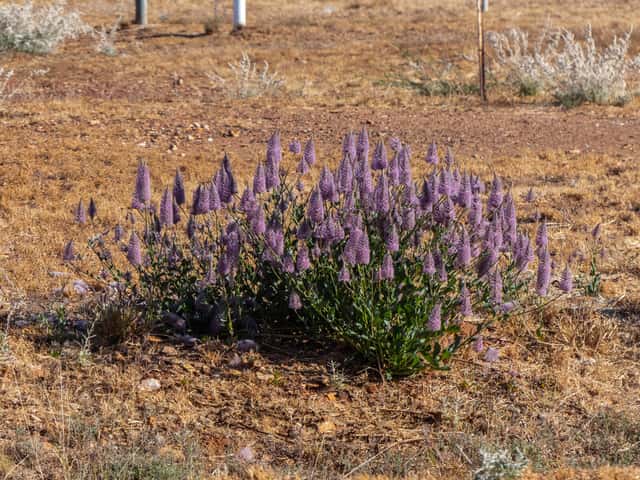
Amaranthaceae
Pink Mulla Mulla: Full Sun Plant
Ptilotus exaltatus
A sun-loving Australian native that thrives on neglect: give it full sun, sharply-draining sandy soil, and let it dry out completely between waterings. Overwatering and poor drainage are by far its biggest threats, commonly leading to root rot. It needs little to no fertiliser in reasonable soil and tolerates heat well, but is sensitive to frost and prolonged cold.
Every 10 days
Direct sun
10° - 38°C
20% - 40%
Categories
What is Pink Mulla Mulla?
Pink Mulla Mulla (Ptilotus exaltatus) is a medium-care plant from the Amaranthaceae family. Ptilotus exaltatus is a stiff, herbaceous to semi-woody annual or short-lived perennial in the Amaranthaceae family, native to the arid and semi-arid regions across much of Australia. It produces egg-shaped to oblong leaves up to 125 mm long and striking conical flower spikes, up to 150 mm long, in...
Pink Mulla Mulla grows up to 76cm, spread of 25cm, watering every 10 days, 10°C – 38°C, 20–40% humidity. It is not suitable for indoor environments and safe for pets.
Unlike many popular species, Pink Mulla Mulla is safe to keep around pets.
How to Care for Pink Mulla Mulla?
TLDR: Pink Mulla Mulla needs Direct sun, watering every 10 days, and temperatures between 10-38°C with 20-40% humidity.
How Often Should You Water Pink Mulla Mulla?
Water deeply but infrequently, only once the soil has dried out completely. Established plants are drought-tolerant and need watering roughly every 10 days at most; container specimens may need it a little more often in summer heat. Never let it sit in wet or waterlogged soil.
How Much Light Does Pink Mulla Mulla Need?
Give it as much direct sun as possible — at least 6 to 8 hours a day. Grown indoors or in shade, it becomes leggy and flowers poorly, so an unobstructed, sun-drenched spot (or bright full-sun windowsill) is essential.
What Is the Best Soil for Pink Mulla Mulla?
Plant in light, loose, sandy or gravelly soil with excellent drainage; a touch of compost helps but rich, moisture-retentive soil invites root rot. Raised beds or pots with drainage holes work well in heavier garden soils.
What Pot Should You Use for Pink Mulla Mulla?
Use an unglazed terracotta or another porous pot with generous drainage holes, paired with a free-draining sandy or gritty potting mix, to avoid the waterlogging this plant is highly sensitive to.
What Is Pink Mulla Mulla and Where Does It Come From?
Ptilotus exaltatus is a stiff, herbaceous to semi-woody annual or short-lived perennial in the Amaranthaceae family, native to the arid and semi-arid regions across much of Australia. It produces egg-shaped to oblong leaves up to 125 mm long and striking conical flower spikes, up to 150 mm long, in shades of pink to purple, giving rise to its "mulla mulla" and "lamb's tail" common names. It is a fast grower, often flowering within weeks from seed, but has a reputation among growers for being short-lived and not entirely reliable in cultivation outside its native dry climate.
How to Propagate Pink Mulla Mulla?
How Big Does Pink Mulla Mulla Grow?
TLDR: Pink Mulla Mulla can reach up to 76cm tall with Fast growth rate.
Max height
76cm
Spread
25cm
Growth rate
Fast
Foliage
Evergreen
Plant Uses
Ornamental
Great for decoration
Is your plant showing symptoms?
Click on the symptom to discover possible causes:
What Diseases Commonly Affect Pink Mulla Mulla?
TLDR: Pink Mulla Mulla is susceptible to 9 known diseases. Monitor regularly for early detection.
Root Rot
Root rot is a serious fungal disease that affects the root system of plants, causing them to decay and die. It is primarily caused by overwatering, poor drainage, or soil-borne fungi such as Pythium, Phytophthora, Rhizoctonia, and Fusarium. The disease thrives in waterlogged conditions where roots are deprived of oxygen, making them susceptible to fungal infection.
Phytophthora Root Rot
The Phytophthora genus consists of soil-borne oomycetes (water molds) that act as plant pathogens, primarily affecting trees and woody plants. It typically spreads through the root system, leading to systemic decline and eventual plant collapse.
Aphids
Aphids are small, soft-bodied, pear-shaped insects (1/16 to 1/8 inch long) that feed by sucking nutrient-rich sap from plants. They reproduce rapidly and can quickly weaken plants, causing distorted growth and transmitting plant viruses. Aphids come in various colors including green, black, red, yellow, brown, and gray. They secrete honeydew, a sticky substance that attracts ants and encourages sooty mold growth.
Scale Insects
Scale insects are small sap-sucking pests that appear as brown, shell-like bumps on plant stems and leaves. There are over 25 species, divided into armored (hard) and unarmored (soft) scales. They feed by piercing plant tissue and extracting sap, which weakens the plant and can lead to yellowing, stunted growth, and even death if left untreated. They also excrete honeydew, which attracts ants and promotes sooty mold growth.
Meaning & Symbolism
Among Australian native gardeners, Ptilotus exaltatus is often prized as an emblem of resilience — a plant that turns some of the continent's harshest, driest conditions into a striking, feathery bloom.
Compare with similar plants
| Attribute | Difficulty | Light | Watering | Pet Safe |
|---|---|---|---|---|
| Dark Fieldcap | Medium | Low light | 2d | ⚠️ |
| Azalea | Medium | Partial shade | 3d | ⚠️ |
| Muriel's Bamboo | Medium | Partial shade | 3d | ✓ |
| Bougainvillea | Medium | Direct sun | 7d | ⚠️ |




