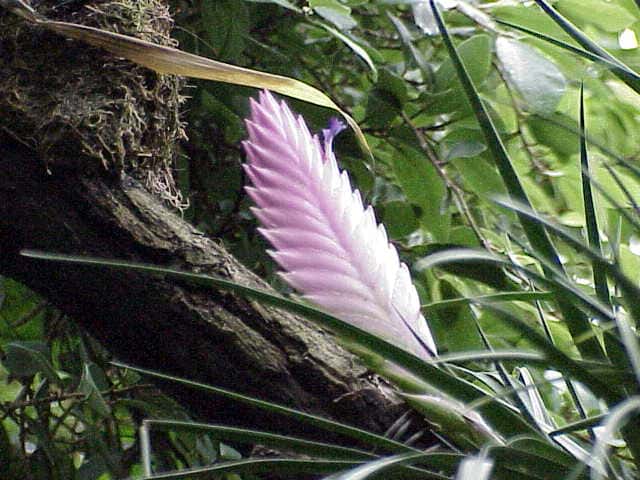
Bromeliaceae
Pink Quill: Pet-Safe Plant
Tillandsia cyanea
Grow in bright, indirect light with good air circulation; mount on bark or pot loosely in an open, fast-draining bromeliad mix. Water by misting or soaking weekly, always letting it dry fully between waterings, and avoid leaving water pooled in the base to prevent rot.
Every 7 days
Partial shade
12° - 25°C
40% - 60%
Categories
What is Pink Quill?
Pink Quill (Tillandsia cyanea) is a medium-care plant from the Bromeliaceae family. Tillandsia cyanea, known as the Pink Quill, is an epiphytic air plant native to Ecuador prized for its long-lasting bright pink flattened bract that rises from a rosette of narrow, arching green leaves. Unlike soil-grown houseplants, it has no true roots for absorbing nutrients -- instead it draws w...
Pink Quill grows up to 25cm, spread of 20cm, watering every 7 days, 12°C – 25°C, 40–60% humidity. It is suitable for indoor environments and safe for pets.
Unlike many popular species, Pink Quill is safe to keep around pets. Without adequate drainage, root rot can develop within 14 days.
How to Care for Pink Quill?
TLDR: Pink Quill needs Partial shade, watering every 7 days, and temperatures between 12-25°C with 40-60% humidity.
How Often Should You Water Pink Quill?
Water once a week by misting thoroughly or dunking in room-temperature, chlorine-free water for 20-30 minutes, then shake off excess and let it dry upside down so no water sits in the crown.
How Much Light Does Pink Quill Need?
Place near an east or west-facing window for bright, indirect light; a few hours of gentle morning sun is fine but protect from harsh midday direct sun which can scorch the leaves.
What Is the Best Soil for Pink Quill?
No soil needed -- this epiphyte grows best mounted on bark or in a loose, chunky orchid/bromeliad mix that lets air reach the base; never plant it in dense, moisture-retentive potting soil.
What Pot Should You Use for Pink Quill?
An open-slat wooden basket, mounted bark or driftwood, or a shallow terracotta dish without soil -- anything that allows airflow around the base.
Care Schedule
Fertilize
Every 14 days
Misting
Every 3 days
Rotate
Every 7 days
Repot
Every 365 days
What Is Pink Quill and Where Does It Come From?
Tillandsia cyanea, known as the Pink Quill, is an epiphytic air plant native to Ecuador prized for its long-lasting bright pink flattened bract that rises from a rosette of narrow, arching green leaves. Unlike soil-grown houseplants, it has no true roots for absorbing nutrients -- instead it draws water and nutrients through specialized trichomes on its leaves. Small tubular violet-blue flowers emerge one at a time from the pink bract, which itself can stay colorful for two to three months.
How to Propagate Pink Quill?
Pup (offset) division
The mother plant naturally declines after flowering but produces one or more pups first; letting pups mature longer before separating improves survival, though they can also be left attached to form a cluster.
- 1 Wait until the pup (baby plant growing at the base) reaches at least one-third the size of the mother plant
- 2 Gently twist or cut the pup away from the mother plant with a clean, sharp blade close to its base
- 3 Let the cut surface dry for a few hours before resuming normal watering
- 4 Mount the pup on bark or place it loosely in an airy bromeliad mix and care for it as an adult plant
Materials needed:
How Big Does Pink Quill Grow?
TLDR: Pink Quill can reach up to 25cm tall with Slow growth rate.
Max height
25cm
Spread
20cm
Growth rate
Slow
Foliage
Evergreen
Plant Uses
Ornamental
Great for decoration
Air Purifying
Improves air quality
Is your plant showing symptoms?
Click on the symptom to discover possible causes:
What Diseases Commonly Affect Pink Quill?
TLDR: Pink Quill is susceptible to 7 known diseases. Monitor regularly for early detection.
Root Rot
Root rot is a serious fungal disease that affects the root system of plants, causing them to decay and die. It is primarily caused by overwatering, poor drainage, or soil-borne fungi such as Pythium, Phytophthora, Rhizoctonia, and Fusarium. The disease thrives in waterlogged conditions where roots are deprived of oxygen, making them susceptible to fungal infection.
Crown Rot
Crown rot is a serious fungal disease that attacks the crown (base) of the plant where the stem meets the soil. It is caused by various fungal pathogens including Phytophthora, Fusarium, and Rhizoctonia. The disease thrives in waterlogged conditions and can quickly spread to kill the entire plant if not addressed promptly.
Overwatering
Overwatering occurs when plants receive too much water, depriving roots of oxygen and causing root rot. This environmental stress is one of the most common causes of houseplant death, as waterlogged soil prevents roots from breathing and functioning properly.
Scale Insects
Scale insects are small sap-sucking pests that appear as brown, shell-like bumps on plant stems and leaves. There are over 25 species, divided into armored (hard) and unarmored (soft) scales. They feed by piercing plant tissue and extracting sap, which weakens the plant and can lead to yellowing, stunted growth, and even death if left untreated. They also excrete honeydew, which attracts ants and promotes sooty mold growth.
Meaning & Symbolism
The Pink Quill's vivid, long-lasting bloom is often seen as a symbol of resilience and quiet beauty, thriving without soil and drawing life from the air itself.
Compare with similar plants
| Attribute | Difficulty | Light | Watering | Pet Safe |
|---|---|---|---|---|
| Dark Fieldcap | Medium | Low light | 2d | ⚠️ |
| Azalea | Medium | Partial shade | 3d | ⚠️ |
| Muriel's Bamboo | Medium | Partial shade | 3d | ✓ |
| Bougainvillea | Medium | Direct sun | 7d | ⚠️ |
Choose & Compare
Sources & References
- Pink Quill Plant: Tillandsia Cyanea Growing Guide
- Tillandsia cyanea | pink quill - RHS
- Are Air Plants Toxic to Cats and Dogs?
- ASPCA Toxic and Non-Toxic Plant Search
- Tillandsia Cyanea Pink Quill Plant Care
- Notes from Tillandsia II: Tillandsia cyanea
- Tillandsia cyanea - How to grow & care
- Cultivo y cuidados de Tillandsia cyanea
- Tillandsia Cyanea o Pluma Rosa - Tillandsias y más




