Asparagaceae
Beaucarnea (Ponytail Palm) Care Guide
Beaucarnea
Give Beaucarnea bright light, let the soil dry out completely between waterings, and use a fast-draining succulent or cactus mix. It thrives on benign neglect: overwatering is by far the most common cause of failure, since the swollen caudex stores water and rots quickly if kept wet.
Every 21 days
Bright indirect
10° - 35°C
30% - 50%
Categories
What is Ponytail Palm?
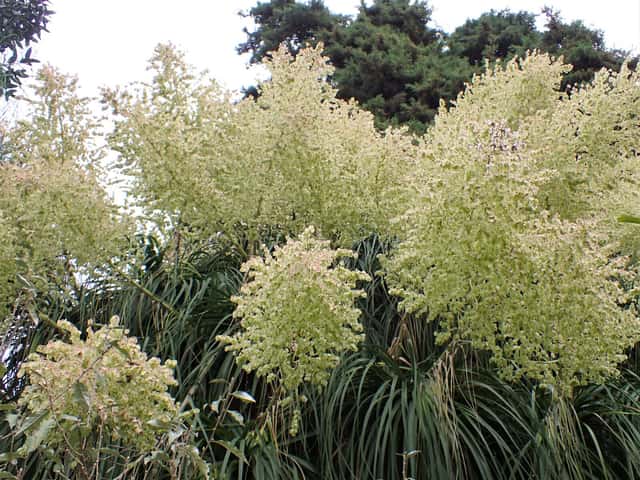
Ponytail Palm (Beaucarnea) is a easy-care plant from the Asparagaceae family. Beaucarnea is a genus of slow-growing, drought-tolerant succulent trees native to the arid regions of eastern Mexico, prized for the bulbous, water-storing caudex at its base and the long, gracefully arching ribbon-like leaves that give it its "ponytail" look. Despite the common name, it is not a tr...
Ponytail Palm grows up to 9.0m, spread of 200cm, watering every 21 days, 10°C – 35°C, 30–50% humidity. It is suitable for indoor environments and safe for pets.
Unlike many tropical plants, Ponytail Palm tolerates watering mistakes. Best for beginners. Unlike many popular species, Ponytail Palm is safe to keep around pets. Without adequate drainage, root rot can develop within 42 days.
How to Care for Ponytail Palm?
TLDR: Ponytail Palm needs Bright indirect, watering every 21 days, and temperatures between 10-35°C with 30-50% humidity.
How Often Should You Water Ponytail Palm?
Water deeply, then wait until the soil is completely dry before watering again - roughly every 2-3 weeks in the growing season and monthly or less in winter. When in doubt, wait longer, since the caudex is a built-in water reservoir.
How Much Light Does Ponytail Palm Need?
Place in bright, indirect light with some direct morning sun for the best growth; low light causes thin, pale, leggy leaves over time.
What Is the Best Soil for Ponytail Palm?
Use a well-draining cactus/succulent mix, or amend regular potting soil with perlite or coarse sand, and always plant in a pot with drainage holes.
What Pot Should You Use for Ponytail Palm?
A shallow, unglazed terracotta pot with drainage holes is ideal, since terracotta wicks away excess moisture and helps prevent rot around the caudex.
Care Schedule
Fertilize
Every 60 days
What Is Ponytail Palm and Where Does It Come From?
Beaucarnea is a genus of slow-growing, drought-tolerant succulent trees native to the arid regions of eastern Mexico, prized for the bulbous, water-storing caudex at its base and the long, gracefully arching ribbon-like leaves that give it its "ponytail" look. Despite the common name, it is not a true palm but a member of the Asparagaceae family (subfamily Nolinoideae), most closely related to Dracaena and Nolina. The most widely cultivated species, Beaucarnea recurvata, is grown around the world as a low-maintenance houseplant and landscape specimen thanks to its resilience to neglect and infrequent watering.
How to Propagate Ponytail Palm?
Offset (Pup) Division
Pups usually only form on mature plants (10+ years) grown in high light; not every specimen will produce them.
- 1 Wait until the plant is mature and has produced offsets (pups) at the base of the caudex.
- 2 Gently remove the potting mix around the pup to expose where it attaches to the parent plant.
- 3 Use a clean, sharp knife to separate the pup, keeping as many of its own roots intact as possible.
- 4 Let the cut surface callus over for 1-2 days in a dry, shaded spot.
- 5 Pot the pup in a well-draining succulent mix and keep lightly moist until new growth appears.
Materials needed:
Seed Propagation
Germination is slow and inconsistent; patience is essential and not all seeds will sprout.
- 1 Soak fresh seeds in warm water overnight to soften the seed coat.
- 2 Sow seeds shallowly in a moist, well-draining sand-based mix.
- 3 Keep at a warm, consistent temperature of about 18-21C (65-70F) with bright, indirect light.
- 4 Maintain even moisture until germination, which can take anywhere from 2 weeks to a few months.
- 5 Pot up seedlings once they have a few true leaves and a visibly swelling caudex.
Materials needed:
How Big Does Ponytail Palm Grow?
TLDR: Ponytail Palm can reach up to 9.0m tall with Slow growth rate.
Max height
9.0m
Spread
2.0m
Growth rate
Slow
Foliage
Evergreen
Plant Uses
Ornamental
Great for decoration
Is your plant showing symptoms?
Click on the symptom to discover possible causes:
What Diseases Commonly Affect Ponytail Palm?
TLDR: Ponytail Palm is susceptible to 4 known diseases. Monitor regularly for early detection.
Root Rot
Root rot is a serious fungal disease that affects the root system of plants, causing them to decay and die. It is primarily caused by overwatering, poor drainage, or soil-borne fungi such as Pythium, Phytophthora, Rhizoctonia, and Fusarium. The disease thrives in waterlogged conditions where roots are deprived of oxygen, making them susceptible to fungal infection.
Spider Mites
Spider mites are tiny arachnids (less than 1/20 inch long) related to spiders and ticks that feed on plant sap. They thrive in hot, dry conditions and can cause significant damage to ornamental and vegetable plants. During severe infestations, crop losses can reach 14% or higher as these pests disrupt vital plant processes including photosynthesis, carbon dioxide absorption, and transpiration.
Mealybugs
Mealybugs are small, soft-bodied insects covered with a white, waxy, cottony material. They are common pests of houseplants and outdoor plants in mild climates. These sap-sucking insects feed on plant tissue, causing damage, stunted growth, and can lead to plant death if left untreated. They produce sticky honeydew which attracts sooty mold.
Scale Insects
Scale insects are small sap-sucking pests that appear as brown, shell-like bumps on plant stems and leaves. There are over 25 species, divided into armored (hard) and unarmored (soft) scales. They feed by piercing plant tissue and extracting sap, which weakens the plant and can lead to yellowing, stunted growth, and even death if left untreated. They also excrete honeydew, which attracts ants and promotes sooty mold growth.
Meaning & Symbolism
Beaucarnea's name comes from Latin for "good harvest," and its ability to store water and thrive through neglect has made it a popular symbol of resilience, patience and self-sufficiency.
Fun Facts
Despite being called a "palm," Beaucarnea is not related to true palms at all - it is closer to Dracaena and asparagus.
The swollen base, called a caudex, can store months worth of water, letting the plant survive long droughts in the wild.
In its native Mexico, mature specimens can live for many decades and eventually grow branched, tree-like crowns several meters tall.
The genus name honors 19th-century French botanist Jean-Baptiste Beaucarne.
Frequently asked questions
Is Beaucarnea (Ponytail Palm) toxic to cats and dogs?
How often should I water my Ponytail Palm?
Why are the leaf tips turning brown?
Is Beaucarnea a true palm tree?
Compare with similar plants
| Attribute | Difficulty | Light | Watering | Pet Safe |
|---|---|---|---|---|
| Field Maple | Easy | Bright indirect | 14d | ✓ |
| Silver Birch | Easy | Direct sun | 14d | ✓ |
| Common Blanketflower | Easy | Direct sun | 10d | ✓ |
| Cushion Bush | Easy | Direct sun | 14d | ✓ |
Choose & Compare
Sources & References
- Ponytail Palm (Beaucarnea Recurvata) Guide - OurHouseplants
- Toxic and Non-toxic Plants: Pony Tail - ASPCA
- Beaucarnea recurvata (Ponytail Palm) - World of Succulents
- Ponytail Palm (Beaucarnea recurvata) - Gardenia.net
- Beaucarnea recurvata - NC State Extension Plant Toolbox
- Beaucarnea recurvata - Missouri Botanical Garden Plant Finder
- Beaucarnea recurvata: Ponytail Palm - UF/IFAS Environmental Horticulture





