Amaryllidaceae
How to Grow Powell's Crinum Lily (Crinum x powellii)
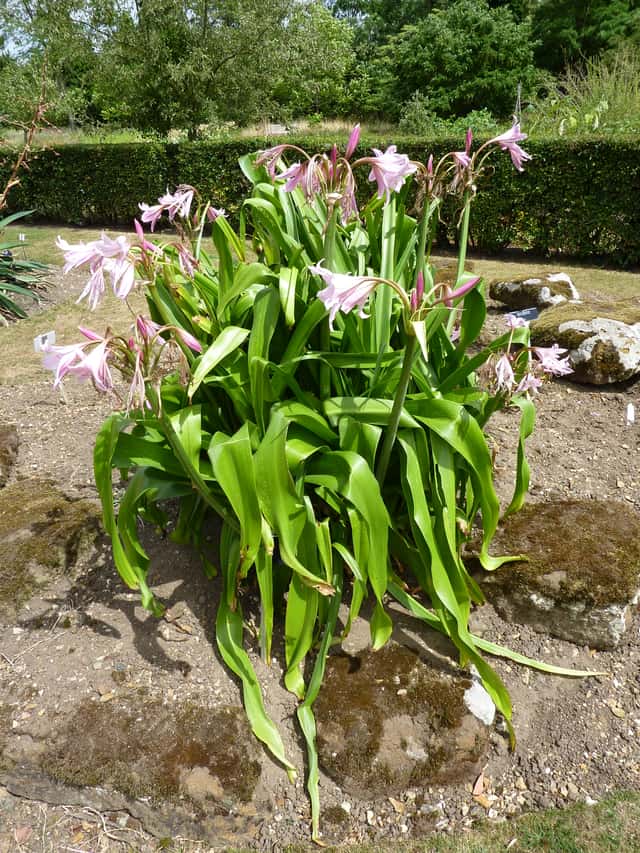
Crinum x powellii
Powell's Crinum Lily is a low-maintenance, drought-tolerant bulb best grown in a sunny, sheltered spot with well-draining soil. Water regularly during the growing season and reduce watering in winter. Fertilize monthly in spring and summer. Mulch the bulbs heavily in colder regions to protect from frost. Divide clumps every few years to maintain vigour.
Every 7 days
Bright indirect
5° - 30°C
40% - 70%
Categories
What is Powell's Crinum Lily?
Powell's Crinum Lily (Crinum x powellii) is a easy-care plant from the Amaryllidaceae family. Crinum x powellii, commonly known as Powell's Crinum Lily, is a stunning hybrid bulbous perennial resulting from a cross between two South African species, Crinum bulbispermum and Crinum moorei. It produces large, strap-like leaves and tall flower spikes bearing fragrant, trumpet-shaped flowers in s...
Powell's Crinum Lily grows up to 1.5m, spread of 80cm, watering every 7 days, 5°C – 30°C, 40–70% humidity. It is not suitable for indoor environments and not safe for pets.
Unlike many tropical plants, Powell's Crinum Lily tolerates watering mistakes. Best for beginners. Without precautions, ingestion can cause irritation in pets. Keep out of reach of cats and dogs.
How to Care for Powell's Crinum Lily?
TLDR: Powell's Crinum Lily needs Bright indirect, watering every 7 days, and temperatures between 5-30°C with 40-70% humidity.
How Often Should You Water Powell's Crinum Lily?
Water every 7–10 days during the growing season, ensuring the soil is moist but never waterlogged. Reduce watering significantly in autumn and winter when the plant is dormant. Always allow the top layer of soil to dry slightly between waterings to prevent bulb rot.
How Much Light Does Powell's Crinum Lily Need?
Place in full sun for best flowering — at least 6 hours of direct sunlight daily. It tolerates partial shade but will produce fewer flowers. In very hot climates, light afternoon shade can prevent leaf scorch.
What Is the Best Soil for Powell's Crinum Lily?
Plant in well-draining, fertile soil enriched with organic matter. It tolerates loamy, sandy, or chalky soils. Avoid heavy clay or waterlogged ground, as prolonged wet conditions will cause bulb rot. Adding coarse sand or grit to heavy soils improves drainage.
What Pot Should You Use for Powell's Crinum Lily?
For container growing, use a large terracotta or clay pot (at least 40–50 cm diameter) with ample drainage holes. Deep pots are preferred as Crinum bulbs grow large and need room. Outdoors, border planting in well-prepared garden soil is ideal.
Care Schedule
Fertilize
Every 30 days
Repot
Every 730 days
What Is Powell's Crinum Lily and Where Does It Come From?
Crinum x powellii, commonly known as Powell's Crinum Lily, is a stunning hybrid bulbous perennial resulting from a cross between two South African species, Crinum bulbispermum and Crinum moorei. It produces large, strap-like leaves and tall flower spikes bearing fragrant, trumpet-shaped flowers in shades of pink to white during late summer. A hardy and long-lived garden plant, it thrives in borders, cottage gardens, and warm temperate climates.
How to Propagate Powell's Crinum Lily?
Offset Division
Divide clumps every 3–5 years in spring. Avoid dividing when the plant is in active flower. The larger the offset bulb, the sooner it will bloom.
- 1 Wait until offsets (small bulblets) are at least 10–15 cm tall alongside the mother plant.
- 2 Carefully dig around the clump with a fork, lifting the entire root mass.
- 3 Gently separate the offset bulbs from the main bulb, keeping roots intact.
- 4 Replant offsets at the same depth as the mother plant in well-draining soil.
- 5 Water in well and keep moist until established.
Materials needed:
How Big Does Powell's Crinum Lily Grow?
TLDR: Powell's Crinum Lily can reach up to 1.5m tall with Slow growth rate.
Max height
1.5m
Spread
80cm
Growth rate
Slow
Foliage
Deciduous
Warning: Toxic Plant
This plant can be toxic if ingested. Keep out of reach of:
Plant Uses
Ornamental
Great for decoration
Is your plant showing symptoms?
Click on the symptom to discover possible causes:
What Diseases Commonly Affect Powell's Crinum Lily?
TLDR: Powell's Crinum Lily is susceptible to 4 known diseases. Monitor regularly for early detection.
Root Rot
Root rot is a serious fungal disease that affects the root system of plants, causing them to decay and die. It is primarily caused by overwatering, poor drainage, or soil-borne fungi such as Pythium, Phytophthora, Rhizoctonia, and Fusarium. The disease thrives in waterlogged conditions where roots are deprived of oxygen, making them susceptible to fungal infection.
Slugs and Snails
Slugs and snails are mollusks that feed on plant tissue, causing irregular holes in leaves and damage to young seedlings. They are most active at night and in moist conditions, leaving characteristic silvery slime trails. These pests can quickly devastate gardens, especially during wet seasons.
Aphids
Aphids are small, soft-bodied, pear-shaped insects (1/16 to 1/8 inch long) that feed by sucking nutrient-rich sap from plants. They reproduce rapidly and can quickly weaken plants, causing distorted growth and transmitting plant viruses. Aphids come in various colors including green, black, red, yellow, brown, and gray. They secrete honeydew, a sticky substance that attracts ants and encourages sooty mold growth.
Spider Mites
Spider mites are tiny arachnids (less than 1/20 inch long) related to spiders and ticks that feed on plant sap. They thrive in hot, dry conditions and can cause significant damage to ornamental and vegetable plants. During severe infestations, crop losses can reach 14% or higher as these pests disrupt vital plant processes including photosynthesis, carbon dioxide absorption, and transpiration.
Meaning & Symbolism
Powell's Crinum Lily symbolises elegance, grace, and the beauty of late summer. Its dramatic blooms and resilient nature make it a symbol of endurance and natural abundance in cottage garden traditions.
Fun Facts
Crinum x powellii is a hybrid created in the 19th century by crossing two South African species: Crinum bulbispermum and Crinum moorei.
A mature clump can produce 5 to 40 fragrant flower spikes in a single season.
Powell's Crinum Lily is surprisingly hardy and can survive temperatures as low as -15°C with adequate mulching.
The flower spikes open in succession, meaning a single spike can produce blooms over several weeks.
Frequently asked questions
How often should I water Powell's Crinum Lily?
Is Crinum x powellii toxic to pets?
How do I propagate Powell's Crinum Lily?
When does Crinum x powellii bloom?
Can I grow Powell's Crinum Lily in a pot?
Compare with similar plants
| Attribute | Difficulty | Light | Watering | Pet Safe |
|---|---|---|---|---|
| Field Maple | Easy | Bright indirect | 14d | ✓ |
| Silver Birch | Easy | Direct sun | 14d | ✓ |
| Common Blanketflower | Easy | Direct sun | 10d | ✓ |
| Cushion Bush | Easy | Direct sun | 14d | ✓ |





