Oleaceae
Privet (Ligustrum): Complete Care Guide and Landscape Uses
Ligustrum
Privet is a low-maintenance, highly adaptable shrub. It thrives in full sun to partial shade, requires moderate watering (drought-tolerant once established), prefers well-drained soil, and benefits from regular pruning to maintain shape. Fertilize monthly during the growing season. Container-grown plants should be repotted every 2–3 years.
Every 10 days
Bright indirect
-10° - 38°C
40% - 70%
Categories
What is Privet?
Privet (Ligustrum) is a easy-care plant from the Oleaceae family. Privet (Ligustrum) is a genus of over 50 species of evergreen, semi-evergreen, and deciduous shrubs and small trees in the family Oleaceae. Originating primarily in Asia and Europe, privets are among the most widely used landscape shrubs worldwide, prized for their fast growth, tolerance of frequent...
Privet grows up to 6.0m, spread of 450cm, watering every 10 days, -10°C – 38°C, 40–70% humidity. It is not suitable for indoor environments and not safe for pets.
Unlike many tropical plants, Privet tolerates watering mistakes. Best for beginners. Without precautions, ingestion can cause irritation in pets. Keep out of reach of cats and dogs.
How to Care for Privet?
TLDR: Privet needs Bright indirect, watering every 10 days, and temperatures between -10-38°C with 40-70% humidity.
How Often Should You Water Privet?
Water thoroughly during hot weather whenever the topsoil dries out. Once established, privet tolerates dry spells well. Reduce watering in winter, but do not let the root ball dry out completely. Avoid waterlogging, which can cause root rot.
How Much Light Does Privet Need?
Privet thrives in full sun and adapts well to partial shade. More sunlight promotes denser, more compact growth and heavier flowering. Avoid deep shade where the plant becomes leggy and less vigorous.
What Is the Best Soil for Privet?
Prefers fertile, well-draining soil with pH between 5.5 and 7.5. Adapts to clay, sandy, and chalky soils as long as drainage is adequate. Amend planting holes with compost to support establishment. Avoid waterlogged conditions.
What Pot Should You Use for Privet?
Terracotta or fiberglass pots are ideal for container cultivation, providing stability and good aeration. Use medium to large containers (minimum 30 cm diameter) to accommodate the vigorous root system. Ensure adequate drainage holes.
Care Schedule
Fertilize
Every 90 days
What Is Privet and Where Does It Come From?
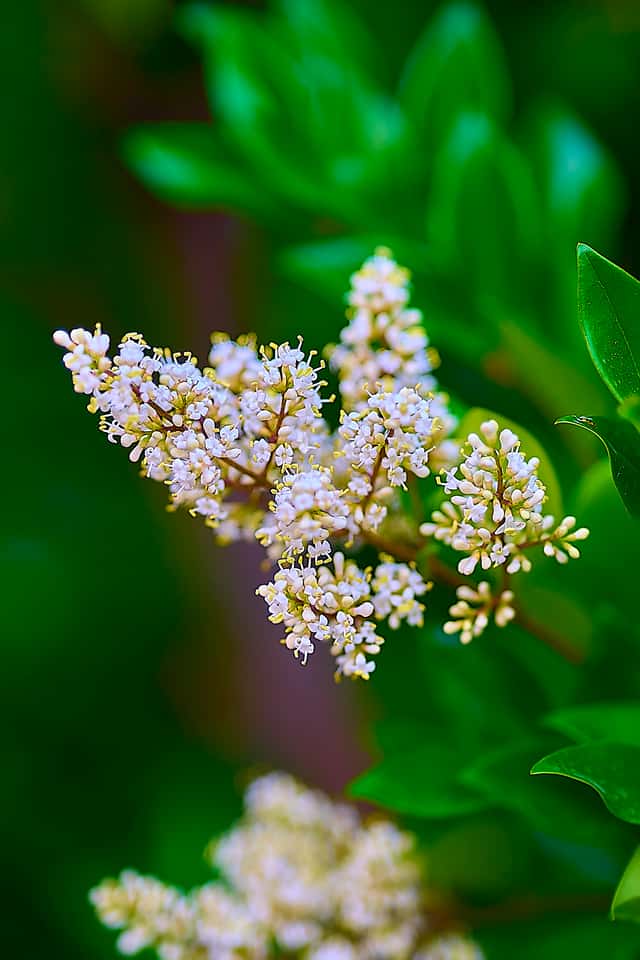
Privet (Ligustrum) is a genus of over 50 species of evergreen, semi-evergreen, and deciduous shrubs and small trees in the family Oleaceae. Originating primarily in Asia and Europe, privets are among the most widely used landscape shrubs worldwide, prized for their fast growth, tolerance of frequent pruning, and adaptability to varied soil types. The most commonly cultivated species include L. japonicum, L. lucidum, L. sinense, L. vulgare, and L. ovalifolium. Leaves are oval to elliptic, typically dark glossy green. Small, fragrant white flowers appear in summer, followed by small black berries that are toxic if ingested. Several species have become invasive outside their native range, particularly in the Americas and Australia.
How to Propagate Privet?
Semi-hardwood stem cutting
Use sterilized tools. Cover with a clear plastic bag to retain humidity. Replace medium if mold appears.
- 1 Select a healthy semi-hardwood shoot 10–15 cm long
- 2 Remove lower leaves, leaving only 2–3 at the tip
- 3 Apply rooting hormone powder or gel to the cut base
- 4 Insert into moist, well-draining medium (sand and perlite mix)
- 5 Keep in bright indirect light with high humidity
- 6 Roots should develop in 3–5 weeks
Materials needed:
Seed propagation
Germination is slow and erratic. Cuttings are preferred for faster, more reliable results.
- 1 Collect ripe (black) berries and extract seeds
- 2 Cold-stratify seeds for 4–6 weeks before sowing
- 3 Sow in lightly moist seed compost at 20–25°C
- 4 Keep in a bright location away from direct sun
- 5 Transplant seedlings when they reach 5–10 cm tall
Materials needed:
How Big Does Privet Grow?
TLDR: Privet can reach up to 6.0m tall with Fast growth rate.
Max height
6.0m
Spread
4.5m
Growth rate
Fast
Foliage
Evergreen
Warning: Toxic Plant
This plant can be toxic if ingested. Keep out of reach of:
Plant Uses
Ornamental
Great for decoration
Medicinal Uses
- Ligustrum lucidum (glossy privet) is used in Traditional Chinese Medicine as a kidney and liver tonic (Nu Zhen Zi)
- Bark and leaf extracts have been used historically in European folk medicine as astringents
Culinary Uses
- Berries are toxic — do not consume
- No established culinary use
Is your plant showing symptoms?
Click on the symptom to discover possible causes:
What Diseases Commonly Affect Privet?
TLDR: Privet is susceptible to 12 known diseases. Monitor regularly for early detection.
Anthracnose
Anthracnose is a fungal disease caused by fungi in the genus Colletotrichum that affects many plants, including vegetables, fruits, and trees. The disease thrives in cool, wet conditions, causing dark, sunken lesions on leaves, stems, flowers, and fruits.
Leaf Spot
Leaf spot is a common fungal disease caused by various pathogens including Alternaria, Ascochyta, Colletotrichum, Septoria, and Venturia. It primarily affects leaves, causing discolored spots that can lead to premature leaf drop if left untreated.
Powdery Mildew
Powdery mildew is a common fungal disease caused by various fungi species including Erysiphe, Podosphaera, Oïdium, and Leveillula. It affects over 10,000 plant species worldwide. The disease thrives in warm, dry climates with high humidity and appears as a distinctive white powdery coating on plant surfaces.
Root Rot
Root rot is a serious fungal disease that affects the root system of plants, causing them to decay and die. It is primarily caused by overwatering, poor drainage, or soil-borne fungi such as Pythium, Phytophthora, Rhizoctonia, and Fusarium. The disease thrives in waterlogged conditions where roots are deprived of oxygen, making them susceptible to fungal infection.
Meaning & Symbolism
In European garden tradition, privet hedges symbolize privacy, boundary, and protection. The fragrant white flowers are associated with summer abundance and attract pollinators. In the language of flowers, privet represents discretion and understated elegance.
Fun Facts
Ligustrum lucidum can grow up to 15 metres tall when allowed to grow as a tree without pruning
Privet flowers are highly fragrant and are an important nectar source for bees in early summer
The genus Ligustrum contains over 50 species, most native to China and Japan
Several privet species are considered invasive in South America, North America, and Australia due to their prolific seeding
Frequently asked questions
How often should I water privet?
Can privet be grown in a pot?
Is privet toxic?
When and how should I prune privet?
Does privet flower?
Compare with similar plants
| Attribute | Difficulty | Light | Watering | Pet Safe |
|---|---|---|---|---|
| Field Maple | Easy | Bright indirect | 14d | ✓ |
| Silver Birch | Easy | Direct sun | 14d | ✓ |
| Common Blanketflower | Easy | Direct sun | 10d | ✓ |
| Cushion Bush | Easy | Direct sun | 14d | ✓ |





