Zygophyllaceae
Puncturevine: Ground Cover Plant
Tribulus terrestris
A very low-maintenance plant that thrives in arid and sunny conditions. Ideal for poor, sandy soils where few species survive.
Every 10 days
Direct sun
10° - 40°C
20% - 50%
Categories
What is Puncturevine?
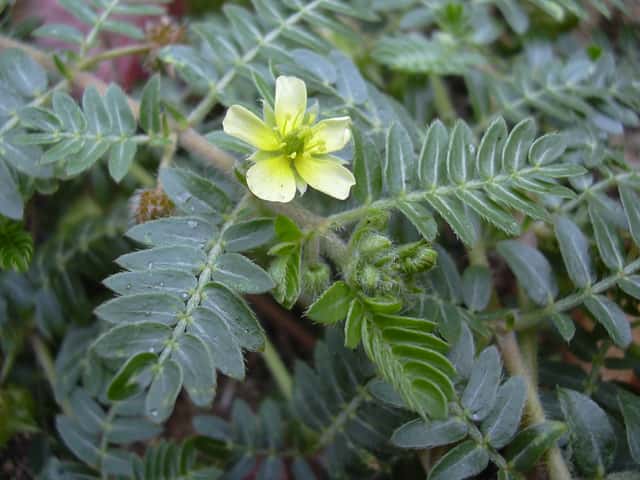
Puncturevine (Tribulus terrestris) is a easy-care plant from the Zygophyllaceae family. Tribulus terrestris is a prostrate herbaceous plant, famous for its fruits covered in rigid spines that can penetrate light surfaces and cause injury. Native to warm and temperate regions of the Old World, it is considered a pioneer species and often an invasive weed due to its extreme resilience. I...
Puncturevine grows up to 60cm, spread of 150cm, watering every 10 days, 10°C – 40°C, 20–50% humidity. It is not suitable for indoor environments and not safe for pets.
Unlike many tropical plants, Puncturevine tolerates watering mistakes. Best for beginners. Without precautions, ingestion can cause irritation in pets. Keep out of reach of cats and dogs.
How to Care for Puncturevine?
TLDR: Puncturevine needs Direct sun, watering every 10 days, and temperatures between 10-40°C with 20-50% humidity.
How Often Should You Water Puncturevine?
Rarely needs watering once established. Overwatering is the most common cause of plant death due to root rot.
How Much Light Does Puncturevine Need?
Requires constant full sun. In shaded areas, the plant will grow weakly, with leggy stems and without producing flowers.
What Is the Best Soil for Puncturevine?
Prefere poor, sandy, or rocky soils. Avoid soils rich in organic matter or those that retain too much moisture.
What Pot Should You Use for Puncturevine?
Not recommended for indoor cultivation; if grown in pots, use wide and shallow containers with excellent drainage.
Care Schedule
Fertilize
Every 30 days
What Is Puncturevine and Where Does It Come From?
Tribulus terrestris is a prostrate herbaceous plant, famous for its fruits covered in rigid spines that can penetrate light surfaces and cause injury. Native to warm and temperate regions of the Old World, it is considered a pioneer species and often an invasive weed due to its extreme resilience. Its leaves are pinnate and its five-petaled yellow flowers open during the day. In traditional medicine, especially in Ayurveda and Chinese medicine, it is used to treat various conditions, being popularly associated with increased vitality and libido.
How to Propagate Puncturevine?
Sowing
- Seeds can remain viable in the soil for many years.
- Be careful when handling the fruits, as the spines are very sharp.
- 1 Seed Collection
Harvest the dry, woody fruits (spines) from the plant in late summer or fall.
- 2 Soil Preparation
Prepare a seedbed with predominantly sandy and well-drained soil.
- 3 Planting
Press the fruits or individual seeds into the soil to a depth of about 1 cm.
- 4 Germination
Keep the soil slightly moist until the first seedlings appear; then, drastically reduce watering.
Materials needed:
How Big Does Puncturevine Grow?
TLDR: Puncturevine can reach up to 60cm tall with Fast growth rate.
Max height
60cm
Spread
1.5m
Growth rate
Fast
Foliage
Deciduous
Warning: Toxic Plant
This plant can be toxic if ingested. Keep out of reach of:
Plant Uses
Medicinal
Medicinal properties
Edible
Can be consumed
Ground Cover
Soil coverage
Medicinal Uses
- Libido and sexual function support
- Diuretic properties
- Traditional treatment for kidney stones
- Aid in reducing inflammation
Is your plant showing symptoms?
Click on the symptom to discover possible causes:
What Diseases Commonly Affect Puncturevine?
TLDR: Puncturevine is susceptible to 6 known diseases. Monitor regularly for early detection.
Powdery Mildew
Powdery mildew is a common fungal disease caused by various fungi species including Erysiphe, Podosphaera, Oïdium, and Leveillula. It affects over 10,000 plant species worldwide. The disease thrives in warm, dry climates with high humidity and appears as a distinctive white powdery coating on plant surfaces.
Aphids
Aphids are small, soft-bodied, pear-shaped insects (1/16 to 1/8 inch long) that feed by sucking nutrient-rich sap from plants. They reproduce rapidly and can quickly weaken plants, causing distorted growth and transmitting plant viruses. Aphids come in various colors including green, black, red, yellow, brown, and gray. They secrete honeydew, a sticky substance that attracts ants and encourages sooty mold growth.
Caterpillars
Caterpillars are the larval stage of moths and butterflies that feed voraciously on plant foliage, stems, flowers, and fruits. Common species include cabbage loopers, tomato hornworms, armyworms, and cutworms. These pests can cause extensive damage by consuming large amounts of plant tissue in a short time. They vary in size from small (1/4 inch) to large (5 inches), with colors ranging from green to brown, often featuring stripes or spots. Caterpillars are highly mobile and can quickly spread throughout gardens, making them one of the most destructive common pests.
Spider Mites
Spider mites are tiny arachnids (less than 1/20 inch long) related to spiders and ticks that feed on plant sap. They thrive in hot, dry conditions and can cause significant damage to ornamental and vegetable plants. During severe infestations, crop losses can reach 14% or higher as these pests disrupt vital plant processes including photosynthesis, carbon dioxide absorption, and transpiration.
Meaning & Symbolism
Represents tenacity, survival in adverse conditions, and defensive protection.
Compare with similar plants
| Attribute | Difficulty | Light | Watering | Pet Safe |
|---|---|---|---|---|
| Field Maple | Easy | Bright indirect | 14d | ✓ |
| Silver Birch | Easy | Direct sun | 14d | ✓ |
| Common Blanketflower | Easy | Direct sun | 10d | ✓ |
| Cushion Bush | Easy | Direct sun | 14d | ✓ |





