Lythraceae
Purple Loosestrife: Edible Plant
Lythrum salicaria
Full sun, constantly moist to wet soil, fast and vigorous growth; requires active management to prevent uncontrolled spread into wild areas.
Every 3 days
Bright indirect
-25° - °C
% - %
Categories
What is Purple Loosestrife?
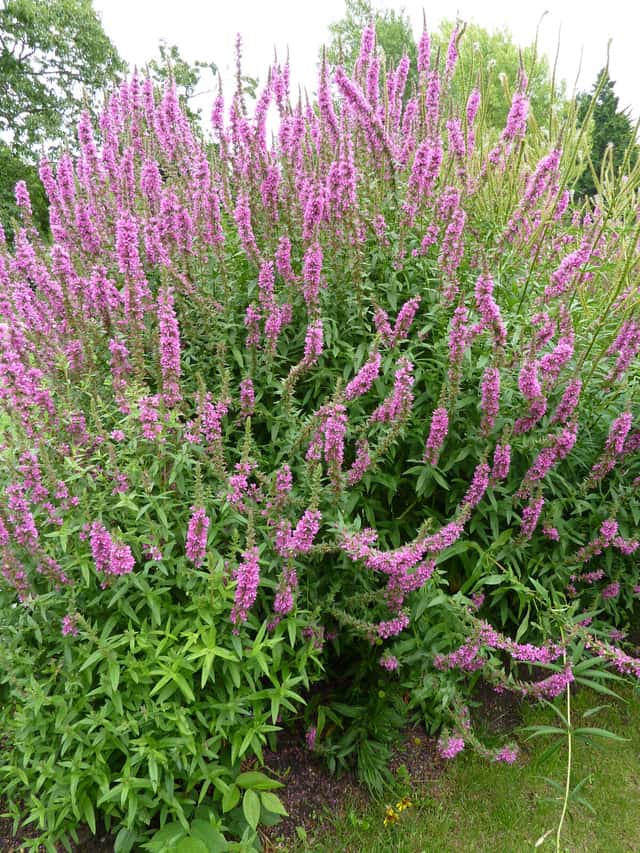
Purple Loosestrife (Lythrum salicaria) is a easy-care plant from the Lythraceae family. Purple loosestrife is a wetland perennial native to Europe and Asia, prized for its tall, showy spikes of magenta-purple flowers that bloom through summer. It grows vigorously in moist meadows, marshes, and pond margins. WARNING: it is a highly invasive species in North American wetlands, where it f...
Purple Loosestrife grows up to 1.8m, spread of 90cm, watering every 3 days. It is not suitable for indoor environments and safe for pets.
Unlike many tropical plants, Purple Loosestrife tolerates watering mistakes. Best for beginners. Unlike many popular species, Purple Loosestrife is safe to keep around pets.
How to Care for Purple Loosestrife?
TLDR: Purple Loosestrife needs Bright indirect, watering every 3 days, and temperatures between -25-30°C with 40-70% humidity.
How Often Should You Water Purple Loosestrife?
Keep soil consistently moist to waterlogged; the plant tolerates growing in shallow standing water. Water frequently in containers and never let it dry out.
How Much Light Does Purple Loosestrife Need?
Thrives in full sun (6+ hours of direct light daily); tolerates partial shade but flowers less profusely.
What Is the Best Soil for Purple Loosestrife?
Adapts to sandy, loamy, or clay soils as long as they stay moist; tolerates mildly acidic to mildly alkaline pH.
What Pot Should You Use for Purple Loosestrife?
If grown in a container, use a large pot with no drainage hole or set in a saucer kept constantly filled with water, as for marginal bog/aquatic plants.
Care Schedule
Fertilize
Every 14 days
Misting
Every 3 days
Rotate
Every 7 days
Repot
Every 365 days
What Is Purple Loosestrife and Where Does It Come From?
Purple loosestrife is a wetland perennial native to Europe and Asia, prized for its tall, showy spikes of magenta-purple flowers that bloom through summer. It grows vigorously in moist meadows, marshes, and pond margins. WARNING: it is a highly invasive species in North American wetlands, where it forms dense monocultures that crowd out native vegetation — planting and sale are banned or restricted in many US states and Canadian provinces.
How Big Does Purple Loosestrife Grow?
TLDR: Purple Loosestrife can reach up to 1.8m tall with Fast growth rate.
Max height
1.8m
Spread
90cm
Growth rate
Fast
Foliage
Deciduous
Plant Uses
Ornamental
Great for decoration
Medicinal
Medicinal properties
Edible
Can be consumed
Medicinal Uses
- Astringent herb traditionally used for diarrhea and dysentery
- Applied topically for wounds and eczema
Culinary Uses
- Young cooked leaves, rich in calcium
Is your plant showing symptoms?
Click on the symptom to discover possible causes:
What Diseases Commonly Affect Purple Loosestrife?
TLDR: Purple Loosestrife is susceptible to 3 known diseases. Monitor regularly for early detection.
Leaf Spot
Leaf spot is a common fungal disease caused by various pathogens including Alternaria, Ascochyta, Colletotrichum, Septoria, and Venturia. It primarily affects leaves, causing discolored spots that can lead to premature leaf drop if left untreated.
Insect herbivory
Insect herbivory occurs when various pests like caterpillars, beetles, or grasshoppers feed on plant tissues. This damage reduces the plant's ability to photosynthesize and can introduce secondary infections. If left unchecked, it can lead to total defoliation and plant death.
Curculionidae
Curculionidae (weevils) are small beetles that feed on plants. Adults chew leaf margins, leaving crescent-shaped notches, primarily at night. The larvae live in the substrate and consume roots, causing decline, yellowing, and wilting even when the substrate is moist, and in severe cases, plant death. They frequently affect ornamentals and garden plants such as strawberries, citrus, roses, hydrangeas, azaleas, blueberries, begonias, and many potted plants.
Meaning & Symbolism
In Victorian flower language it symbolized love and passion, but it is now best known as a cautionary ecological example — an ornamental plant that escaped cultivation to become one of North America's most notorious invasive wetland weeds.
Compare with similar plants
| Attribute | Difficulty | Light | Watering | Pet Safe |
|---|---|---|---|---|
| Field Maple | Easy | Bright indirect | 14d | ✓ |
| Silver Birch | Easy | Direct sun | 14d | ✓ |
| Common Blanketflower | Easy | Direct sun | 10d | ✓ |
| Cushion Bush | Easy | Direct sun | 14d | ✓ |





