Bromeliaceae
Puya Care Guide
Puya
Give Puya as much direct sun as possible, water sparingly and only when the soil is fully dry, and plant it in gritty, fast-draining soil. It tolerates light frost and short droughts but will not forgive soggy roots.
Every 14 days
Direct sun
-3° - 27°C
30% - 50%
Categories
What is Puya?
Puya (Puya) is a easy-care plant from the Bromeliaceae family. Puya is a genus of roughly 200-225 terrestrial bromeliad species native to the cool, dry slopes of the Andes Mountains in Chile, Peru, Bolivia, and Argentina. Unlike most bromeliads, Puya species grow rooted in the ground rather than as epiphytes, forming tough, spiny rosettes of silvery-green leave...
Puya grows up to 3.0m, spread of 150cm, watering every 14 days, -3°C – 27°C, 30–50% humidity. It is not suitable for indoor environments and safe for pets.
Unlike many tropical plants, Puya tolerates watering mistakes. Best for beginners. Unlike many popular species, Puya is safe to keep around pets.
How to Care for Puya?
TLDR: Puya needs Direct sun, watering every 14 days, and temperatures between -3-27°C with 30-50% humidity.
How Often Should You Water Puya?
Water deeply but infrequently, letting the soil dry out completely between waterings. Cut back watering in winter to avoid root and crown rot.
How Much Light Does Puya Need?
Place in full, direct sun for most of the day -- strong light is essential for healthy growth and eventual flowering.
What Is the Best Soil for Puya?
Use a coarse, well-draining mix of sand, gravel, and garden soil (a cactus/succulent blend works well); avoid heavy or calcareous soils.
What Pot Should You Use for Puya?
A wide, heavy terracotta pot with generous drainage holes and a gravel base.
What Is Puya and Where Does It Come From?
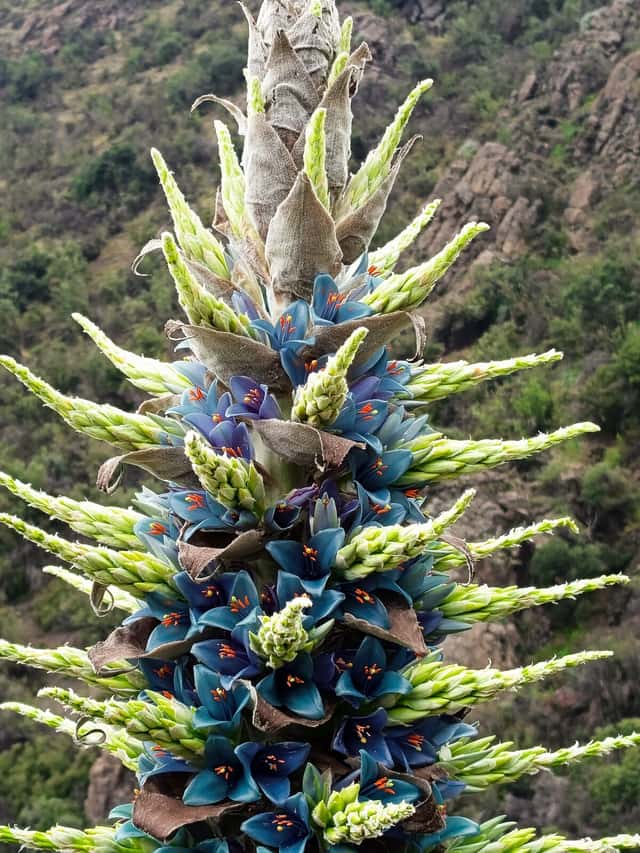
Puya is a genus of roughly 200-225 terrestrial bromeliad species native to the cool, dry slopes of the Andes Mountains in Chile, Peru, Bolivia, and Argentina. Unlike most bromeliads, Puya species grow rooted in the ground rather than as epiphytes, forming tough, spiny rosettes of silvery-green leaves. Many are monocarpic, sending up a dramatic flower spike -- sometimes several meters tall -- once in their lifetime before the rosette dies, leaving offsets behind.
How to Propagate Puya?
Seed propagation
Seeds lose viability quickly, so use fresh seed when possible and avoid burying them too deep.
- 1 Soak seeds in water for 24 hours before sowing
- 2 Sow seeds on the surface of a gritty, well-draining seed mix
- 3 Keep in bright, indirect light at warm temperatures until germination
- 4 Transplant seedlings once they have several true leaves
Materials needed:
Offset division
Wear thick gloves -- Puya leaves have sharp, hooked spines.
- 1 Wait for offsets (pups) to form at the base of a mature or flowering rosette
- 2 Once an offset has its own roots, separate it carefully with a clean knife
- 3 Let the cut surface callus for a day before planting
- 4 Pot the offset in gritty, well-draining soil and keep lightly moist until established
Materials needed:
How Big Does Puya Grow?
TLDR: Puya can reach up to 3.0m tall with Slow growth rate.
Max height
3.0m
Spread
1.5m
Growth rate
Slow
Foliage
Evergreen
Plant Uses
Ornamental
Great for decoration
Edible
Can be consumed
Culinary Uses
- Young leaf bases and stems of some species are eaten raw in salads in parts of Chile
Is your plant showing symptoms?
Click on the symptom to discover possible causes:
What Diseases Commonly Affect Puya?
TLDR: Puya is susceptible to 4 known diseases. Monitor regularly for early detection.
Root Rot
Root rot is a serious fungal disease that affects the root system of plants, causing them to decay and die. It is primarily caused by overwatering, poor drainage, or soil-borne fungi such as Pythium, Phytophthora, Rhizoctonia, and Fusarium. The disease thrives in waterlogged conditions where roots are deprived of oxygen, making them susceptible to fungal infection.
Mealybugs
Mealybugs are small, soft-bodied insects covered with a white, waxy, cottony material. They are common pests of houseplants and outdoor plants in mild climates. These sap-sucking insects feed on plant tissue, causing damage, stunted growth, and can lead to plant death if left untreated. They produce sticky honeydew which attracts sooty mold.
Crown Rot
Crown rot is a serious fungal disease that attacks the crown (base) of the plant where the stem meets the soil. It is caused by various fungal pathogens including Phytophthora, Fusarium, and Rhizoctonia. The disease thrives in waterlogged conditions and can quickly spread to kill the entire plant if not addressed promptly.
Slugs and Snails
Slugs and snails are mollusks that feed on plant tissue, causing irregular holes in leaves and damage to young seedlings. They are most active at night and in moist conditions, leaving characteristic silvery slime trails. These pests can quickly devastate gardens, especially during wet seasons.
Fun Facts
Puya raimondii, the tallest bromeliad on Earth, can take 80-150 years to flower before sending up a single spike over 9 meters tall.
Puya chilensis has earned the nickname "sheep-eating plant" because its hooked spines can trap small animals that later decompose and fertilize the plant.
Unlike most of their epiphytic bromeliad relatives, Puya species grow rooted in the ground on rocky Andean slopes.
Frequently asked questions
Is Puya toxic to pets?
How much water does Puya need?
Can Puya be grown indoors?
Why hasn't my Puya flowered?
Compare with similar plants
| Attribute | Difficulty | Light | Watering | Pet Safe |
|---|---|---|---|---|
| Field Maple | Easy | Bright indirect | 14d | ✓ |
| Silver Birch | Easy | Direct sun | 14d | ✓ |
| Common Blanketflower | Easy | Direct sun | 10d | ✓ |
| Cushion Bush | Easy | Direct sun | 14d | ✓ |





