Cycadaceae
Cycas rumphii: Queen Sago Care Guide
Cycas rumphii
Queen sago thrives in bright light, from full sun to partial shade, and prefers sandy, well-draining, organically rich soil. Let the topsoil dry out between waterings, as this drought-tolerant cycad is highly sensitive to root rot in soggy conditions. Growth is very slow, so little fertilizer or repotting is needed; watch for scale insects and mealybugs, its most common pests.
Every 10 days
Bright indirect
10° - 35°C
40% - 70%
Categories
What is Queen Sago?
Queen Sago (Cycas rumphii) is a medium-care plant from the Cycadaceae family. Cycas rumphii, known as queen sago, is a slow-growing cycad native to the coastal forests of Indonesia, New Guinea and nearby Indian Ocean islands. Despite its palm-like rosette of glossy, arching fronds, it is not a true palm but an ancient gymnosperm related to conifers, predating flowering plants...
Queen Sago grows up to 10.0m, spread of 500cm, watering every 10 days, 10°C – 35°C, 40–70% humidity. It is suitable for indoor environments and not safe for pets.
Without precautions, ingestion can cause irritation in pets. Keep out of reach of cats and dogs. Without adequate drainage, root rot can develop within 20 days.
How to Care for Queen Sago?
TLDR: Queen Sago needs Bright indirect, watering every 10 days, and temperatures between 10-35°C with 40-70% humidity.
How Often Should You Water Queen Sago?
Water deeply, then allow the top few centimeters of soil to dry before watering again. Reduce watering considerably in winter or cooler months.
How Much Light Does Queen Sago Need?
Provide bright light — full sun outdoors or a spot within a meter of a bright window indoors. Avoid deep shade, which weakens growth.
What Is the Best Soil for Queen Sago?
Use a sandy, humus-rich mix with excellent drainage, such as a palm/cactus blend amended with perlite or coarse sand.
What Pot Should You Use for Queen Sago?
A wide, heavy terracotta or ceramic pot with generous drainage holes to accommodate the swollen, water-storing trunk base and prevent tipping.
Care Schedule
Fertilize
Every 120 days
What Is Queen Sago and Where Does It Come From?
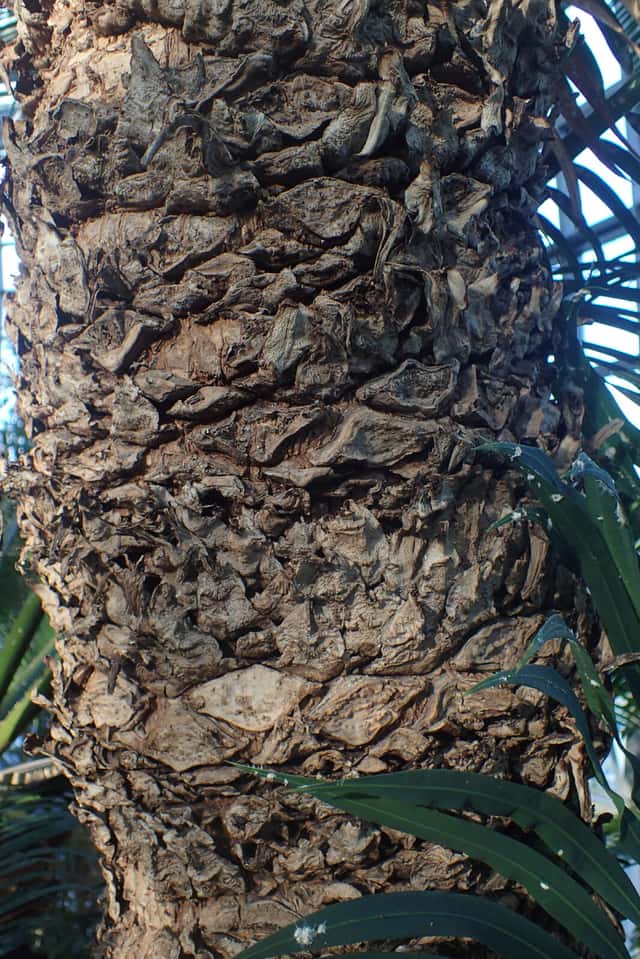
Cycas rumphii, known as queen sago, is a slow-growing cycad native to the coastal forests of Indonesia, New Guinea and nearby Indian Ocean islands. Despite its palm-like rosette of glossy, arching fronds, it is not a true palm but an ancient gymnosperm related to conifers, predating flowering plants by millions of years. It forms a thick, columnar trunk topped with a crown of pinnate leaves and is prized as a striking, long-lived ornamental for gardens and large containers in tropical and subtropical climates.
How to Propagate Queen Sago?
Seed propagation
Fresh seeds germinate far better than old ones; bottom heat speeds up germination considerably.
- 1 Collect ripe orange-red seeds from a pollinated female cone
- 2 Soak seeds in water for 24-48 hours to soften the outer coat
- 3 Sow horizontally in a sandy, well-draining mix with the seed half-buried
- 4 Keep warm (around 25-30°C) and lightly moist until germination
- 5 Transplant the seedling once the first leaf emerges and roots are established
Materials needed:
Basal offset division
Dusting the cut surface with fungicide reduces the risk of rot before planting.
- 1 Locate a basal offset (pup) at least 10-15 cm wide growing at the trunk base
- 2 Carefully cut it away from the parent trunk with a clean, sharp knife
- 3 Remove most leaves and let the cut surface callous for a few days in a dry, shaded spot
- 4 Plant in a sandy, well-draining mix, burying only the base
- 5 Keep barely moist until new roots and leaves appear
Materials needed:
How Big Does Queen Sago Grow?
TLDR: Queen Sago can reach up to 10.0m tall with Slow growth rate.
Max height
10.0m
Spread
5.0m
Growth rate
Slow
Foliage
Evergreen
Warning: Toxic Plant
This plant can be toxic if ingested. Keep out of reach of:
Plant Uses
Ornamental
Great for decoration
Medicinal
Medicinal properties
Medicinal Uses
- Traditional poultices for wounds (historical/ethnobotanical use only; not medically recommended due to toxicity)
Is your plant showing symptoms?
Click on the symptom to discover possible causes:
What Diseases Commonly Affect Queen Sago?
TLDR: Queen Sago is susceptible to 5 known diseases. Monitor regularly for early detection.
Scale Insects
Scale insects are small sap-sucking pests that appear as brown, shell-like bumps on plant stems and leaves. There are over 25 species, divided into armored (hard) and unarmored (soft) scales. They feed by piercing plant tissue and extracting sap, which weakens the plant and can lead to yellowing, stunted growth, and even death if left untreated. They also excrete honeydew, which attracts ants and promotes sooty mold growth.
Mealybugs
Mealybugs are small, soft-bodied insects covered with a white, waxy, cottony material. They are common pests of houseplants and outdoor plants in mild climates. These sap-sucking insects feed on plant tissue, causing damage, stunted growth, and can lead to plant death if left untreated. They produce sticky honeydew which attracts sooty mold.
Spider Mites
Spider mites are tiny arachnids (less than 1/20 inch long) related to spiders and ticks that feed on plant sap. They thrive in hot, dry conditions and can cause significant damage to ornamental and vegetable plants. During severe infestations, crop losses can reach 14% or higher as these pests disrupt vital plant processes including photosynthesis, carbon dioxide absorption, and transpiration.
Root Rot
Root rot is a serious fungal disease that affects the root system of plants, causing them to decay and die. It is primarily caused by overwatering, poor drainage, or soil-borne fungi such as Pythium, Phytophthora, Rhizoctonia, and Fusarium. The disease thrives in waterlogged conditions where roots are deprived of oxygen, making them susceptible to fungal infection.
Meaning & Symbolism
In Vanuatu and other Pacific island cultures, cycads like Cycas rumphii are planted as living symbols of peace, status and welcome; more broadly, their extreme longevity has made cycads emblems of endurance across generations.
Fun Facts
Cycas rumphii is a living fossil — cycads like it predate dinosaurs and flowering plants by tens of millions of years.
It is dioecious: individual plants are either male or female, with females bearing large seed clusters and males producing pollen cones.
In Vanuatu, cycad leaves are traditionally used in ceremonies to signal peace and hospitality.
Despite resembling a palm, it is completely unrelated — palms are flowering plants, while cycads are ancient gymnosperms.
Frequently asked questions
Is Cycas rumphii toxic to pets?
How often should I water queen sago?
Why is my queen sago growing so slowly?
Does Cycas rumphii flower?
Can I grow queen sago indoors?
Compare with similar plants
| Attribute | Difficulty | Light | Watering | Pet Safe |
|---|---|---|---|---|
| Dark Fieldcap | Medium | Low light | 2d | ⚠️ |
| Azalea | Medium | Partial shade | 3d | ⚠️ |
| Muriel's Bamboo | Medium | Partial shade | 3d | ✓ |
| Bougainvillea | Medium | Direct sun | 7d | ⚠️ |




