Orchidaceae
Queen Victoria's Dendrobium (Dendrobium victoriae-reginae)
Dendrobium victoriae-reginae
A cool-growing epiphyte that needs bright, filtered light, constant moisture without waterlogging, and high humidity (70-90%) year-round. A pronounced day-night temperature drop and a brief, slightly drier winter rest encourage strong blooming.
Every 4 days
Partial shade
10° - 25°C
70% - 90%
Categories
What is Queen Victoria's Dendrobium?
Queen Victoria's Dendrobium (Dendrobium victoriae-reginae) is a medium-care plant from the Orchidaceae family. Dendrobium victoriae-reginae, known as Queen Victoria's dendrobium, is a striking epiphytic orchid endemic to the high-elevation cloud forests of the Philippines, found on Luzon, Mindanao, Mindoro, Negros, and Camiguin. It grows among oaks, rhododendrons, and azaleas at 1,300 to 2,700 meters elevati...
Queen Victoria's Dendrobium grows up to 25cm, watering every 4 days, 10°C – 25°C, 70–90% humidity. It is suitable for indoor environments and safe for pets.
Unlike many popular species, Queen Victoria's Dendrobium is safe to keep around pets. Without adequate drainage, root rot can develop within 8 days.
How to Care for Queen Victoria's Dendrobium?
TLDR: Queen Victoria's Dendrobium needs Partial shade, watering every 4 days, and temperatures between 10-25°C with 70-90% humidity.
How Often Should You Water Queen Victoria's Dendrobium?
Keep the mounting moss or bark mix evenly moist at all times, watering again just as it approaches dryness. Ease off slightly for a few weeks in the cooler months to mimic its natural dry season, but never let the roots stay dry for long.
How Much Light Does Queen Victoria's Dendrobium Need?
Give bright, filtered light or partial shade, similar to dappled light under a mossy forest canopy. Avoid direct midday sun, which scorches the leaves; too little light will suppress flowering.
What Is the Best Soil for Queen Victoria's Dendrobium?
Grow mounted on a cork or tree-fern slab with a moisture-retentive pad, or pot in a chunky, well-draining mix of bark, sphagnum moss, and perlite that mirrors its epiphytic habitat.
What Pot Should You Use for Queen Victoria's Dendrobium?
Best grown in a hanging basket or mounted on cork/tree-fern slab to suit its pendulous growth habit and let roots dry briefly between waterings.
Care Schedule
Fertilize
Every 14 days
Misting
Every 2 days
Repot
Every 730 days
What Is Queen Victoria's Dendrobium and Where Does It Come From?
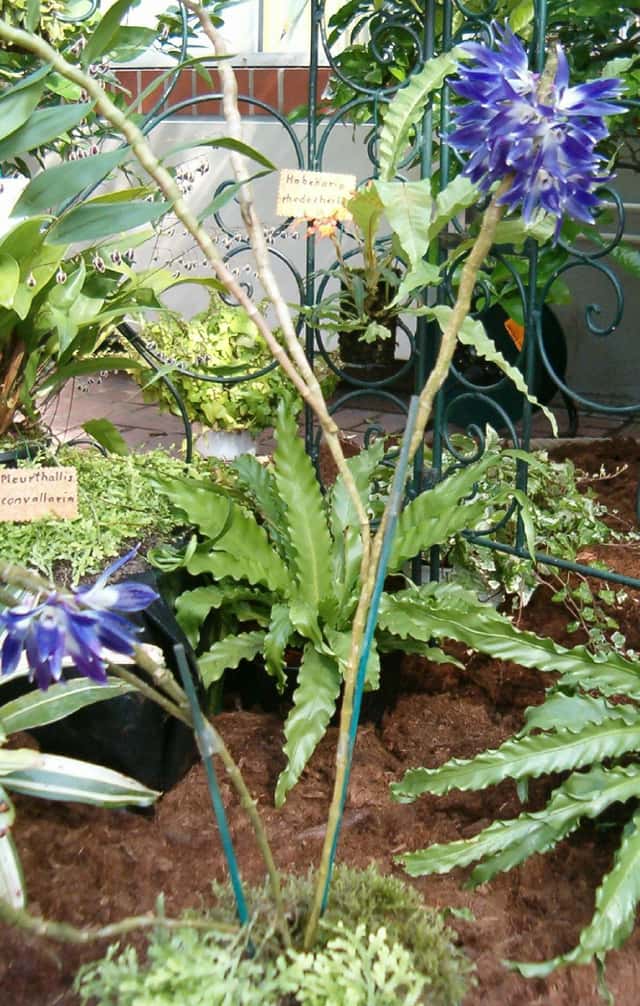
Dendrobium victoriae-reginae, known as Queen Victoria's dendrobium, is a striking epiphytic orchid endemic to the high-elevation cloud forests of the Philippines, found on Luzon, Mindanao, Mindoro, Negros, and Camiguin. It grows among oaks, rhododendrons, and azaleas at 1,300 to 2,700 meters elevation, where cool temperatures and near-constant moisture prevail. Its pendulous, cane-like stems are basally branching and swollen at the nodes, bearing papery, lance-shaped leaves. Short, erect racemes carry one to three flowers in variable shades of lilac to deep violet-blue, among the most prized colors in the genus.
How to Propagate Queen Victoria's Dendrobium?
Division
Only divide vigorous, well-established plants; smaller divisions take longer to re-establish and bloom.
- 1 Wait until the plant has at least 4-5 healthy canes with visible roots
- 2 Using a sterile blade, cut the rhizome between pseudobulbs, keeping 3 or more canes and healthy roots per division
- 3 Let cut surfaces dry and callus for a few hours
- 4 Mount each division on cork/tree-fern slab or pot in fresh bark mix
- 5 Keep humid but avoid watering directly onto fresh cuts for the first few days
Materials needed:
Keiki propagation
Do not remove a keiki before it has developed its own healthy root system.
- 1 Watch for a keiki (plantlet) forming on a node of an older cane
- 2 Wait until the keiki develops its own roots at least 3-5 cm long
- 3 Cut the keiki away from the parent cane with a sterile blade
- 4 Mount or pot the keiki separately in a small amount of moss or bark
- 5 Keep humidity high until the new plant is established
Materials needed:
How Big Does Queen Victoria's Dendrobium Grow?
TLDR: Queen Victoria's Dendrobium can reach up to 25cm tall with Slow growth rate.
Max height
25cm
Growth rate
Slow
Foliage
Evergreen
Plant Uses
Ornamental
Great for decoration
Is your plant showing symptoms?
Click on the symptom to discover possible causes:
What Diseases Commonly Affect Queen Victoria's Dendrobium?
TLDR: Queen Victoria's Dendrobium is susceptible to 3 known diseases. Monitor regularly for early detection.
Root Rot
Root rot is a serious fungal disease that affects the root system of plants, causing them to decay and die. It is primarily caused by overwatering, poor drainage, or soil-borne fungi such as Pythium, Phytophthora, Rhizoctonia, and Fusarium. The disease thrives in waterlogged conditions where roots are deprived of oxygen, making them susceptible to fungal infection.
Overwatering
Overwatering occurs when plants receive too much water, depriving roots of oxygen and causing root rot. This environmental stress is one of the most common causes of houseplant death, as waterlogged soil prevents roots from breathing and functioning properly.
Powdery Mildew
Powdery mildew is a common fungal disease caused by various fungi species including Erysiphe, Podosphaera, Oïdium, and Leveillula. It affects over 10,000 plant species worldwide. The disease thrives in warm, dry climates with high humidity and appears as a distinctive white powdery coating on plant surfaces.
Meaning & Symbolism
Named for Queen Victoria, this orchid represents royalty, refined elegance, and rarity.
Fun Facts
The species name honors Queen Victoria of the United Kingdom.
It grows only in the misty, high-elevation cloud forests of the Philippines, often above 2,000 meters.
Its flowers can vary noticeably in color intensity, from pale lilac to deep violet-blue, even among plants from the same population.
Frequently asked questions
How often should I water Dendrobium victoriae-reginae?
Is Queen Victoria's Dendrobium toxic to cats or dogs?
Why will my Dendrobium victoriae-reginae not bloom?
What is the best way to grow this orchid?
Compare with similar plants
| Attribute | Difficulty | Light | Watering | Pet Safe |
|---|---|---|---|---|
| Dark Fieldcap | Medium | Low light | 2d | ⚠️ |
| Azalea | Medium | Partial shade | 3d | ⚠️ |
| Muriel's Bamboo | Medium | Partial shade | 3d | ✓ |
| Bougainvillea | Medium | Direct sun | 7d | ⚠️ |




