Plantaginaceae
Hebe Quicksilver: Ground Cover Plant
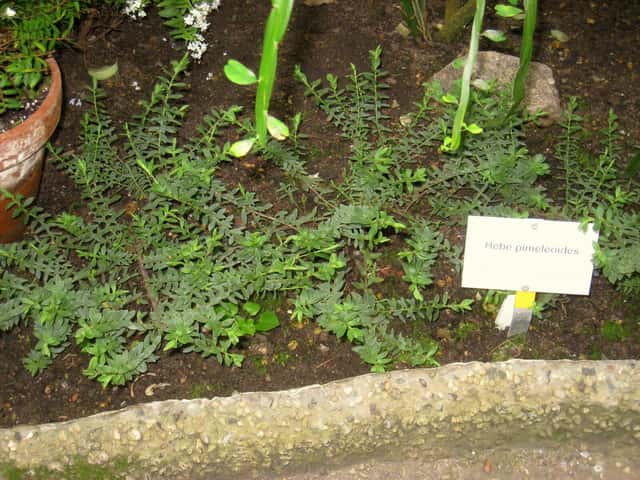
Hebe pimeleoides
Hebe pimeleoides is a low-maintenance, drought-tolerant shrub suitable for rock gardens, as ground cover, or in containers. It requires a sunny to semi-shady location, very well-draining, poor to moderately fertile soil, and can tolerate slightly acidic to slightly alkaline conditions. Once established, it can handle short periods of drought but does not tolerate consistently wet soil. It is hardy to approximately -5 °C (zones 7-10).
Every 10 days
Bright indirect
-5° - 28°C
40% - 70%
Categories
What is Hebe Quicksilver?
Hebe Quicksilver (Hebe pimeleoides) is a easy-care plant from the Plantaginaceae family. Hebe pimeleoides is a low-growing, evergreen shrub native to New Zealand (dry Marlborough and Canterbury mountain ranges on the South Island). It is characterized by tiny, grey-blue (glaucous) leaves 7–10 mm long, arranged oppositely on dark, almost black stems. From spring to early summer, it produ...
Hebe Quicksilver grows up to 45cm, spread of 90cm, watering every 10 days, -5°C – 28°C, 40–70% humidity. It is not suitable for indoor environments and not safe for pets.
Unlike many tropical plants, Hebe Quicksilver tolerates watering mistakes. Best for beginners. Without precautions, ingestion can cause irritation in pets. Keep out of reach of cats and dogs.
How to Care for Hebe Quicksilver?
TLDR: Hebe Quicksilver needs Bright indirect, watering every 10 days, and temperatures between -5-28°C with 40-70% humidity.
How Often Should You Water Hebe Quicksilver?
During the first year after planting, water regularly to ensure the plant establishes well. Afterward, only water during prolonged dry periods – the soil must dry out between waterings, as waterlogged root balls cause root rot.
How Much Light Does Hebe Quicksilver Need?
It grows best in full sun but can tolerate partial shade. Sufficient light promotes compact growth, abundant flowering, and enhances the silver-grey leaf coloration.
What Is the Best Soil for Hebe Quicksilver?
Requires very well-draining, rather poor to moderately fertile soil with a pH that is slightly acidic to slightly alkaline. Heavy, waterlogged soils are unsuitable – if necessary, amend the soil with sand or gravel before planting.
What Pot Should You Use for Hebe Quicksilver?
When growing in a container, choose a terracotta or other breathable pot with a prominent drainage hole to prevent water retention around the roots.
Care Schedule
Fertilize
Every 365 days
What Is Hebe Quicksilver and Where Does It Come From?
Hebe pimeleoides is a low-growing, evergreen shrub native to New Zealand (dry Marlborough and Canterbury mountain ranges on the South Island). It is characterized by tiny, grey-blue (glaucous) leaves 7–10 mm long, arranged oppositely on dark, almost black stems. From spring to early summer, it produces small inflorescences with pale purple to white flowers that attract bees and other pollinating insects. The 'Quicksilver' cultivar is known for its compact, semi-prostrate growth habit and has received the Award of Garden Merit from the Royal Horticultural Society.
How Big Does Hebe Quicksilver Grow?
TLDR: Hebe Quicksilver can reach up to 45cm tall with Slow growth rate.
Max height
45cm
Spread
90cm
Growth rate
Slow
Foliage
Evergreen
Warning: Toxic Plant
This plant can be toxic if ingested. Keep out of reach of:
Plant Uses
Ornamental
Great for decoration
Ground Cover
Soil coverage
Is your plant showing symptoms?
Click on the symptom to discover possible causes:
What Diseases Commonly Affect Hebe Quicksilver?
TLDR: Hebe Quicksilver is susceptible to 8 known diseases. Monitor regularly for early detection.
Septoria Leaf Spot
Septoria leaf spot is a destructive fungal disease caused by Septoria lycopersici, particularly devastating during seasons of moderate temperature and abundant rainfall. The disease starts on lower leaves and progresses upward, causing small circular spots with tan to gray centers and dark brown margins. If left untreated, it can dramatically reduce plant yields and cause complete leaf blight.
Downy Mildew
Downy mildew is a fungal-like disease caused by oomycetes (water molds) that thrives in cool, wet conditions. It affects a wide range of plants, causing yellowing leaves with fuzzy white-gray growth underneath, leading to defoliation and reduced yields if left untreated.
Phytophthora Root Rot
Disease caused by fungus-like organisms (oomycetes) that live in soil and can survive for years. It affects roots, stem, and crown of plants, being especially severe in waterlogged or poorly drained soils. It is the second most common cause of root rot in trees and shrubs.
Powdery Mildew
Powdery mildew is a common fungal disease caused by various fungi species including Erysiphe, Podosphaera, Oïdium, and Leveillula. It affects over 10,000 plant species worldwide. The disease thrives in warm, dry climates with high humidity and appears as a distinctive white powdery coating on plant surfaces.
Meaning & Symbolism
Due to its origin in the harsh New Zealand mountains and its ability to survive drought and poor soil, Hebe pimeleoides symbolizes resilience and understated elegance. Its silver-grey leaves lend it a touch of delicate, calming beauty.
Compare with similar plants
| Attribute | Difficulty | Light | Watering | Pet Safe |
|---|---|---|---|---|
| Field Maple | Easy | Bright indirect | 14d | ✓ |
| Silver Birch | Easy | Direct sun | 14d | ✓ |
| Common Blanketflower | Easy | Direct sun | 10d | ✓ |
| Cushion Bush | Easy | Direct sun | 14d | ✓ |





