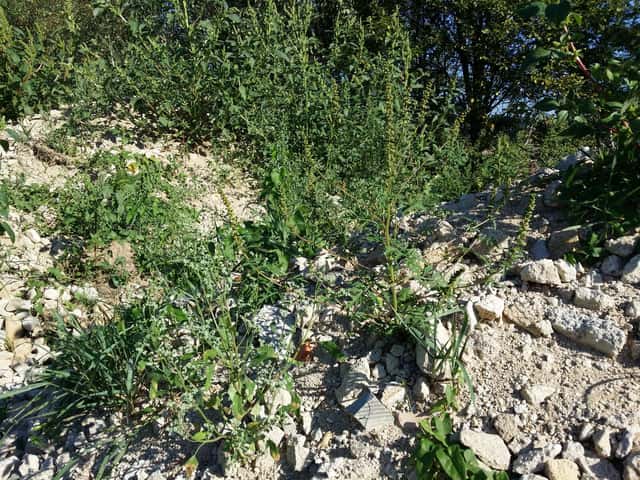
Asteraceae
Ragweed (Ambrosia)
Ambrosia
Ragweed requires essentially no care -- it is a self-seeding annual weed that thrives on neglect. It germinates readily in disturbed, sunny soil, tolerates drought and poor nutrition, and completes its life cycle from seed to flower to seed within a single growing season. Most "care" in practice consists of removal (hand-pulling or hoeing before flowering) to limit pollen production and spread.
Every 14 days
Bright indirect
° - °C
% - %
Categories
What is Ragweed?
Ragweed (Ambrosia) is a easy-care plant from the Asteraceae family. Ambrosia is a genus of roughly 40 weedy annual and perennial species in the daisy family (Asteraceae), native to the Americas and now naturalized across Europe, Asia, and beyond. The best-known species, Ambrosia artemisiifolia (common or annual ragweed), is a fast-growing, deeply lobed-leaved plant...
Ragweed grows up to 1.8m, spread of 120cm, watering every 14 days. It is not suitable for indoor environments and safe for pets.
Unlike many tropical plants, Ragweed tolerates watering mistakes. Best for beginners. Unlike many popular species, Ragweed is safe to keep around pets.
How to Care for Ragweed?
TLDR: Ragweed needs Bright indirect, watering every 14 days, and temperatures between 15-30°C with 40-70% humidity.
How Often Should You Water Ragweed?
No supplemental watering is normally needed once established; ragweed is highly drought-tolerant and thrives in dry soil. If intentionally growing it (e.g. for wildlife seed), water only during germination.
How Much Light Does Ragweed Need?
Needs full sun (6+ hours of direct light daily) for vigorous growth and flowering; tolerates partial shade but grows sparser and flowers less.
What Is the Best Soil for Ragweed?
Extremely adaptable -- grows in sandy, clay, loamy, or rocky soils, including poor and compacted ground. Prefers well-draining, disturbed soil over rich cultivated beds.
What Pot Should You Use for Ragweed?
Not suited to container cultivation as an ornamental; if grown intentionally for wildlife/seed, use a large, well-draining pot with poor-to-average garden soil in full sun.
Care Schedule
Fertilize
Every 14 days
Misting
Every 3 days
Rotate
Every 7 days
Repot
Every 365 days
What Is Ragweed and Where Does It Come From?
Ambrosia is a genus of roughly 40 weedy annual and perennial species in the daisy family (Asteraceae), native to the Americas and now naturalized across Europe, Asia, and beyond. The best-known species, Ambrosia artemisiifolia (common or annual ragweed), is a fast-growing, deeply lobed-leaved plant that colonizes disturbed soil -- roadsides, fields, construction sites, and waste ground. It is not cultivated as an ornamental; rather, it is notorious as one of the most significant sources of allergenic pollen in the world, triggering hay fever (allergic rhinitis) in millions of people during late summer and fall.
How to Propagate Ragweed?
Seed propagation
Ragweed self-seeds prolifically without any help; in most settings the challenge is preventing spread, not encouraging germination. Each plant can produce thousands of seeds that remain viable in soil for years.
- 1 Loosen and disturb bare, sunny soil (ragweed germinates best in freshly disturbed ground).
- 2 Scatter seed on the soil surface or bury lightly, about 0.5 cm deep.
- 3 Keep soil lightly moist until seedlings emerge, then let rainfall take over.
- 4 Thin seedlings if a denser stand is not desired.
Materials needed:
How Big Does Ragweed Grow?
TLDR: Ragweed can reach up to 1.8m tall with Fast growth rate.
Max height
1.8m
Spread
1.2m
Growth rate
Fast
Foliage
Deciduous
Warning: Toxic Plant
This plant can be toxic if ingested. Keep out of reach of:
Plant Uses
Medicinal
Medicinal properties
Medicinal Uses
- Traditional leaf tea (folk medicine, limited modern clinical evidence)
Is your plant showing symptoms?
Click on the symptom to discover possible causes:
What Diseases Commonly Affect Ragweed?
TLDR: Ragweed is susceptible to 6 known diseases. Monitor regularly for early detection.
Powdery Mildew
Powdery mildew is a common fungal disease caused by various fungi species including Erysiphe, Podosphaera, Oïdium, and Leveillula. It affects over 10,000 plant species worldwide. The disease thrives in warm, dry climates with high humidity and appears as a distinctive white powdery coating on plant surfaces.
Rust
Rust is a common fungal disease caused by fungi in the order Pucciniales that affects a wide variety of plants. The disease gets its name from the characteristic orange, yellow, or reddish-brown pustules that appear on leaves, resembling metal rust. This obligate fungal parasite requires living plants to survive and can cause significant economic losses in agricultural crops.
Downy Mildew
Downy mildew is a fungal-like disease caused by oomycetes (water molds) that thrives in cool, wet conditions. It affects a wide range of plants, causing yellowing leaves with fuzzy white-gray growth underneath, leading to defoliation and reduced yields if left untreated.
Aphids
Aphids are small, soft-bodied, pear-shaped insects (1/16 to 1/8 inch long) that feed by sucking nutrient-rich sap from plants. They reproduce rapidly and can quickly weaken plants, causing distorted growth and transmitting plant viruses. Aphids come in various colors including green, black, red, yellow, brown, and gray. They secrete honeydew, a sticky substance that attracts ants and encourages sooty mold growth.
Meaning & Symbolism
Ragweed carries no traditional ornamental symbolism; culturally it is associated with late-summer allergy season and is widely regarded as a noxious weed rather than a garden plant.
Fun Facts
A single ragweed plant can release up to 1 billion pollen grains in one season.
Ragweed pollen can travel hundreds of miles on the wind and has even been detected far out at sea.
The white rust fungus Albugo tragopogi can cut ragweed pollen production by up to 99% in infected plants.
Despite its reputation, ragweed seeds are rich in oil and are an important late-season food source for songbirds.
Frequently asked questions
Is ragweed the same as goldenrod?
Does ragweed need to be watered or fertilized?
How can I control ragweed in my yard?
What diseases affect ragweed?
Compare with similar plants
| Attribute | Difficulty | Light | Watering | Pet Safe |
|---|---|---|---|---|
| Field Maple | Easy | Bright indirect | 14d | ✓ |
| Silver Birch | Easy | Direct sun | 14d | ✓ |
| Common Blanketflower | Easy | Direct sun | 10d | ✓ |
| Cushion Bush | Easy | Direct sun | 14d | ✓ |
Choose & Compare
Sources & References
- Ambrosia artemisiifolia | NC State Extension Gardener Plant Toolbox
- Ambrosia artemisiifolia (Annual ragweed) | Native Plants of North America
- Ragweed (Ambrosia Artemisiifolia) Growing, Care, & Removal Guide
- Ambrosia artemisiifolia (common ragweed) | CABI Compendium
- Damage to Common Ragweed Caused by White Rust Fungus (Albugo tragopogi)
- Effects of elevated CO2 on biomass and fungi associated with ragweed ecotypes
- Ragweed Pollen Allergy: Burden, Characteristics, and Management of an Imported Allergen Source in Europe
- Modifiable Risk Factors for Common Ragweed Allergy and Disease in Children





