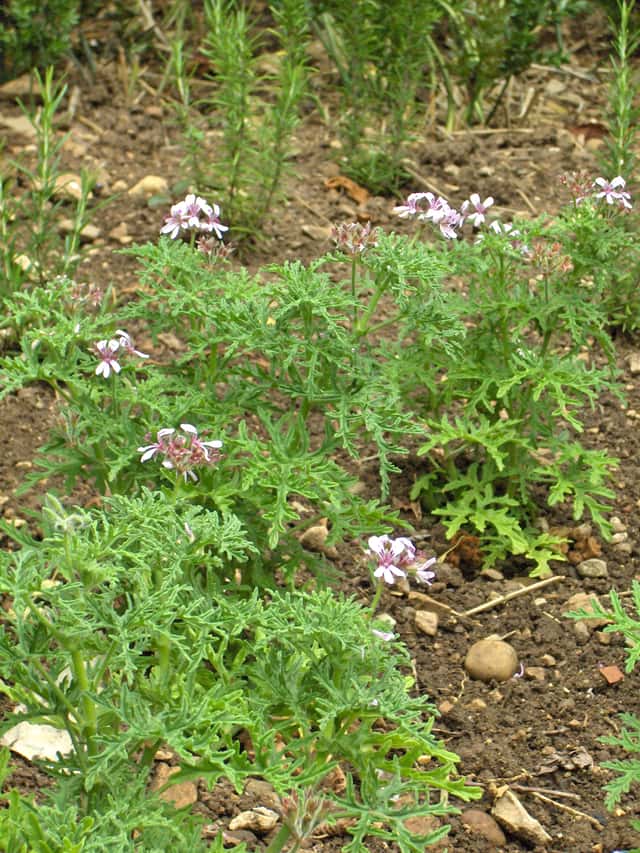
Geraniaceae
Rasp-leaf Pelargonium (Pelargonium radens)
Pelargonium radens
Grow in full sun with well-drained, sandy-loam soil. Water moderately, letting the topsoil dry between waterings, and never let the pot sit in standing water. Prune regularly to keep growth compact and fragrant, and refresh plants from cuttings every 2-3 years since they are relatively short-lived.
Every 7 days
Direct sun
5° - 29°C
30% - 55%
Categories
What is Rasp-leaf pelargonium?
Rasp-leaf pelargonium (Pelargonium radens) is a easy-care plant from the Geraniaceae family. Pelargonium radens is an aromatic, evergreen shrub native to the southern and eastern Cape of South Africa, where it grows in ravines and among mountainside shrubs. It forms a closely branched shrub up to 1.5 m tall, with deeply divided, gray-green triangular leaves that release a strong rose-lemon...
Rasp-leaf pelargonium grows up to 1.5m, spread of 100cm, watering every 7 days, 5°C – 29°C, 30–55% humidity. It is suitable for indoor environments and not safe for pets.
Unlike many tropical plants, Rasp-leaf pelargonium tolerates watering mistakes. Best for beginners. Without precautions, ingestion can cause irritation in pets. Keep out of reach of cats and dogs. Without adequate drainage, root rot can develop within 14 days.
How to Care for Rasp-leaf pelargonium?
TLDR: Rasp-leaf pelargonium needs Direct sun, watering every 7 days, and temperatures between 5-29°C with 30-55% humidity.
How Often Should You Water Rasp-leaf pelargonium?
Water moderately and only when the top layer of soil has dried out; good drainage is essential to prevent root rot.
How Much Light Does Rasp-leaf pelargonium Need?
Needs full sun outdoors or the brightest spot available indoors - it cannot tolerate shade.
What Is the Best Soil for Rasp-leaf pelargonium?
Use a light, sandy or loamy, well-draining potting mix with a mildly acidic to mildly alkaline pH.
What Pot Should You Use for Rasp-leaf pelargonium?
Terracotta pot with drainage holes - porous material helps excess moisture evaporate and prevents root rot.
Care Schedule
Fertilize
Every 30 days
Rotate
Every 14 days
Repot
Every 365 days
What Is Rasp-leaf pelargonium and Where Does It Come From?
Pelargonium radens is an aromatic, evergreen shrub native to the southern and eastern Cape of South Africa, where it grows in ravines and among mountainside shrubs. It forms a closely branched shrub up to 1.5 m tall, with deeply divided, gray-green triangular leaves that release a strong rose-lemon fragrance when bruised, and clusters of small pale purple to pink flowers with deep purple markings that bloom from summer into fall. It is one of the parent species behind many rose-scented pelargonium hybrids grown for essential oil.
How to Propagate Rasp-leaf pelargonium?
Stem cuttings
Use clean, sharp tools and avoid overwatering the cutting; renewing plants from cuttings every 2-3 years keeps them vigorous.
- 1 Take a semi-mature stem cutting about 10 cm long with 2-3 leaves
- 2 Let the cut end callous for a few hours to reduce rot risk
- 3 Dip the cut end in rooting hormone
- 4 Insert into a light, well-drained potting mix or water
- 5 Keep in bright, indirect light until roots form
Materials needed:
Seeds
Germination can be slow and uneven; fresh seed germinates more reliably than stored seed.
- 1 Sow fresh seed in a light, well-drained potting mix
- 2 Keep at a minimum of 13C in a greenhouse or warm indoor spot
- 3 Keep the soil lightly moist until germination
Materials needed:
How Big Does Rasp-leaf pelargonium Grow?
TLDR: Rasp-leaf pelargonium can reach up to 1.5m tall with Fast growth rate.
Max height
1.5m
Spread
1.0m
Growth rate
Fast
Foliage
Evergreen
Warning: Toxic Plant
This plant can be toxic if ingested. Keep out of reach of:
Plant Uses
Ornamental
Great for decoration
Aromatic
Pleasant fragrance
Medicinal
Medicinal properties
Edible
Can be consumed
Medicinal Uses
- Fresh leaves used externally as an astringent for tired feet and legs
Culinary Uses
- Leaves and essential oil traditionally used to flavor jellies and herbal teas
Is your plant showing symptoms?
Click on the symptom to discover possible causes:
What Diseases Commonly Affect Rasp-leaf pelargonium?
TLDR: Rasp-leaf pelargonium is susceptible to 6 known diseases. Monitor regularly for early detection.
Root Rot
Root rot is a serious fungal disease that affects the root system of plants, causing them to decay and die. It is primarily caused by overwatering, poor drainage, or soil-borne fungi such as Pythium, Phytophthora, Rhizoctonia, and Fusarium. The disease thrives in waterlogged conditions where roots are deprived of oxygen, making them susceptible to fungal infection.
Grey Mould
Rust
Rust is a common fungal disease caused by fungi in the order Pucciniales that affects a wide variety of plants. The disease gets its name from the characteristic orange, yellow, or reddish-brown pustules that appear on leaves, resembling metal rust. This obligate fungal parasite requires living plants to survive and can cause significant economic losses in agricultural crops.
Aphids
Aphids are small, soft-bodied, pear-shaped insects (1/16 to 1/8 inch long) that feed by sucking nutrient-rich sap from plants. They reproduce rapidly and can quickly weaken plants, causing distorted growth and transmitting plant viruses. Aphids come in various colors including green, black, red, yellow, brown, and gray. They secrete honeydew, a sticky substance that attracts ants and encourages sooty mold growth.
Meaning & Symbolism
In Victorian flower language, scented-leaf pelargoniums symbolize true friendship, comfort, and gentility; their fragrance is linked to remembrance and hospitality.
Fun Facts
Its deeply cut, rasp-textured leaves give the plant its common name "rasp-leaf pelargonium."
It is one of the parent species used to create rose-scented pelargonium hybrids grown commercially for essential oil.
Its essential oil is classified as Generally Recognized as Safe (GRAS) by the US FDA for use as a food flavoring.
Frequently asked questions
How often should I water Pelargonium radens?
Does Pelargonium radens need full sun?
Is Pelargonium radens toxic to pets?
How do you propagate Pelargonium radens?
What diseases affect Pelargonium radens?
Compare with similar plants
| Attribute | Difficulty | Light | Watering | Pet Safe |
|---|---|---|---|---|
| Field Maple | Easy | Bright indirect | 14d | ✓ |
| Silver Birch | Easy | Direct sun | 14d | ✓ |
| Common Blanketflower | Easy | Direct sun | 10d | ✓ |
| Cushion Bush | Easy | Direct sun | 14d | ✓ |





