Araceae
Aglaonema 'Siam Aurora' — Red Aglaonema Care Guide
Aglaonema 'Siam Aurora'
Red Aglaonema thrives in bright, indirect light but tolerates medium light (color intensity fades in low light). Water when the top 2-3 inches of soil dry out, roughly every 9 days in warm months and less often in winter. It prefers warm temperatures (18-24°C), average to high humidity, and a well-draining, peat-based potting mix. Feed monthly during the growing season and repot every couple of years once rootbound.
Every 9 days
Partial shade
15° - 29°C
40% - 70%
Categories
What is Red Aglaonema?
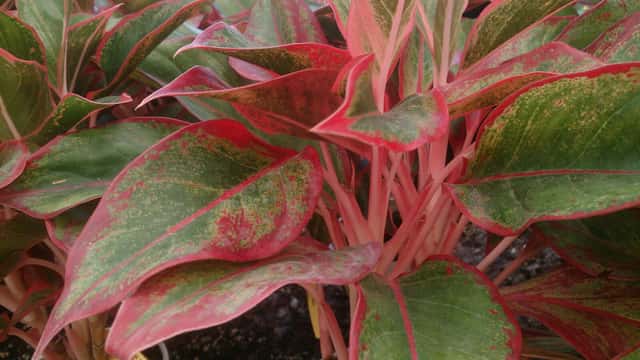
Red Aglaonema (Aglaonema 'Siam Aurora') is a easy-care plant from the Araceae family. Aglaonema 'Siam Aurora', widely known as Red Aglaonema, is a compact evergreen cultivar of Chinese Evergreen prized for its striking foliage — deep green leaves splashed and edged with vivid red, pink and cream variegation. Native to the tropical understories of Southeast Asia, this Araceae family m...
Red Aglaonema grows up to 90cm, spread of 90cm, watering every 9 days, 15°C – 29°C, 40–70% humidity. It is suitable for indoor environments and not safe for pets.
Unlike many tropical plants, Red Aglaonema tolerates watering mistakes. Best for beginners. Without precautions, ingestion can cause irritation in pets. Keep out of reach of cats and dogs. Without adequate drainage, root rot can develop within 18 days.
How to Care for Red Aglaonema?
TLDR: Red Aglaonema needs Partial shade, watering every 9 days, and temperatures between 15-29°C with 40-70% humidity.
How Often Should You Water Red Aglaonema?
Let the top 5 cm of soil dry between waterings and always use a pot with drainage holes — Siam Aurora is sensitive to soggy soil and prone to root rot if overwatered.
How Much Light Does Red Aglaonema Need?
Place in bright, indirect light for the most vivid red and pink coloring; it tolerates medium/low light but leaves will turn greener and growth will slow. Avoid direct sun, which scorches the leaves.
What Is the Best Soil for Red Aglaonema?
Use a light, well-draining mix of peat-based potting soil, perlite and orchid bark (roughly 3:1) to keep roots aerated and prevent waterlogging.
What Pot Should You Use for Red Aglaonema?
A terracotta or other porous pot with ample drainage holes helps excess moisture evaporate and protects the sensitive roots from rot.
Care Schedule
Fertilize
Every 30 days
Misting
Every 7 days
Rotate
Every 30 days
Repot
Every 730 days
What Is Red Aglaonema and Where Does It Come From?
Aglaonema 'Siam Aurora', widely known as Red Aglaonema, is a compact evergreen cultivar of Chinese Evergreen prized for its striking foliage — deep green leaves splashed and edged with vivid red, pink and cream variegation. Native to the tropical understories of Southeast Asia, this Araceae family member is one of the most popular colored-leaf houseplants thanks to its resilience, moderate light tolerance, and low-maintenance nature. It grows as a bushy, clumping plant reaching about 90 cm (3 ft) tall and wide indoors, and occasionally produces small greenish spathe flowers with white spadixes in late summer to fall.
How to Propagate Red Aglaonema?
Stem Cutting
Change the water every few days if rooting in water, and transfer to soil once roots reach 3-5 cm long.
- 1 Cut a healthy stem with at least 2-3 leaves using a clean, sharp tool
- 2 Let the cut callous for a few hours or dip it in rooting hormone
- 3 Plant in a light, moist potting mix or place in water until roots form
- 4 Keep in bright, indirect light and high humidity until new roots appear
Materials needed:
Clump Division
Division is the fastest, most reliable method and works well when repotting the plant annually.
- 1 Remove the plant from its pot and identify natural clusters of stems and roots
- 2 Gently separate the clumps by hand or with a sterilized knife, making sure each division keeps roots attached
- 3 Repot each division into its own pot with well-draining soil
- 4 Water thoroughly and keep in bright, indirect light while it recovers
Materials needed:
How Big Does Red Aglaonema Grow?
TLDR: Red Aglaonema can reach up to 90cm tall with Medium growth rate.
Max height
90cm
Spread
90cm
Growth rate
Medium
Foliage
Evergreen
Warning: Toxic Plant
This plant can be toxic if ingested. Keep out of reach of:
Plant Uses
Ornamental
Great for decoration
Air Purifying
Improves air quality
Is your plant showing symptoms?
Click on the symptom to discover possible causes:
What Diseases Commonly Affect Red Aglaonema?
TLDR: Red Aglaonema is susceptible to 6 known diseases. Monitor regularly for early detection.
Root Rot
Root rot is a serious fungal disease that affects the root system of plants, causing them to decay and die. It is primarily caused by overwatering, poor drainage, or soil-borne fungi such as Pythium, Phytophthora, Rhizoctonia, and Fusarium. The disease thrives in waterlogged conditions where roots are deprived of oxygen, making them susceptible to fungal infection.
Mealybugs
Mealybugs are small, soft-bodied insects covered with a white, waxy, cottony material. They are common pests of houseplants and outdoor plants in mild climates. These sap-sucking insects feed on plant tissue, causing damage, stunted growth, and can lead to plant death if left untreated. They produce sticky honeydew which attracts sooty mold.
Spider Mites
Spider mites are tiny arachnids (less than 1/20 inch long) related to spiders and ticks that feed on plant sap. They thrive in hot, dry conditions and can cause significant damage to ornamental and vegetable plants. During severe infestations, crop losses can reach 14% or higher as these pests disrupt vital plant processes including photosynthesis, carbon dioxide absorption, and transpiration.
Aphids
Aphids are small, soft-bodied, pear-shaped insects (1/16 to 1/8 inch long) that feed by sucking nutrient-rich sap from plants. They reproduce rapidly and can quickly weaken plants, causing distorted growth and transmitting plant viruses. Aphids come in various colors including green, black, red, yellow, brown, and gray. They secrete honeydew, a sticky substance that attracts ants and encourages sooty mold growth.
Meaning & Symbolism
Considered a symbol of good luck, prosperity and longevity in Southeast Asian and Chinese culture, Red Aglaonema is a popular gift during Lunar New Year celebrations.
Fun Facts
The vivid red pigmentation of Siam Aurora comes from anthocyanins, the same pigments responsible for red apples and autumn leaves.
Aglaonema is sometimes called 'Chinese Evergreen' because it has been cultivated in China for centuries as a symbol of luck and fortune.
In its native Southeast Asian rainforests, Aglaonema grows in the deep shade of the forest floor, which is why it tolerates low indoor light so well.
Frequently asked questions
Is Aglaonema 'Siam Aurora' toxic to cats and dogs?
How often should I water my Red Aglaonema?
Does Siam Aurora need bright light to keep its red color?
Is Aglaonema 'Siam Aurora' an air-purifying plant?
Compare with similar plants
| Attribute | Difficulty | Light | Watering | Pet Safe |
|---|---|---|---|---|
| Field Maple | Easy | Bright indirect | 14d | ✓ |
| Silver Birch | Easy | Direct sun | 14d | ✓ |
| Common Blanketflower | Easy | Direct sun | 10d | ✓ |
| Cushion Bush | Easy | Direct sun | 14d | ✓ |





