Cornaceae
Red Osier Dogwood (Cornus sericea)
Cornus sericea
Easy-care, cold-hardy shrub that wants full sun to part shade and consistently moist, organically rich soil. Prune out 20-25% of the oldest stems each early spring to keep new growth colorful. Tolerates clay, wet ground, and short flooding, but struggles in hot, humid summers south of zone 7.
Every 4 days
Bright indirect
-40° - 32°C
50% - 90%
Categories
What is Red Osier Dogwood?
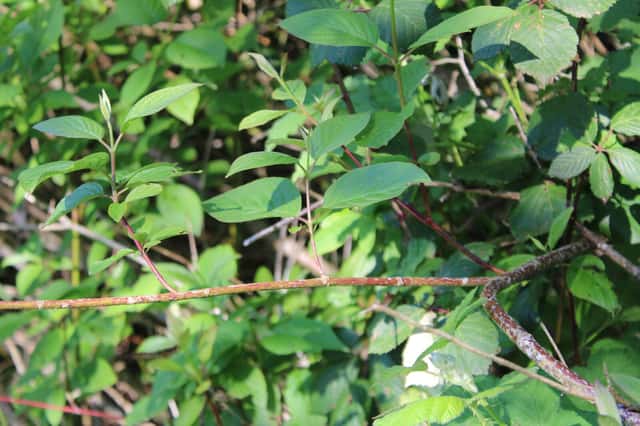
Red Osier Dogwood (Cornus sericea) is a easy-care plant from the Cornaceae family. The red osier dogwood is a fast-growing, multi-stemmed deciduous shrub native to much of North America, prized above all for its brilliant red winter stems. Small clusters of creamy white flowers appear in late spring, followed by white berries often tinged with blue that ripen in late summer and fe...
Red Osier Dogwood grows up to 2.7m, spread of 305cm, watering every 4 days, -40°C – 32°C, 50–90% humidity. It is not suitable for indoor environments and safe for pets.
Unlike many tropical plants, Red Osier Dogwood tolerates watering mistakes. Best for beginners. Unlike many popular species, Red Osier Dogwood is safe to keep around pets.
How to Care for Red Osier Dogwood?
TLDR: Red Osier Dogwood needs Bright indirect, watering every 4 days, and temperatures between -40-32°C with 50-90% humidity.
How Often Should You Water Red Osier Dogwood?
Keep the soil evenly moist, especially in the first two seasons after planting. Red osier dogwood tolerates wet and even seasonally flooded ground, but extended drought causes leaf scorch and dulls stem color, so water deeply during dry spells.
How Much Light Does Red Osier Dogwood Need?
Plant in full sun for the most vivid red winter stem color; the shrub also tolerates part shade but stems tend to be less intensely colored and growth more open.
What Is the Best Soil for Red Osier Dogwood?
Prefers organically rich, consistently moist loam but adapts to clay and sandy soils. Tolerant of a wide pH range from slightly acidic to alkaline (about 6.0-8.0).
What Is Red Osier Dogwood and Where Does It Come From?
The red osier dogwood is a fast-growing, multi-stemmed deciduous shrub native to much of North America, prized above all for its brilliant red winter stems. Small clusters of creamy white flowers appear in late spring, followed by white berries often tinged with blue that ripen in late summer and feed songbirds and small mammals. In fall the foliage turns shades of orange, red, and purple before dropping to reveal the shrub's fiery bark. It spreads by underground stolons and root suckers to form dense colonies, making it a popular choice for stream banks, rain gardens, and wet or boggy sites where few other shrubs thrive.
How to Propagate Red Osier Dogwood?
Softwood stem cuttings
Keep cuttings in bright, indirect light and high humidity until rooted; success rates above 90% are common.
- 1 Cut 6-8 inch sections of current-season growth just below a node
- 2 Strip leaves from the bottom half of the cutting
- 3 Dip the cut end in rooting hormone
- 4 Insert into a well-draining potting mix and keep consistently moist
- 5 Roots typically begin forming within 1-2 weeks
Materials needed:
Hardwood cuttings
Cuttings taken in January-February often root at rates up to 70%; even untreated cuttings root readily.
- 1 Take 12-15 inch sections of dormant one-year-old wood in late winter before buds break
- 2 Ensure cuttings are at least 3/8 inch thick at the base
- 3 Insert two-thirds of the cutting into moist soil or a rooting bed outdoors
- 4 Keep soil consistently moist through spring
Materials needed:
How Big Does Red Osier Dogwood Grow?
TLDR: Red Osier Dogwood can reach up to 2.7m tall with Fast growth rate.
Max height
2.7m
Spread
3.0m
Growth rate
Fast
Foliage
Deciduous
Plant Uses
Ornamental
Great for decoration
Medicinal
Medicinal properties
Medicinal Uses
- Indigenous peoples of North America traditionally used a decoction of the astringent bark to treat fevers, headaches, coughs, colds, and diarrhea, and as a wash for skin irritations (historical/traditional use, not a verified medical treatment)
Is your plant showing symptoms?
Click on the symptom to discover possible causes:
What Diseases Commonly Affect Red Osier Dogwood?
TLDR: Red Osier Dogwood is susceptible to 6 known diseases. Monitor regularly for early detection.
Powdery Mildew
Powdery mildew is a common fungal disease caused by various fungi species including Erysiphe, Podosphaera, Oïdium, and Leveillula. It affects over 10,000 plant species worldwide. The disease thrives in warm, dry climates with high humidity and appears as a distinctive white powdery coating on plant surfaces.
Leaf Spot
Leaf spot is a common fungal disease caused by various pathogens including Alternaria, Ascochyta, Colletotrichum, Septoria, and Venturia. It primarily affects leaves, causing discolored spots that can lead to premature leaf drop if left untreated.
Canker
Canker is a disease caused by various fungi and bacteria that create necrotic, sunken areas on bark of branches, stems, and trunks. Pathogens enter through wounds and natural openings, especially when plants are stressed. Canker can gradually weaken or kill branches by disrupting water and nutrient flow.
Root Rot
Root rot is a serious fungal disease that affects the root system of plants, causing them to decay and die. It is primarily caused by overwatering, poor drainage, or soil-borne fungi such as Pythium, Phytophthora, Rhizoctonia, and Fusarium. The disease thrives in waterlogged conditions where roots are deprived of oxygen, making them susceptible to fungal infection.
Fun Facts
Its Latin name "sericea" means "silky," referring to the fine hairs on the underside of its leaves.
Native Americans mixed the inner bark with tobacco to create kinnikinnick, a traditional smoking blend.
A single shrub can spread into a thicket several meters wide via underground stolons and root suckers.
Frequently asked questions
Why are the stems of my red osier dogwood not red?
How much water does red osier dogwood need?
Is red osier dogwood toxic to pets?
What diseases affect red osier dogwood?
Compare with similar plants
| Attribute | Difficulty | Light | Watering | Pet Safe |
|---|---|---|---|---|
| Field Maple | Easy | Bright indirect | 14d | ✓ |
| Silver Birch | Easy | Direct sun | 14d | ✓ |
| Common Blanketflower | Easy | Direct sun | 10d | ✓ |
| Cushion Bush | Easy | Direct sun | 14d | ✓ |
Choose & Compare
Sources & References
- Cornus sericea - Missouri Botanical Garden Plant Finder
- Cornus sericea - NC State Extension Gardener Plant Toolbox
- Red Osier Dogwood (Cornus sericea): Uses, Grow & Care Guide - Gardenia.net
- Cornus sericea - Wikipedia
- Cornus sericea - Plants For A Future (PFAF)
- Propagating Dogwoods and Willows - University of Vermont Extension
- Cornejo comun y Cornejo rojo - verdeesvida.es





