Geraniaceae
Redstem Filaree: Edible Plant
Erodium cicutarium
Redstem Filaree is an extremely low-maintenance and robust wild plant that prefers full sun, well-draining, nutrient-poor soil, and moderate watering. Waterlogging must be avoided; otherwise, the species is very tolerant of drought, foot traffic, and poor soil. Pests and diseases are rarely an issue.
Every 10 days
Direct sun
16° - 24°C
% - %
Categories
What is Redstem Filaree?
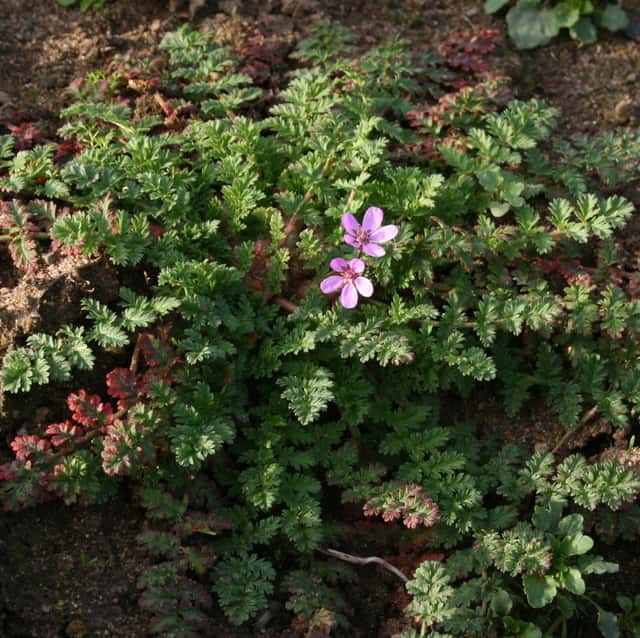
Redstem Filaree (Erodium cicutarium) is a easy-care plant from the Geraniaceae family. Redstem Filaree is an annual or biennial herb in the geranium family (Geraniaceae), native to Eurasia and North Africa and now naturalized worldwide. From a flat basal rosette of finely divided, fern-like leaves, it grows prostrate to ascending stems 10 to 40 cm in length. From April to September, s...
Redstem Filaree grows up to 40cm, spread of 60cm, watering every 10 days, 16°C – 24°C. It is not suitable for indoor environments and safe for pets.
Unlike many tropical plants, Redstem Filaree tolerates watering mistakes. Best for beginners. Unlike many popular species, Redstem Filaree is safe to keep around pets.
How to Care for Redstem Filaree?
TLDR: Redstem Filaree needs Direct sun, watering every 10 days, and temperatures between 16-24°C with 40-70% humidity.
How Often Should You Water Redstem Filaree?
Water moderately and only when the soil has dried out—Stork's-bill tolerates short dry spells much better than waterlogged soil. Once established, natural rainfall is usually sufficient.
How Much Light Does Redstem Filaree Need?
Choose a sunny to full-sun location with at least 6 to 8 hours of direct light; the plant blooms significantly less in partial shade.
What Is the Best Soil for Redstem Filaree?
A well-draining, sandy-loam to stony soil with a neutral to slightly alkaline pH (approx. 6 to 7.5) is ideal. Nutrient-rich, humus-heavy soil is not necessary—Redstem Filaree actually grows better in poor soils.
What Pot Should You Use for Redstem Filaree?
If cultivated in a pot, use a shallow container with generous drainage holes and a mineral-based, permeable substrate (e.g., a sand-loam mix) to reliably prevent root rot from standing water.
Care Schedule
Repot
Every 900 days
What Is Redstem Filaree and Where Does It Come From?
Redstem Filaree is an annual or biennial herb in the geranium family (Geraniaceae), native to Eurasia and North Africa and now naturalized worldwide. From a flat basal rosette of finely divided, fern-like leaves, it grows prostrate to ascending stems 10 to 40 cm in length. From April to September, small pink to violet flowers appear, followed by the namesake beak-like seed pods. These pods spiral when wet, actively drilling the seeds into the soil. As a hardy pioneer plant, it prefers dry, sandy, and stony locations such as roadsides, fallow fields, and vineyards.
How Big Does Redstem Filaree Grow?
TLDR: Redstem Filaree can reach up to 40cm tall with Fast growth rate.
Max height
40cm
Spread
60cm
Growth rate
Fast
Foliage
Deciduous
Plant Uses
Medicinal
Medicinal properties
Edible
Can be consumed
Ornamental
Great for decoration
Medicinal Uses
- Traditionally used as an astringent and hemostatic agent to stop bleeding
- Infusions of leaves and roots used in folk medicine for diarrhea and urinary tract complaints
- Used as a poultice for minor wounds, insect bites, and skin irritations
- Roots and leaves were traditionally believed to promote milk flow in nursing mothers
Culinary Uses
- Young leaves and shoots can be eaten raw in salads or steamed as a wild green
- Roots and lower stems taste milder than the leaves and can be eaten cooked
- Flowers are suitable as an edible garnish for salads
Is your plant showing symptoms?
Click on the symptom to discover possible causes:
What Diseases Commonly Affect Redstem Filaree?
TLDR: Redstem Filaree is susceptible to 20 known diseases. Monitor regularly for early detection.
Powdery Mildew
Powdery mildew is a common fungal disease caused by various fungi species including Erysiphe, Podosphaera, Oïdium, and Leveillula. It affects over 10,000 plant species worldwide. The disease thrives in warm, dry climates with high humidity and appears as a distinctive white powdery coating on plant surfaces.
Root Rot
Root rot is a serious fungal disease that affects the root system of plants, causing them to decay and die. It is primarily caused by overwatering, poor drainage, or soil-borne fungi such as Pythium, Phytophthora, Rhizoctonia, and Fusarium. The disease thrives in waterlogged conditions where roots are deprived of oxygen, making them susceptible to fungal infection.
Anthracnose
Anthracnose is a fungal disease caused by fungi in the genus Colletotrichum that affects many plants, including vegetables, fruits, and trees. The disease thrives in cool, wet conditions, causing dark, sunken lesions on leaves, stems, flowers, and fruits.
Sooty Mold
Sooty mold is a fungal disease that develops on surfaces coated with honeydew, a sticky sweet substance secreted by sap-sucking insects like aphids, scale insects, and whiteflies. While it does not directly infect plant tissue, it reduces photosynthetic capacity by blocking sunlight and diminishes the plant's aesthetic appearance.
Meaning & Symbolism
In folk medicine, Stork's-bill was traditionally seen as a symbol of resilience and frugality; its hygroscopic fruit beaks, which untwist with moisture, were even used in the past as simple weather indicators.
Compare with similar plants
| Attribute | Difficulty | Light | Watering | Pet Safe |
|---|---|---|---|---|
| Field Maple | Easy | Bright indirect | 14d | ✓ |
| Silver Birch | Easy | Direct sun | 14d | ✓ |
| Common Blanketflower | Easy | Direct sun | 10d | ✓ |
| Cushion Bush | Easy | Direct sun | 14d | ✓ |





