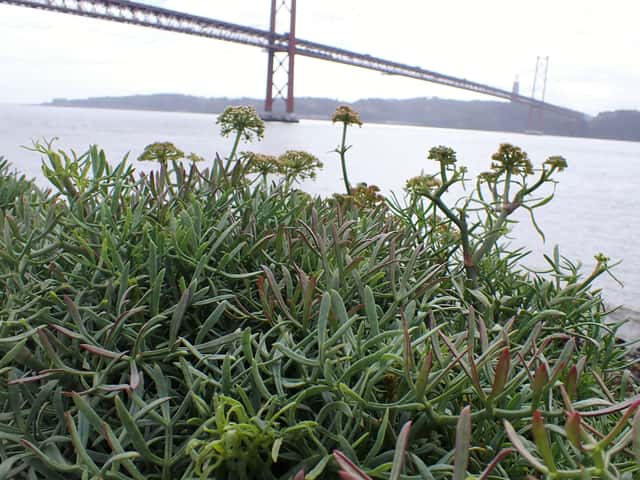
Apiaceae
Rock samphire: Edible Plant
Crithmum maritimum
A hardy and very low-maintenance plant if grown in full sun with well-drained, nutrient-poor soil. It tolerates drought, salt wind, and alkaline soils; the main risk is waterlogging, which can cause root rot. It does not require any specific phytosanitary treatments.
Every 14 days
Direct sun
-15° - 35°C
40% - 70%
Categories
What is Rock samphire?
Rock samphire (Crithmum maritimum) is a medium-care plant from the Apiaceae family. Rock samphire (Crithmum maritimum) is a succulent perennial plant in the Apiaceae family, widespread along the rocky and sandy coasts of the Mediterranean, the Atlantic, and the Black Sea. It grows wild on cliffs and rocks battered by salty winds, forming compact, branched bushes with fleshy, glauco...
Rock samphire grows up to 50cm, spread of 60cm, watering every 14 days, -15°C – 35°C, 40–70% humidity. It is not suitable for indoor environments and safe for pets.
Unlike many popular species, Rock samphire is safe to keep around pets.
How to Care for Rock samphire?
TLDR: Rock samphire needs Direct sun, watering every 14 days, and temperatures between -15-35°C with 40-70% humidity.
How Often Should You Water Rock samphire?
Water sparingly, allowing the soil to dry out completely between waterings: once established, the plant is very drought-resistant and tolerates the dry periods typical of the Mediterranean summer well.
How Much Light Does Rock samphire Need?
Requires direct full sun for most of the day: it does not tolerate shade, and in low-light conditions, it grows stunted and produces fewer aromatic leaves.
What Is the Best Soil for Rock samphire?
Prefers sandy or gravelly substrates, poor in organic matter and well-drained, with a neutral to alkaline pH (7.0-8.5). It also tolerates saline or rocky soils well.
What Pot Should You Use for Rock samphire?
Prefer an unglazed terracotta pot, which promotes evaporation and reduces water stagnation, with large drainage holes and a bottom layer of gravel or expanded clay; ideal for Mediterranean-style compositions or rock gardens.
Care Schedule
Fertilize
Every 90 days
Repot
Every 730 days
What Is Rock samphire and Where Does It Come From?
Rock samphire (Crithmum maritimum) is a succulent perennial plant in the Apiaceae family, widespread along the rocky and sandy coasts of the Mediterranean, the Atlantic, and the Black Sea. It grows wild on cliffs and rocks battered by salty winds, forming compact, branched bushes with fleshy, glaucous, and aromatic leaves that have an intensely savory flavor. In summer, it produces umbels of small yellowish-white flowers, followed in autumn by aromatic seeds. Extremely resistant to drought and salt spray, it is one of the few truly halophytic horticultural plants.
How Big Does Rock samphire Grow?
TLDR: Rock samphire can reach up to 50cm tall with Fast growth rate.
Max height
50cm
Spread
60cm
Growth rate
Fast
Foliage
Evergreen
Plant Uses
Edible
Can be consumed
Medicinal
Medicinal properties
Ornamental
Great for decoration
Medicinal Uses
- Diuretic
- Digestive and carminative
- Depurative
- Traditionally used to prevent scurvy (rich in vitamin C)
Culinary Uses
- Fresh leaves in salads, sauces, and soups
- Pickled as an alternative to capers
- Flavoring for fish dishes
- Natural coloring and flavoring for pasta and risotto
Is your plant showing symptoms?
Click on the symptom to discover possible causes:
What Diseases Commonly Affect Rock samphire?
TLDR: Rock samphire is susceptible to 3 known diseases. Monitor regularly for early detection.
Root Rot
Root rot is a serious fungal disease that affects the root system of plants, causing them to decay and die. It is primarily caused by overwatering, poor drainage, or soil-borne fungi such as Pythium, Phytophthora, Rhizoctonia, and Fusarium. The disease thrives in waterlogged conditions where roots are deprived of oxygen, making them susceptible to fungal infection.
Overwatering
Overwatering occurs when plants receive too much water, depriving roots of oxygen and causing root rot. This environmental stress is one of the most common causes of houseplant death, as waterlogged soil prevents roots from breathing and functioning properly.
Aphids
Aphids are small, soft-bodied, pear-shaped insects (1/16 to 1/8 inch long) that feed by sucking nutrient-rich sap from plants. They reproduce rapidly and can quickly weaken plants, causing distorted growth and transmitting plant viruses. Aphids come in various colors including green, black, red, yellow, brown, and gray. They secrete honeydew, a sticky substance that attracts ants and encourages sooty mold growth.
Meaning & Symbolism
Known as 'St. Peter's herb' (the patron saint of fishermen) and mentioned by Shakespeare in King Lear as a symbol of the dangerous harvest on cliffs overlooking the sea, the plant is today associated primarily with resilience, adaptation, and sobriety in the harshest coastal environments.
Compare with similar plants
| Attribute | Difficulty | Light | Watering | Pet Safe |
|---|---|---|---|---|
| Dark Fieldcap | Medium | Low light | 2d | ⚠️ |
| Azalea | Medium | Partial shade | 3d | ⚠️ |
| Muriel's Bamboo | Medium | Partial shade | 3d | ✓ |
| Bougainvillea | Medium | Direct sun | 7d | ⚠️ |




