Lamiaceae
Rosemary (Rosmarinus officinalis): Complete Growing Guide
Rosmarinus officinalis
Grow in full sun with well-drained, slightly alkaline soil. Water sparingly, allowing the soil to dry completely between waterings. Highly drought-tolerant once established. Prune periodically to maintain a compact, bushy shape.
Every 10 days
Direct sun
-6° - 35°C
30% - 50%
Categories
What is Rosemary?
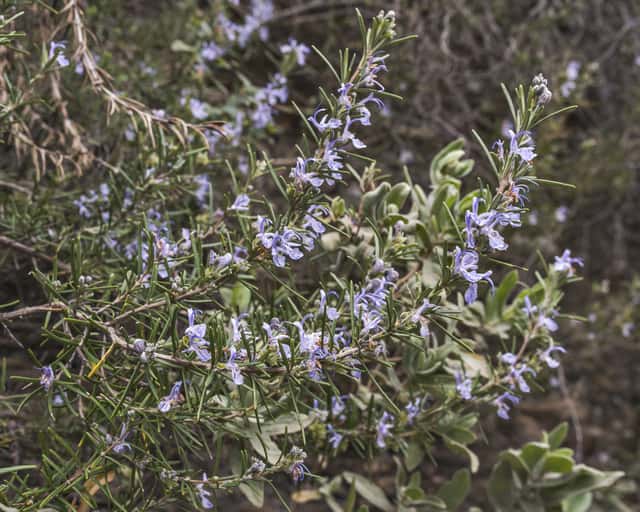
Rosemary (Rosmarinus officinalis) is a easy-care plant from the Lamiaceae family. Rosemary (Rosmarinus officinalis) is a fragrant, evergreen perennial shrub native to the Mediterranean region. It features needle-like, dark green leaves with silvery undersides and produces small tubular flowers in shades of blue, violet, white, or pink. It is prized as a culinary herb, medicinal p...
Rosemary grows up to 1.8m, spread of 150cm, watering every 10 days, -6°C – 35°C, 30–50% humidity. It is suitable for indoor environments and safe for pets.
Unlike many tropical plants, Rosemary tolerates watering mistakes. Best for beginners. Unlike many popular species, Rosemary is safe to keep around pets. Without adequate drainage, root rot can develop within 20 days.
How to Care for Rosemary?
TLDR: Rosemary needs Direct sun, watering every 10 days, and temperatures between -6-35°C with 30-50% humidity.
How Often Should You Water Rosemary?
Water only when the soil is completely dry — overwatering is the number one cause of rosemary decline. Water at the base and avoid wetting the foliage to prevent fungal diseases.
How Much Light Does Rosemary Need?
Requires full sun — at least 6 to 8 hours of direct sunlight daily. Indoors, place near a south-facing window or supplement with a full-spectrum grow light.
What Is the Best Soil for Rosemary?
Prefers sandy, rocky, or gravelly, well-drained soils with a pH of 6.0–8.0. Avoid heavy clay or waterlogged soil, which leads to root rot.
What Pot Should You Use for Rosemary?
Terracotta or clay pot that allows excess moisture to evaporate, promoting healthy root conditions.
Care Schedule
Fertilize
Every 90 days
Rotate
Every 30 days
Repot
Every 730 days
What Is Rosemary and Where Does It Come From?
Rosemary (Rosmarinus officinalis) is a fragrant, evergreen perennial shrub native to the Mediterranean region. It features needle-like, dark green leaves with silvery undersides and produces small tubular flowers in shades of blue, violet, white, or pink. It is prized as a culinary herb, medicinal plant, and ornamental shrub.
How Big Does Rosemary Grow?
TLDR: Rosemary can reach up to 1.8m tall with Slow growth rate.
Max height
1.8m
Spread
1.5m
Growth rate
Slow
Foliage
Evergreen
Plant Uses
Edible
Can be consumed
Medicinal
Medicinal properties
Aromatic
Pleasant fragrance
Ornamental
Great for decoration
Medicinal Uses
- Supports digestion and relieves bloating
- Contains anti-inflammatory and antioxidant compounds (rosmarinic acid)
- Traditionally used to stimulate circulation and memory
- Used in aromatherapy to boost focus and reduce stress
- Applied topically to stimulate hair growth
Culinary Uses
- Classic seasoning for lamb, chicken, and roasted vegetables
- Infuses oils, vinegars, and compound butters
- Used in focaccia, breads, and savory biscuits
- Key ingredient in Herbes de Provence blend
- Pairs well with garlic, lemon, and olive oil
Is your plant showing symptoms?
Click on the symptom to discover possible causes:
What Diseases Commonly Affect Rosemary?
TLDR: Rosemary is susceptible to 11 known diseases. Monitor regularly for early detection.
Root Rot
Root rot is a serious fungal disease that affects the root system of plants, causing them to decay and die. It is primarily caused by overwatering, poor drainage, or soil-borne fungi such as Pythium, Phytophthora, Rhizoctonia, and Fusarium. The disease thrives in waterlogged conditions where roots are deprived of oxygen, making them susceptible to fungal infection.
Overwatering
Overwatering occurs when plants receive too much water, depriving roots of oxygen and causing root rot. This environmental stress is one of the most common causes of houseplant death, as waterlogged soil prevents roots from breathing and functioning properly.
Powdery Mildew
Powdery mildew is a common fungal disease caused by various fungi species including Erysiphe, Podosphaera, Oïdium, and Leveillula. It affects over 10,000 plant species worldwide. The disease thrives in warm, dry climates with high humidity and appears as a distinctive white powdery coating on plant surfaces.
Gray Mold (Botrytis Blight)
Gray mold, caused by the fungus Botrytis cinerea, is a widespread necrotrophic pathogen affecting over 1,400 plant species. It thrives in cool, humid conditions and attacks weakened or aging plant tissues, causing soft rot and characteristic gray fuzzy growth.
Meaning & Symbolism
Symbol of remembrance, fidelity, and loyalty. Ancient Greek scholars wore rosemary garlands believing it enhanced memory and cognitive function.
Fun Facts
Rosemary can live for over 20 years with proper care.
Ancient Greek students wore rosemary garlands on their temples, believing it boosted memory during exams.
The name "rosemary" derives from the Latin "ros marinus," meaning "dew of the sea," reflecting its coastal Mediterranean origins.
Rosemary flowers are edible and make a beautiful garnish for salads and desserts.
Compare with similar plants
| Attribute | Difficulty | Light | Watering | Pet Safe |
|---|---|---|---|---|
| Field Maple | Easy | Bright indirect | 14d | ✓ |
| Silver Birch | Easy | Direct sun | 14d | ✓ |
| Common Blanketflower | Easy | Direct sun | 10d | ✓ |
| Cushion Bush | Easy | Direct sun | 14d | ✓ |





