Lythraceae
Dwarf Rotala: Fast Growing
Rotala rotundifolia
It is a fast-growing and easy-to-manage stem plant, suitable for both low-tech and high-tech aquariums. Medium to high light, nutrient-rich substrate, and micronutrients such as iron promote its coloration; CO2 is optional but intensifies the reddish tones and foliage density. It requires periodic pruning of the stems to maintain its shape and stimulate lateral branching.
Every 7 days
Bright indirect
18° - 28°C
% - %
Categories
What is Dwarf Rotala?
Dwarf Rotala (Rotala rotundifolia) is a easy-care plant from the Lythraceae family. Rotala rotundifolia is a stem plant from the Lythraceae family, native to South and Southeast Asia, where it grows as a common weed in rice paddies and wetlands across India, China, Taiwan, Thailand, Laos, and Vietnam. It exhibits two distinct forms depending on the cultivation method: in its emerse...
Dwarf Rotala grows up to 30cm, watering every 7 days, 18°C – 28°C. It is suitable for indoor environments and safe for pets.
Unlike many tropical plants, Dwarf Rotala tolerates watering mistakes. Best for beginners. Unlike many popular species, Dwarf Rotala is safe to keep around pets. Without adequate drainage, root rot can develop within 14 days.
How to Care for Dwarf Rotala?
TLDR: Dwarf Rotala needs Bright indirect, watering every 7 days, and temperatures between 18-28°C with 40-70% humidity.
How Often Should You Water Dwarf Rotala?
As a fully submerged plant, it is not watered; instead, weekly water changes of approximately 20% are recommended to maintain good water quality and prevent stem 'melting' caused by sudden changes in water parameters.
How Much Light Does Dwarf Rotala Need?
It needs medium to high-intensity light to grow compactly and develop its characteristic pink or reddish tones at the tips; with low light, it loses its lower leaves and becomes greener and more leggy.
What Is the Best Soil for Dwarf Rotala?
It is recommended to plant in a nutrient-rich substrate specifically for planted aquariums (aquasoil), in small bunches of stems spaced apart to allow for development and branching.
What Pot Should You Use for Dwarf Rotala?
Nutrient-rich aquarium substrate with fine grain size.
Care Schedule
Fertilize
Every 7 days
What Is Dwarf Rotala and Where Does It Come From?
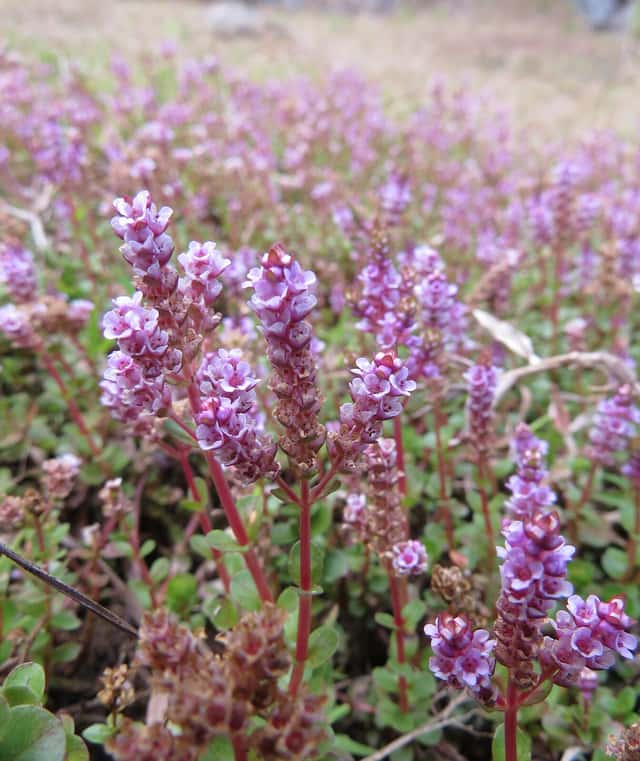
Rotala rotundifolia is a stem plant from the Lythraceae family, native to South and Southeast Asia, where it grows as a common weed in rice paddies and wetlands across India, China, Taiwan, Thailand, Laos, and Vietnam. It exhibits two distinct forms depending on the cultivation method: in its emersed form (above water), it develops rounded leaves, while submerged in an aquarium, its leaves are narrow and lanceolate. Under intense lighting, the stem tips and upper leaves take on hues ranging from pale pink to orange-red, whereas in low light, the plant remains a deep green.
How to Propagate Dwarf Rotala?
Stem cuttings
- 1 Cut a healthy portion of the stem, at least 2-3 inches long, just below a node.
- 2 Remove the lower leaves from the segment that will be buried in the substrate.
- 3 Plant the cutting directly into the nutrient substrate using planting tweezers, leaving the top part exposed.
- 4 Maintain good lighting and stable parameters until the cutting takes root and puts out new shoots.
Materials needed:
How Big Does Dwarf Rotala Grow?
TLDR: Dwarf Rotala can reach up to 30cm tall with Fast growth rate.
Max height
30cm
Growth rate
Fast
Foliage
Evergreen
Plant Uses
Ornamental
Great for decoration
Is your plant showing symptoms?
Click on the symptom to discover possible causes:
Meaning & Symbolism
In the aquarium hobby, it represents the vitality and adaptability of Asian river ecosystems.
Compare with similar plants
| Attribute | Difficulty | Light | Watering | Pet Safe |
|---|---|---|---|---|
| Field Maple | Easy | Bright indirect | 14d | ✓ |
| Silver Birch | Easy | Direct sun | 14d | ✓ |
| Common Blanketflower | Easy | Direct sun | 10d | ✓ |
| Cushion Bush | Easy | Direct sun | 14d | ✓ |
Choose & Compare
Sources & References
- Rotala rotundifolia: cuidados, luz, temperatura y pH | Plantas Acuáticas
- Rotala rotundifolia - Wikipedia
- How to grow Rotala Rotundifolia - The 2Hr Aquarist
- Common Mistakes with Rotala Rotundifolia and How to Avoid Them - Aquascaping Academy
- Rotala rotundifolia (Buch.-Ham. ex Roxb.) Koehne | Plants of the World Online | Kew Science





