Rosaceae
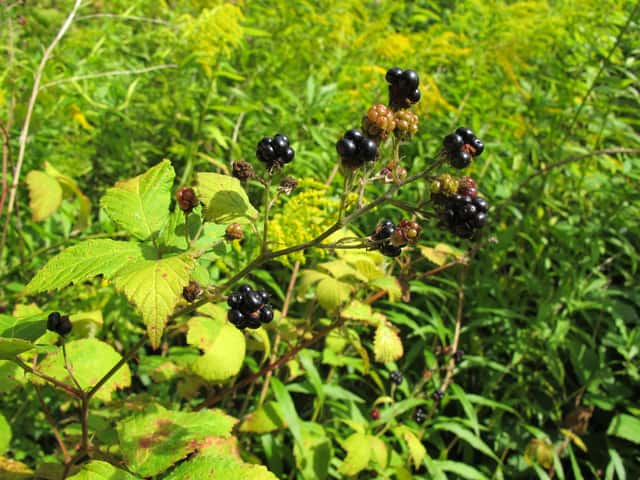
Grabowski's Bramble: Edible Plant
Rubus grabowskii
Grow it as you would any blackberry bramble: full sun, rich well-drained soil, and a sturdy support (fence, wall, or trellis) for the long arching canes. Water regularly while canes are establishing and through flowering and fruit set, then ease off once berries ripen. Cut spent (second-year) canes to the ground after fruiting and thin the new canes each winter to keep the plant open, productive, and manageable — left unchecked it spreads readily by tip-rooting and can become thicket-forming.
Every 7 days
Direct sun
-23° - 35°C
40% - 70%
Categories
What is Grabowski's Bramble?
Grabowski's Bramble (Rubus grabowskii) is a medium-care plant from the Rosaceae family. Grabowski's Bramble is one of the roughly 330+ microspecies that make up the European blackberry group (Rubus fruticosus aggregate), a complex of apomictic (seed-clone-forming) brambles found across hedgerows, woodland edges, and waste ground in central and northern Europe. Like its relatives, it is...
Grabowski's Bramble grows up to 7.0m, spread of 400cm, watering every 7 days, -23°C – 35°C, 40–70% humidity. It is not suitable for indoor environments and safe for pets.
Unlike many popular species, Grabowski's Bramble is safe to keep around pets.
How to Care for Grabowski's Bramble?
TLDR: Grabowski's Bramble needs Direct sun, watering every 7 days, and temperatures between -23-35°C with 40-70% humidity.
How Often Should You Water Grabowski's Bramble?
Keep soil evenly moist (roughly 2.5-4 cm of water a week) from flowering through fruit swell; established plants tolerate short dry spells but yield and berry size suffer if the plant is stressed while fruiting. Avoid waterlogging — brambles dislike wet feet.
How Much Light Does Grabowski's Bramble Need?
Needs full sun for the best flowering and fruit production; it will survive part shade but canes get leggy and fruiting drops off.
What Is the Best Soil for Grabowski's Bramble?
Prefers a loamy, humus-rich, well-drained soil with a slightly acidic to neutral pH (around 6.0-7.0). Adding compost or well-rotted manure at planting improves vigor.
What Pot Should You Use for Grabowski's Bramble?
Best grown directly in the ground against a support structure rather than in a container. If pot culture is unavoidable, use a large (40+ litre), sturdy, well-draining pot, since the vigorous root system and arching canes quickly outgrow smaller containers.
Care Schedule
Fertilize
Every 30 days
What Is Grabowski's Bramble and Where Does It Come From?
Grabowski's Bramble is one of the roughly 330+ microspecies that make up the European blackberry group (Rubus fruticosus aggregate), a complex of apomictic (seed-clone-forming) brambles found across hedgerows, woodland edges, and waste ground in central and northern Europe. Like its relatives, it is a vigorous, thorny, arching shrub with biennial canes: first-year canes grow vegetatively, then flower, fruit, and die back in their second year while new canes rise to replace them. Botanists distinguish it from other microspecies by its tapering prickles, leaves with a notably long terminal-leaflet stalk, a broad, often pyramid-shaped flower cluster, and white or pale pink flowers with hairy carpel tips. The blackberries it produces in late summer are edible and, like all brambles in the aggregate, it is valuable to wildlife as forage, nesting cover, and a nectar source for pollinators.
How to Propagate Grabowski's Bramble?
Tip layering
- This is how brambles naturally spread in the wild, so success rates are high.
- Do it in late summer to autumn for roots to establish before winter.
- 1 Choose a cane
Select a healthy, flexible first-year cane in late summer.
- 2 Bury the tip
Bend the cane tip down and bury the last few centimetres in soil or a sunken pot of compost.
- 3 Wait for rooting
Keep the buried tip moist; roots form within a few weeks as a new plantlet.
- 4 Sever and transplant
Once rooted, cut the new plant free from the parent cane and transplant it to its final spot.
Materials needed:
Hardwood cuttings
- Not every cutting will take — start with more than you need.
- Avoid waterlogging, which rots cuttings before they root.
- 1 Take cuttings
During dormancy, cut 15-20 cm sections from mature, pencil-thick canes.
- 2 Plant
Dip the base in rooting hormone if using, and insert two-thirds of the cutting into moist, well-draining compost.
- 3 Keep protected
Keep in a sheltered, frost-free spot and keep the mix lightly moist until spring growth appears.
Materials needed:
How Big Does Grabowski's Bramble Grow?
TLDR: Grabowski's Bramble can reach up to 7.0m tall with Fast growth rate.
Max height
7.0m
Spread
4.0m
Growth rate
Fast
Foliage
Semi-evergreen
Plant Uses
Edible
Can be consumed
Medicinal
Medicinal properties
Ornamental
Great for decoration
Medicinal Uses
- Leaves have traditionally been dried and brewed as a tannin-rich tea used in folk herbalism to help settle mild diarrhea and soothe sore throats or mouth irritation (astringent, anti-inflammatory action).
- Traditionally taken as a mild tonic during pregnancy in European folk herbal practice, though this and all medicinal uses should be discussed with a healthcare provider rather than treated as a recommendation.
Culinary Uses
- The ripe blackberries are edible fresh, and are widely used in jams, jellies, pies, crumbles, sauces, and juices.
- Young leaves can be dried and steeped for a mild herbal tea.
Is your plant showing symptoms?
Click on the symptom to discover possible causes:
What Diseases Commonly Affect Grabowski's Bramble?
TLDR: Grabowski's Bramble is susceptible to 9 known diseases. Monitor regularly for early detection.
Anthracnose
Anthracnose is a fungal disease caused by fungi in the genus Colletotrichum that affects many plants, including vegetables, fruits, and trees. The disease thrives in cool, wet conditions, causing dark, sunken lesions on leaves, stems, flowers, and fruits.
Rust
Rust is a common fungal disease caused by fungi in the order Pucciniales that affects a wide variety of plants. The disease gets its name from the characteristic orange, yellow, or reddish-brown pustules that appear on leaves, resembling metal rust. This obligate fungal parasite requires living plants to survive and can cause significant economic losses in agricultural crops.
Powdery Mildew
Powdery mildew is a common fungal disease caused by various fungi species including Erysiphe, Podosphaera, Oïdium, and Leveillula. It affects over 10,000 plant species worldwide. The disease thrives in warm, dry climates with high humidity and appears as a distinctive white powdery coating on plant surfaces.
Septoria Leaf Spot
Septoria leaf spot is a destructive fungal disease caused by Septoria lycopersici, particularly devastating during seasons of moderate temperature and abundant rainfall. The disease starts on lower leaves and progresses upward, causing small circular spots with tan to gray centers and dark brown margins. If left untreated, it can dramatically reduce plant yields and cause complete leaf blight.
Meaning & Symbolism
In European folk tradition, brambles were prized for their thorns as much as their fruit: hedges and wreaths of bramble were hung on doors and byres for protection against evil spirits and thieves, and the plant's habit of rooting wherever its canes touch the ground made it a folk symbol of renewal, resilience, and the turning of the seasons.
Compare with similar plants
| Attribute | Difficulty | Light | Watering | Pet Safe |
|---|---|---|---|---|
| Dark Fieldcap | Medium | Low light | 2d | ⚠️ |
| Azalea | Medium | Partial shade | 3d | ⚠️ |
| Muriel's Bamboo | Medium | Partial shade | 3d | ✓ |
| Bougainvillea | Medium | Direct sun | 7d | ⚠️ |
Choose & Compare
Sources & References
- Rubus fruticosus L. agg., Bramble - BSBI
- Rubus canduliger, notes on range structure of brambles (Rubus, Rosaceae) - Folia Geobotanica
- Blackberry Care Guide - Edible Landscaping
- Rubus fruticosus agg. (Blackberries) - Gardenia.net
- Blackberry - Clemson HGIC
- Blackberry Pests, Diseases and Weed Management - Wikifarmer
- List of caneberries diseases - Wikipedia
- Rubus fruticosus - Plants For A Future
- Blackberry Medicinal Uses - School of Wild Medicine
- Plant Folklore: Blackberries - The Herb Shoppe




