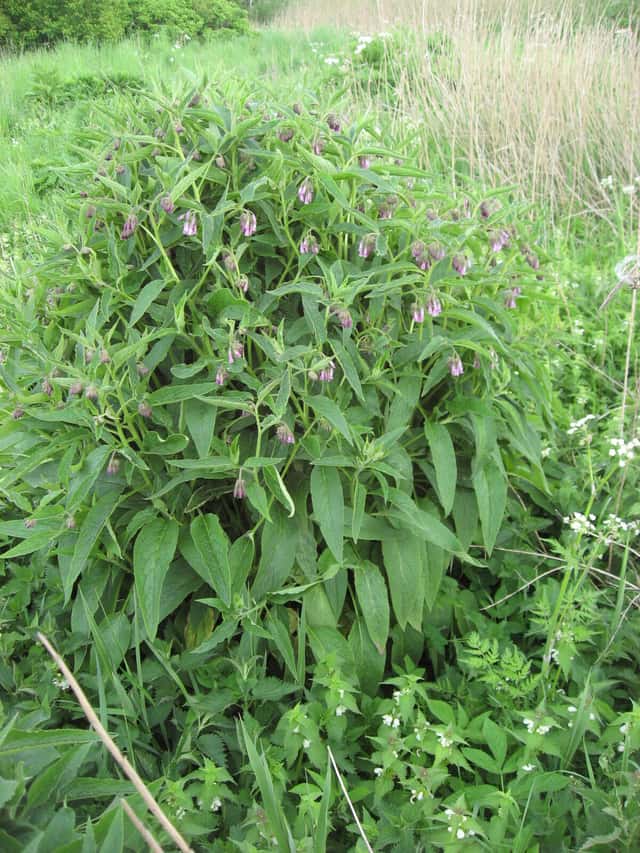
Boraginaceae
Russian Comfrey (Symphytum × uplandicum)
Symphytum × uplandicum
Easy to grow and largely self-sufficient once established, Russian comfrey tolerates poor soil, drought, and neglect. Give it room to spread, water during dry spells in its first year, and cut back several times per season to harvest leaves for compost or mulch — this also helps control its vigorous, spreading habit.
Every 7 days
Bright indirect
10° - 29°C
% - %
Categories
What is Russian Comfrey?
Russian Comfrey (Symphytum × uplandicum) is a easy-care plant from the Boraginaceae family. Russian comfrey (Symphytum × uplandicum) is a vigorous, hardy herbaceous perennial in the borage family (Boraginaceae), arising as a natural hybrid between common comfrey (Symphytum officinale) and rough comfrey (Symphytum asperum). It forms large clumps of coarse, bristly, lance-shaped leaves and s...
Russian Comfrey grows up to 1.5m, spread of 90cm, watering every 7 days, 10°C – 29°C. It is not suitable for indoor environments and not safe for pets.
Unlike many tropical plants, Russian Comfrey tolerates watering mistakes. Best for beginners. Without precautions, ingestion can cause irritation in pets. Keep out of reach of cats and dogs.
How to Care for Russian Comfrey?
TLDR: Russian Comfrey needs Bright indirect, watering every 7 days, and temperatures between 10-29°C with 40-70% humidity.
How Often Should You Water Russian Comfrey?
Water deeply but infrequently, letting the top few centimetres of soil dry out between waterings. Established plants are quite drought tolerant thanks to their deep taproot, though consistent moisture during the growing season encourages lush leaf growth.
How Much Light Does Russian Comfrey Need?
Grows best in full sun to part shade. More sun produces denser growth and more flowers, while light shade is tolerated, especially in hotter climates.
What Is the Best Soil for Russian Comfrey?
Prefers moderately fertile, moist, well-draining soil enriched with organic matter, with a pH between 6.0 and 7.5. Tolerates clay and poor soils once established, though it thrives with compost or well-rotted manure worked in.
What Pot Should You Use for Russian Comfrey?
Not typically container-grown due to its size and deep taproot — best planted directly in garden beds, herb gardens, or dedicated comfrey patches with room to spread. If potted, choose a very deep container of at least 40cm.
What Is Russian Comfrey and Where Does It Come From?
Russian comfrey (Symphytum × uplandicum) is a vigorous, hardy herbaceous perennial in the borage family (Boraginaceae), arising as a natural hybrid between common comfrey (Symphytum officinale) and rough comfrey (Symphytum asperum). It forms large clumps of coarse, bristly, lance-shaped leaves and sends up branching stems topped with nodding, bell-shaped flowers that open pink-blue and mature to violet-purple, blooming from late spring through summer. Prized by organic gardeners as a "dynamic accumulator," its deep taproot draws potassium and other minerals up from the subsoil, making the leaves an excellent source material for compost activators, liquid feeds, and mulch. Note that comfrey contains pyrrolizidine alkaloids that are toxic to the liver if ingested, so its historical internal medicinal use has been discouraged in favor of external, topical applications only.
How to Propagate Russian Comfrey?
Root division
Comfrey regenerates readily from even small root fragments left in the soil, so dig up the entire root when relocating a plant. Named cultivars like Bocking 14 are propagated only by division since they rarely set viable seed.
- 1 In early spring, dig up an established clump once new growth appears
- 2 Use a sharp spade to cut the crown and root mass into sections, each with at least one growth bud and a piece of taproot
- 3 Replant sections immediately at the same depth, spacing at least 60cm apart
- 4 Water thoroughly after planting and keep soil moist until new growth is vigorous
Materials needed:
Root cuttings
Root cuttings are a reliable way to bulk up stock quickly since comfrey roots sprout readily from fragments.
- 1 Select a healthy root about pencil-thickness from an established plant
- 2 Cut into 5-8cm sections
- 3 Plant horizontally about 5cm deep in prepared soil or pots
- 4 Keep consistently moist until shoots emerge
Materials needed:
How Big Does Russian Comfrey Grow?
TLDR: Russian Comfrey can reach up to 1.5m tall with Fast growth rate.
Max height
1.5m
Spread
90cm
Growth rate
Fast
Foliage
Deciduous
Warning: Toxic Plant
This plant can be toxic if ingested. Keep out of reach of:
Plant Uses
Medicinal
Medicinal properties
Ground Cover
Soil coverage
Medicinal Uses
- Historically used externally as poultices, ointments, and compresses for bruises, sprains, and minor skin irritation — internal use is discouraged due to liver-toxic pyrrolizidine alkaloids
Is your plant showing symptoms?
Click on the symptom to discover possible causes:
What Diseases Commonly Affect Russian Comfrey?
TLDR: Russian Comfrey is susceptible to 5 known diseases. Monitor regularly for early detection.
Rust
Rust is a common fungal disease caused by fungi in the order Pucciniales that affects a wide variety of plants. The disease gets its name from the characteristic orange, yellow, or reddish-brown pustules that appear on leaves, resembling metal rust. This obligate fungal parasite requires living plants to survive and can cause significant economic losses in agricultural crops.
Powdery Mildew
Powdery mildew is a common fungal disease caused by various fungi species including Erysiphe, Podosphaera, Oïdium, and Leveillula. It affects over 10,000 plant species worldwide. The disease thrives in warm, dry climates with high humidity and appears as a distinctive white powdery coating on plant surfaces.
Root Rot
Root rot is a serious fungal disease that affects the root system of plants, causing them to decay and die. It is primarily caused by overwatering, poor drainage, or soil-borne fungi such as Pythium, Phytophthora, Rhizoctonia, and Fusarium. The disease thrives in waterlogged conditions where roots are deprived of oxygen, making them susceptible to fungal infection.
Slugs and Snails
Slugs and snails are mollusks that feed on plant tissue, causing irregular holes in leaves and damage to young seedlings. They are most active at night and in moist conditions, leaving characteristic silvery slime trails. These pests can quickly devastate gardens, especially during wet seasons.
Meaning & Symbolism
Comfrey's old English folk name, "knitbone," reflects centuries of traditional use for poulticing bruises, sprains, and broken bones.
Fun Facts
Russian comfrey is a natural hybrid between common comfrey and rough comfrey, first recorded in the Caucasus region.
Its deep taproot can reach over a metre into the subsoil, mining minerals unavailable to shallow-rooted plants.
The popular cultivar 'Bocking 14' was bred specifically for high-yield leaf production for organic fertilizer, not for flowering or seed.
Bees and other pollinators are strongly attracted to its nectar-rich, bell-shaped flowers.
Frequently asked questions
Is Russian comfrey safe to eat?
How do I use comfrey to make garden fertilizer?
Does Russian comfrey spread aggressively?
What conditions does Russian comfrey need to thrive?
Compare with similar plants
| Attribute | Difficulty | Light | Watering | Pet Safe |
|---|---|---|---|---|
| Field Maple | Easy | Bright indirect | 14d | ✓ |
| Silver Birch | Easy | Direct sun | 14d | ✓ |
| Common Blanketflower | Easy | Direct sun | 10d | ✓ |
| Cushion Bush | Easy | Direct sun | 14d | ✓ |
Choose & Compare
Sources & References
- RHS - Symphytum x uplandicum (Russian comfrey)
- Wikipedia - Symphytum
- Practical Plants - Symphytum uplandicum
- LiverTox (NIH) - Comfrey
- PMC - Pyrrolizidine Alkaloids Profile in Comfrey Roots and Leaves
- Mountain Valley Growers - Russian Comfrey
- Missouri Botanical Garden Plant Finder - Symphytum x uplandicum





