Moraceae
Sacred Fig (Ficus religiosa) Care Guide
Ficus religiosa
A fast-growing, resilient fig that thrives in bright light with regular watering during the growing season and a drier, cooler rest in winter. Tolerant of pruning and root restriction, which makes it an excellent bonsai or large indoor tree when given enough light.
Every 7 days
Bright indirect
15° - 32°C
40% - 80%
Categories
What is Sacred Fig?
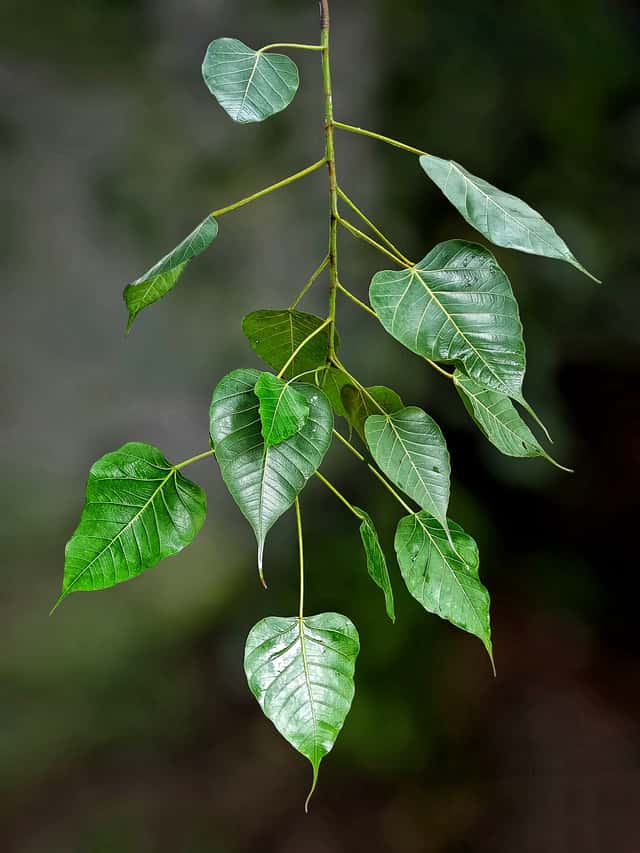
Sacred Fig (Ficus religiosa) is a medium-care plant from the Moraceae family. Ficus religiosa, native to the Indian subcontinent and Indochina, is a large semi-evergreen fig tree in the Moraceae family. In the wild it develops a broad, spreading canopy with distinctive heart-shaped, long-tipped leaves that shimmer and rustle in the slightest breeze, a trait celebrated in Budd...
Sacred Fig grows up to 30.0m, spread of 3000cm, watering every 7 days, 15°C – 32°C, 40–80% humidity. It is suitable for indoor environments and not safe for pets.
Without precautions, ingestion can cause irritation in pets. Keep out of reach of cats and dogs. Without adequate drainage, root rot can develop within 14 days.
How to Care for Sacred Fig?
TLDR: Sacred Fig needs Bright indirect, watering every 7 days, and temperatures between 15-32°C with 40-80% humidity.
How Often Should You Water Sacred Fig?
Water thoroughly when the top inch (2.5 cm) of soil is dry, then let excess drain away completely. Cut back watering in winter when growth slows.
How Much Light Does Sacred Fig Need?
Give it bright, indirect light with a few hours of gentle direct morning sun; insufficient light causes leggy growth and leaf drop.
What Is the Best Soil for Sacred Fig?
Use a loose, fertile, well-draining mix: one part garden loam, one part leaf mould or compost, and a half part coarse sand or perlite.
What Pot Should You Use for Sacred Fig?
A sturdy, heavy terracotta or ceramic pot with ample drainage holes to anchor the vigorous root system and prevent waterlogging.
Care Schedule
Fertilize
Every 30 days
Misting
Every 7 days
Rotate
Every 14 days
Repot
Every 730 days
What Is Sacred Fig and Where Does It Come From?
Ficus religiosa, native to the Indian subcontinent and Indochina, is a large semi-evergreen fig tree in the Moraceae family. In the wild it develops a broad, spreading canopy with distinctive heart-shaped, long-tipped leaves that shimmer and rustle in the slightest breeze, a trait celebrated in Buddhist and Hindu literature. Grown as a bonsai or potted specimen it stays compact while retaining its iconic drip-tip foliage.
How to Propagate Sacred Fig?
Seed Germination
Seeds are extremely small and need light to germinate, so do not bury them.
- 1 Extract tiny seeds from ripe figs and rinse off the pulp
- 2 Sow seeds on the surface of a moist, well-draining seed mix without covering them
- 3 Keep in a warm, bright spot with high humidity (cover with plastic wrap)
- 4 Mist regularly to keep the surface moist until germination
Materials needed:
Air Layering
Keep the moss consistently moist throughout the rooting period.
- 1 Make an upward cut or remove a ring of bark on a healthy branch
- 2 Apply rooting hormone to the wound
- 3 Wrap moist sphagnum moss around the cut and cover with plastic film
- 4 Once roots fill the moss, cut below the new roots and pot up
Materials needed:
Stem Cutting
Wear gloves, the latex sap can irritate skin.
- 1 Take a 15-20 cm semi-hardwood cutting with 2-3 leaves
- 2 Let the cut end dry for a few hours to seal the latex sap
- 3 Dip in rooting hormone and insert into a moist, well-draining mix
- 4 Keep warm and humid until roots establish
Materials needed:
How Big Does Sacred Fig Grow?
TLDR: Sacred Fig can reach up to 30.0m tall with Fast growth rate.
Max height
30.0m
Spread
30.0m
Growth rate
Fast
Foliage
Semi-evergreen
Warning: Toxic Plant
This plant can be toxic if ingested. Keep out of reach of:
Plant Uses
Ornamental
Great for decoration
Medicinal
Medicinal properties
Air Purifying
Improves air quality
Medicinal Uses
- Bark and leaf decoctions used in Ayurveda and Unani medicine for diabetes management (hypoglycemic activity)
- Anti-inflammatory preparations from leaves and bark for asthma and bronchitis
- Root infusions traditionally used to soothe digestive discomfort
- Ripe fruit used as a mild natural laxative
- Bark extracts studied for wound healing and ulcer treatment
Is your plant showing symptoms?
Click on the symptom to discover possible causes:
What Diseases Commonly Affect Sacred Fig?
TLDR: Sacred Fig is susceptible to 11 known diseases. Monitor regularly for early detection.
Powdery Mildew
Powdery mildew is a common fungal disease caused by various fungi species including Erysiphe, Podosphaera, Oïdium, and Leveillula. It affects over 10,000 plant species worldwide. The disease thrives in warm, dry climates with high humidity and appears as a distinctive white powdery coating on plant surfaces.
Alternaria Leaf Spot
Alternaria leaf spot is a common fungal disease caused by Alternaria solani and Alternaria alternata that affects a wide range of plants including tomatoes, potatoes, brassicas, and ornamentals. The disease thrives in warm, humid conditions and can cause significant crop damage if left untreated. Spores overwinter on plant debris and can attach to seeds, making complete elimination difficult.
Rust
Rust is a common fungal disease caused by fungi in the order Pucciniales that affects a wide variety of plants. The disease gets its name from the characteristic orange, yellow, or reddish-brown pustules that appear on leaves, resembling metal rust. This obligate fungal parasite requires living plants to survive and can cause significant economic losses in agricultural crops.
Anthracnose
Anthracnose is a fungal disease caused by fungi in the genus Colletotrichum that affects many plants, including vegetables, fruits, and trees. The disease thrives in cool, wet conditions, causing dark, sunken lesions on leaves, stems, flowers, and fruits.
Meaning & Symbolism
The Sacred Fig is revered as the tree of enlightenment: Buddhists honor it as the Bodhi Tree beneath which the Buddha awakened at Bodh Gaya, while Hindus worship it as a living form of the Trimurti and Sadhus meditate in its shade. It also carries meaning in Jainism and Sikhism as a symbol of wisdom, protection and longevity.
Fun Facts
Its leaves have an unusually long, tapering drip tip that helps shed monsoon rainwater quickly.
The tree is believed to be the exact species under which the Buddha attained enlightenment in Bodh Gaya.
A sacred fig can live for centuries; some specimens associated with temples are said to be over 2,000 years old.
Despite its religious fame, its small figs are not cultivated for eating like the common fig, Ficus carica.
Frequently asked questions
Is the Sacred Fig safe for pets?
Why is Ficus religiosa called the Bodhi Tree?
How fast does a Sacred Fig grow?
Can I grow Ficus religiosa as a bonsai?
Compare with similar plants
| Attribute | Difficulty | Light | Watering | Pet Safe |
|---|---|---|---|---|
| Dark Fieldcap | Medium | Low light | 2d | ⚠️ |
| Azalea | Medium | Partial shade | 3d | ⚠️ |
| Muriel's Bamboo | Medium | Partial shade | 3d | ✓ |
| Bougainvillea | Medium | Direct sun | 7d | ⚠️ |
Choose & Compare
Sources & References
- Ficus religiosa - Wikipedia
- Ficus Religiosa (Bodhi Tree) - Gardenia.net
- Ficus Religiosa Care Guide - Plantophiles
- Caring for Ficus religiosa: The Sacred Fig Tree
- Ficus religiosa - Missouri Botanical Garden Plant Finder
- Ficus Are Toxic To Pets - Pet Poison Helpline
- An overview of the religious and medicinal tree - Ficus religiosa
- Common Ficus Tree Pests & Diseases




