Asparagaceae
Safed Musli (Chlorophytum borivilianum)
Chlorophytum borivilianum
A warm, wet-season plant: part shade or filtered sun, rich sandy well-drained soil, steady moisture while in leaf and very little water while dormant.
Every 4 days
Partial shade
12° - 38°C
50% - 90%
Categories
What is Safed Musli?
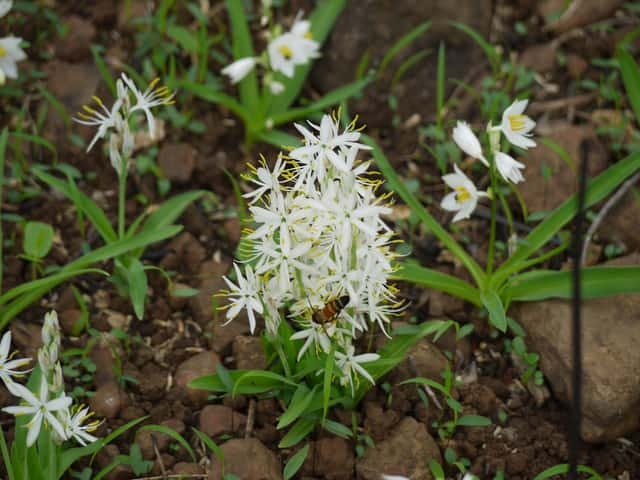
Safed Musli (Chlorophytum borivilianum) is a medium-care plant from the Asparagaceae family. Chlorophytum borivilianum is an herb from India, a relative of the spider plant, that grows on the floor of tropical monsoon forests. It forms a rosette of lance-shaped leaves up to about 45 cm and, in the rainy season, sends up stalks of small, white, star-shaped flowers. Underground it keeps a clu...
Safed Musli grows up to 45cm, spread of 30cm, watering every 4 days, 12°C – 38°C, 50–90% humidity. It is not suitable for indoor environments and safe for pets.
Unlike many popular species, Safed Musli is safe to keep around pets.
How to Care for Safed Musli?
TLDR: Safed Musli needs Partial shade, watering every 4 days, and temperatures between 12-38°C with 50-90% humidity.
How Often Should You Water Safed Musli?
Keep the soil moist, never soggy, while it has leaves: water when the top 2 cm dry out. When the leaves yellow and die back, cut watering right down and let the roots rest almost dry until the next season.
How Much Light Does Safed Musli Need?
Part shade or filtered sun. On Indian farms it grows in full sun during the monsoon, but harsh midday sun in dry weather scorches the leaves.
What Is the Best Soil for Safed Musli?
Loose, sandy loam rich in organic matter, pH 6 to 8. Avoid heavy clay: the roots rot in standing water. Raised beds help.
What Pot Should You Use for Safed Musli?
A wide, deep pot of at least 30 cm with good drainage holes and a drainage layer. The roots grow downward and dislike crowding.
Care Schedule
Fertilize
Every 30 days
Repot
Every 365 days
What Is Safed Musli and Where Does It Come From?
Chlorophytum borivilianum is an herb from India, a relative of the spider plant, that grows on the floor of tropical monsoon forests. It forms a rosette of lance-shaped leaves up to about 45 cm and, in the rainy season, sends up stalks of small, white, star-shaped flowers. Underground it keeps a cluster of thick white storage roots, the "safed musli" (white musli), used for centuries in traditional Indian medicine as a tonic. When the rains end, the leaves die back and the plant spends the dry season dormant as roots only. Wild populations are critically endangered by collection; almost all supply now comes from farms in India.
How to Propagate Safed Musli?
Dividing the tuberous roots
Each piece needs a bit of crown or it will not sprout. Pieces with thicker roots grow stronger.
- 1 Dig up the root cluster after the leaves die back
- 2 Split it into pieces, each with part of the crown and 1-3 roots
- 3 Store in a dry, airy place until the rains begin
- 4 Plant 2-3 cm deep in a raised bed and water
Materials needed:
Seed
Germination is poor and seedlings take more than a year to form good roots. Division is far more reliable.
- 1 Collect the black seeds from ripe capsules
- 2 Sow straight away in a tray of sandy mix
- 3 Keep moist and in part shade
- 4 Transplant when seedlings have 3-4 leaves
Materials needed:
How Big Does Safed Musli Grow?
TLDR: Safed Musli can reach up to 45cm tall with Medium growth rate.
Max height
45cm
Spread
30cm
Growth rate
Medium
Foliage
Deciduous
Plant Uses
Medicinal
Medicinal properties
Edible
Can be consumed
Medicinal Uses
- In Ayurveda the dried root is used as a tonic and aphrodisiac (vajikarana)
- Sold as an adaptogen supplement; human studies are still limited. Talk to a doctor before using it
Culinary Uses
- In parts of India the young leaves are cooked and eaten as a vegetable
Is your plant showing symptoms?
Click on the symptom to discover possible causes:
What Diseases Commonly Affect Safed Musli?
TLDR: Safed Musli is susceptible to 5 known diseases. Monitor regularly for early detection.
Leaf Spot
Leaf spot is a common fungal disease caused by various pathogens including Alternaria, Ascochyta, Colletotrichum, Septoria, and Venturia. It primarily affects leaves, causing discolored spots that can lead to premature leaf drop if left untreated.
Fusarium Wilt
Fusarium is a soil-borne fungus that primarily attacks the roots and vascular tissues of plants. It enters through small wounds or stressed roots, is favored by warm temperatures and waterlogging, and then obstructs the flow of sap. Symptoms include yellowing, often on only one side of the plant, wilting even with moist soil, stunted growth, and, when cutting the stem, internal brown streaks. It frequently affects tomatoes, peppers, eggplants, basil, cucumbers, and zucchini, as well as ornamentals like carnations and cyclamen. In potted plants, it can manifest as root rot with a darkened crown.
Anthracnose
Anthracnose is a fungal disease caused by fungi in the genus Colletotrichum that affects many plants, including vegetables, fruits, and trees. The disease thrives in cool, wet conditions, causing dark, sunken lesions on leaves, stems, flowers, and fruits.
Root Rot
Root rot is a serious fungal disease that affects the root system of plants, causing them to decay and die. It is primarily caused by overwatering, poor drainage, or soil-borne fungi such as Pythium, Phytophthora, Rhizoctonia, and Fusarium. The disease thrives in waterlogged conditions where roots are deprived of oxygen, making them susceptible to fungal infection.
Fun Facts
In India it is nicknamed "white gold" for the price of its dried roots
It is a relative of the common spider plant
Wild populations are listed as critically endangered because of over-collection
Frequently asked questions
Why did my safed musli die back?
How often should I water safed musli?
Can I grow it in a pot?
When are the roots harvested?
Compare with similar plants
| Attribute | Difficulty | Light | Watering | Pet Safe |
|---|---|---|---|---|
| Dark Fieldcap | Medium | Low light | 2d | ⚠️ |
| Azalea | Medium | Partial shade | 3d | ⚠️ |
| Muriel's Bamboo | Medium | Partial shade | 3d | ✓ |
| Bougainvillea | Medium | Direct sun | 7d | ⚠️ |