Cistaceae
Sage-leaved rockrose: Ground Cover Plant
Cistus salviifolius
A hardy, low-maintenance plant that thrives in full sun and poor, well-drained soils; it is highly drought-tolerant but cannot withstand waterlogging.
Every 21 days
Direct sun
-10° - 40°C
20% - 60%
Categories
What is Sage-leaved rockrose?
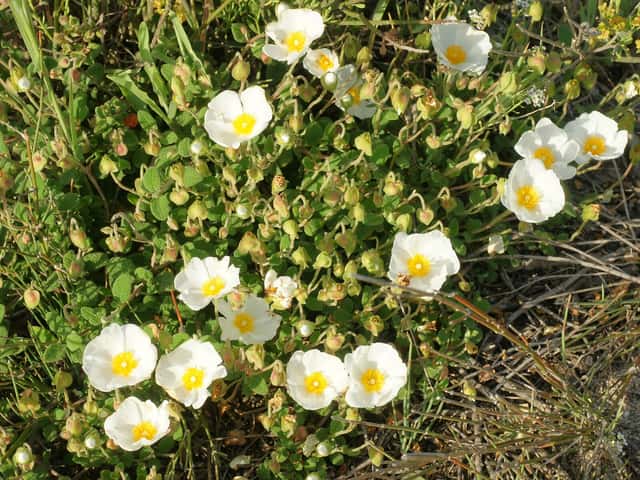
Sage-leaved rockrose (Cistus salviifolius) is a easy-care plant from the Cistaceae family. Cistus salviifolius, or sage-leaved rockrose, is a small evergreen shrub typical of the Mediterranean scrub, reaching heights of about 24 inches with a prostrate-spreading habit. The oval, wrinkled leaves resemble those of sage and are covered in a light grey-green down. Between spring and early sum...
Sage-leaved rockrose grows up to 60cm, spread of 100cm, watering every 21 days, -10°C – 40°C, 20–60% humidity. It is not suitable for indoor environments and safe for pets.
Unlike many tropical plants, Sage-leaved rockrose tolerates watering mistakes. Best for beginners. Unlike many popular species, Sage-leaved rockrose is safe to keep around pets.
How to Care for Sage-leaved rockrose?
TLDR: Sage-leaved rockrose needs Direct sun, watering every 21 days, and temperatures between -10-40°C with 20-60% humidity.
How Often Should You Water Sage-leaved rockrose?
Once established, water sparingly: allow the soil to dry out completely between waterings, as excess water promotes root rot.
How Much Light Does Sage-leaved rockrose Need?
Prefers full sun positions; it can tolerate partial shade, but will bloom less abundantly if it does not receive direct light for most of the day.
What Is the Best Soil for Sage-leaved rockrose?
Grows well in sandy or poor soils as long as they are well-drained; it is not picky about pH and tolerates both calcareous and slightly acidic soils.
What Pot Should You Use for Sage-leaved rockrose?
Cultivation in open ground is preferred; if grown in a pot, choose a terracotta container with large drainage holes and a sandy-gravelly substrate to avoid water stagnation harmful to the roots.
Care Schedule
Fertilize
Every 365 days
What Is Sage-leaved rockrose and Where Does It Come From?
Cistus salviifolius, or sage-leaved rockrose, is a small evergreen shrub typical of the Mediterranean scrub, reaching heights of about 24 inches with a prostrate-spreading habit. The oval, wrinkled leaves resemble those of sage and are covered in a light grey-green down. Between spring and early summer, it produces numerous white five-petaled flowers, often featuring a small yellow spot at the base, which open in the morning and drop within a single day. It is a pioneer species, capable of rapidly colonizing poor, arid soils and regenerating after wildfires.
How Big Does Sage-leaved rockrose Grow?
TLDR: Sage-leaved rockrose can reach up to 60cm tall with Fast growth rate.
Max height
60cm
Spread
1.0m
Growth rate
Fast
Foliage
Evergreen
Plant Uses
Ornamental
Great for decoration
Ground Cover
Soil coverage
Aromatic
Pleasant fragrance
Medicinal
Medicinal properties
Edible
Can be consumed
Medicinal Uses
- Traditional use in Mediterranean folk medicine
- Studied for its polyphenol content with antioxidant activity
- Preliminary research indicates a possible inhibitory effect on alpha-amylase and alpha-glucosidase, of interest for blood sugar control
Culinary Uses
- Leaves occasionally used as a seasoning in local folk traditions
Is your plant showing symptoms?
Click on the symptom to discover possible causes:
What Diseases Commonly Affect Sage-leaved rockrose?
TLDR: Sage-leaved rockrose is susceptible to 7 known diseases. Monitor regularly for early detection.
Root Rot
Root rot is a serious fungal disease that affects the root system of plants, causing them to decay and die. It is primarily caused by overwatering, poor drainage, or soil-borne fungi such as Pythium, Phytophthora, Rhizoctonia, and Fusarium. The disease thrives in waterlogged conditions where roots are deprived of oxygen, making them susceptible to fungal infection.
Phytophthora Root Rot
Disease caused by fungus-like organisms (oomycetes) that live in soil and can survive for years. It affects roots, stem, and crown of plants, being especially severe in waterlogged or poorly drained soils. It is the second most common cause of root rot in trees and shrubs.
Grey Mould
Powdery Mildew
Powdery mildew is a common fungal disease caused by various fungi species including Erysiphe, Podosphaera, Oïdium, and Leveillula. It affects over 10,000 plant species worldwide. The disease thrives in warm, dry climates with high humidity and appears as a distinctive white powdery coating on plant surfaces.
Meaning & Symbolism
The rockrose is considered a symbol of resilience and rebirth: as a pioneer species of the Mediterranean scrub, its seeds germinate more easily after fire, allowing the vegetation to regenerate.
Compare with similar plants
| Attribute | Difficulty | Light | Watering | Pet Safe |
|---|---|---|---|---|
| Field Maple | Easy | Bright indirect | 14d | ✓ |
| Silver Birch | Easy | Direct sun | 14d | ✓ |
| Common Blanketflower | Easy | Direct sun | 10d | ✓ |
| Cushion Bush | Easy | Direct sun | 14d | ✓ |
Choose & Compare
Sources & References
- Cistus salviifolius | sage-leaved rock rose - RHS
- Cistus salviifolius - Sage Leaf Rock Rose - PFAF Plant Database
- Cistus salviifolius: Complete care and use guide for xeriscapes
- Rockrose (Cistus spp.)-Root Rot - PNW Plant Disease Handbook
- Cistus albidus L.—Review of a Traditional Mediterranean Medicinal Plant with Pharmacological Potential
- Ossigeno – Cisto a foglie di salvia (Cistus salviifolius)





