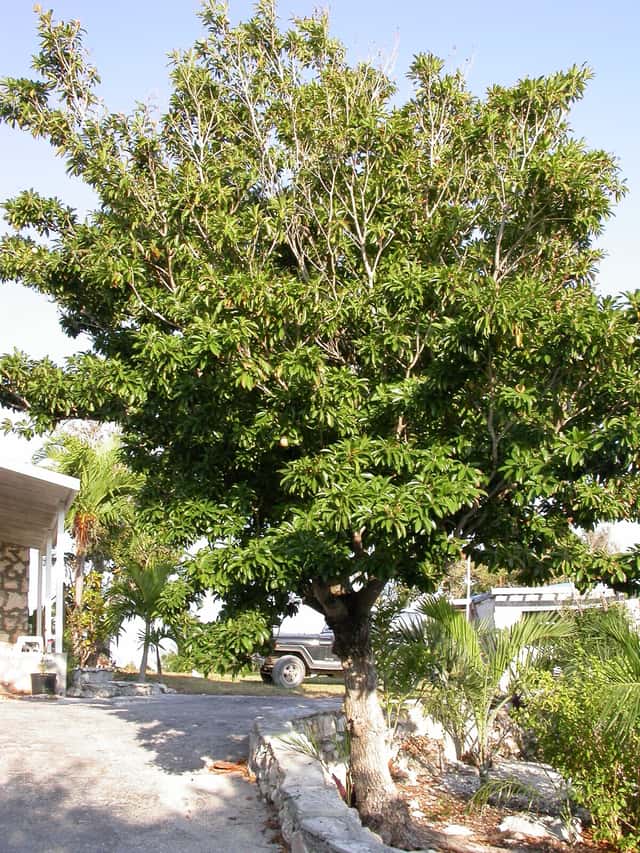
Sapotaceae
Sapodilla: Edible Plant
Manilkara zapota
It requires full sun (at least 6-8 hours of direct light per day), moderate watering allowing the soil surface to dry between waterings, and deep, sandy-loam, well-drained soil with a slightly acidic to neutral pH (6-7.5). It is a slow-growing tree, drought-tolerant once established, but very sensitive to cold and frost.
Every 7 days
Direct sun
15° - 35°C
50% - 80%
Categories
What is Sapodilla?
Sapodilla (Manilkara zapota) is a medium-care plant from the Sapotaceae family. The sapodilla (Manilkara zapota) is an evergreen fruit tree in the Sapotaceae family, native to southern Mexico, the Yucatan, and Central America. In the wild, it can exceed 30 m in height, though cultivated specimens are usually kept between 9 and 15 m. Its foliage is dense and glossy dark green, i...
Sapodilla grows up to 15.0m, spread of 800cm, watering every 7 days, 15°C – 35°C, 50–80% humidity. It is suitable for indoor environments and not safe for pets.
Without precautions, ingestion can cause irritation in pets. Keep out of reach of cats and dogs. Without adequate drainage, root rot can develop within 14 days.
How to Care for Sapodilla?
TLDR: Sapodilla needs Direct sun, watering every 7 days, and temperatures between 15-35°C with 50-80% humidity.
How Often Should You Water Sapodilla?
Water deeply every 7-10 days, allowing the top few inches of soil to dry out between waterings. Increase frequency during flowering and fruit formation, and reduce watering in winter. Avoid waterlogging: excess moisture in poorly drained soils promotes root rot.
How Much Light Does Sapodilla Need?
Place it in the sunniest spot available: it needs direct full sun most of the day to grow and fruit well. It does not tolerate shade or low-light interiors.
What Is the Best Soil for Sapodilla?
Use a deep, loose, and well-drained substrate with a sandy-loam texture rich in organic matter and a pH between 6 and 7.5. It tolerates stony or calcareous soils as long as they drain well; avoid compact or waterlogged substrates.
What Pot Should You Use for Sapodilla?
For young specimens, use a large, deep clay or terracotta pot with good drainage, as it develops a deep taproot. As it grows, it should be transplanted into increasingly larger containers or moved to its permanent location in the ground.
Care Schedule
Fertilize
Every 60 days
Misting
Every 4 days
Rotate
Every 15 days
Repot
Every 730 days
What Is Sapodilla and Where Does It Come From?
The sapodilla (Manilkara zapota) is an evergreen fruit tree in the Sapotaceae family, native to southern Mexico, the Yucatan, and Central America. In the wild, it can exceed 30 m in height, though cultivated specimens are usually kept between 9 and 15 m. Its foliage is dense and glossy dark green, its bell-shaped whitish flowers are inconspicuous, and its fruit—with sweet pulp and a grainy texture—is highly prized in tropical cuisine. Historically, the latex from its bark (chicle) was the basis for Mayan chewing gum.
How to Propagate Sapodilla?
Grafting
- 1 Select a healthy sapodilla seedling rootstock at least 1 year old.
- 2 Choose a productive variety as a bud or scion (side-veneer or shield grafting).
- 3 Make a clean cut in the rootstock and insert the scion or bud, ensuring cambial contact.
- 4 Secure with grafting tape and cover the union point to maintain humidity.
- 5 Keep in partial shade until the bud sprouts (several weeks).
- 6 Once established, gradually remove rootstock shoots below the graft.
Materials needed:
Seed
- 1 Extract seeds from a well-ripened fruit and wash them to remove pulp residue.
- 2 Sow in a light, well-drained substrate at a depth of 1-2 cm.
- 3 Keep the substrate moist and in a warm place (24-30°C).
- 4 Germination occurs in 3-4 weeks.
- 5 Transplant to a larger pot when the seedling has several true leaves.
Materials needed:
How Big Does Sapodilla Grow?
TLDR: Sapodilla can reach up to 15.0m tall with Slow growth rate.
Max height
15.0m
Spread
8.0m
Growth rate
Slow
Foliage
Evergreen
Warning: Toxic Plant
This plant can be toxic if ingested. Keep out of reach of:
Plant Uses
Ornamental
Great for decoration
Edible
Can be consumed
Medicinal
Medicinal properties
Medicinal Uses
- Leaf extracts with reported anti-diabetic, antioxidant, and hypocholesterolemic effects in preliminary studies
- Seed extracts with antibacterial activity against some bacteria
- Tannins from the green fruit with astringent properties, traditionally used against diarrhea
- Caution: seeds have a hard shell with a hook (choking hazard) and should not be chewed or crushed
Culinary Uses
- Ripe fruit eaten fresh as a dessert, with a sweet flavor and grainy texture similar to a ripe pear
- Pulp used in smoothies, ice creams, sorbets, and shakes
- Production of jams, syrups, and preserves
- Historically, the latex (chicle) from the bark was used to make chewing gum
Is your plant showing symptoms?
Click on the symptom to discover possible causes:
What Diseases Commonly Affect Sapodilla?
TLDR: Sapodilla is susceptible to 10 known diseases. Monitor regularly for early detection.
Anthracnose
Anthracnose is a fungal disease caused by fungi in the genus Colletotrichum that affects many plants, including vegetables, fruits, and trees. The disease thrives in cool, wet conditions, causing dark, sunken lesions on leaves, stems, flowers, and fruits.
Leaf Spot
Leaf spot is a common fungal disease caused by various pathogens including Alternaria, Ascochyta, Colletotrichum, Septoria, and Venturia. It primarily affects leaves, causing discolored spots that can lead to premature leaf drop if left untreated.
Rust
Rust is a common fungal disease caused by fungi in the order Pucciniales that affects a wide variety of plants. The disease gets its name from the characteristic orange, yellow, or reddish-brown pustules that appear on leaves, resembling metal rust. This obligate fungal parasite requires living plants to survive and can cause significant economic losses in agricultural crops.
Root Rot
Root rot is a serious fungal disease that affects the root system of plants, causing them to decay and die. It is primarily caused by overwatering, poor drainage, or soil-borne fungi such as Pythium, Phytophthora, Rhizoctonia, and Fusarium. The disease thrives in waterlogged conditions where roots are deprived of oxygen, making them susceptible to fungal infection.
Meaning & Symbolism
In Mesoamerica, the sapodilla is an iconic tree: its latex (chicle) was the basis of traditional Mayan chewing gum, and the tree symbolizes resilience, longevity, and abundance due to its durable wood and sweet fruit.
Compare with similar plants
| Attribute | Difficulty | Light | Watering | Pet Safe |
|---|---|---|---|---|
| Dark Fieldcap | Medium | Low light | 2d | ⚠️ |
| Azalea | Medium | Partial shade | 3d | ⚠️ |
| Muriel's Bamboo | Medium | Partial shade | 3d | ✓ |
| Bougainvillea | Medium | Direct sun | 7d | ⚠️ |




