Lauraceae
Sassafras: Aromatic Plant
Sassafras albidum
Thrives best in full sun to light shade in well-drained, slightly acidic to neutral soil (pH 5.5-7.5). Established trees are moderately drought-tolerant, but young plants should be watered regularly during the first few seasons. Requires minimal pruning and fertilization once established; its deep taproot makes it unsuitable for transplanting or container growing.
Every 10 days
Bright indirect
-29° - 38°C
% - %
Categories
What is Sassafras?
Sassafras (Sassafras albidum) is a medium-care plant from the Lauraceae family. Sassafras albidum is a deciduous tree native to eastern North America, ranging from southern Ontario and New England to Florida and Texas. It is recognized by its characteristic three-lobed leaves, which can have three different shapes on the same branch (entire, mitten-shaped with one lobe, and thr...
Sassafras grows up to 18.0m, spread of 1000cm, watering every 10 days, -29°C – 38°C. It is not suitable for indoor environments and not safe for pets.
Without precautions, ingestion can cause irritation in pets. Keep out of reach of cats and dogs.
How to Care for Sassafras?
TLDR: Sassafras needs Bright indirect, watering every 10 days, and temperatures between -29-38°C with 40-70% humidity.
How Often Should You Water Sassafras?
Keep the soil evenly moist for the first 1-2 seasons after planting. Established trees manage with natural rainfall and only need watering during prolonged periods of drought.
How Much Light Does Sassafras Need?
Young trees tolerate shade under the forest canopy, but mature trees require full sun for vigorous growth and the best fall color.
What Is the Best Soil for Sassafras?
Prefers loose, sandy to loamy soil with good drainage and a pH between 5.5 and 7.5. Avoid heavy, waterlogged, or highly calcareous soils.
What Pot Should You Use for Sassafras?
Not suitable for container cultivation due to the deep, sensitive taproot—best planted directly in the ground at its final growing site.
Care Schedule
Fertilize
Every 180 days
What Is Sassafras and Where Does It Come From?
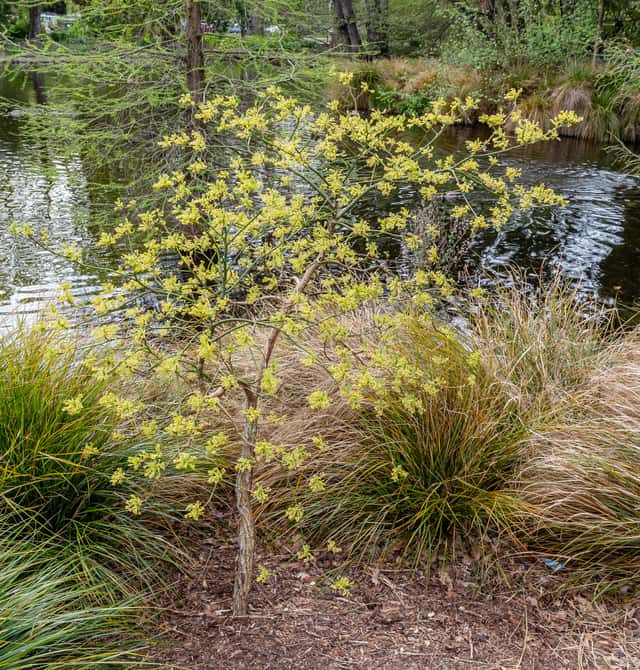
Sassafras albidum is a deciduous tree native to eastern North America, ranging from southern Ontario and New England to Florida and Texas. It is recognized by its characteristic three-lobed leaves, which can have three different shapes on the same branch (entire, mitten-shaped with one lobe, and three-lobed), as well as its highly aromatic bark and roots. In spring, the tree bears small yellow-green flowers, and in autumn, the foliage turns brilliant orange, red, and purple. The species is seriously threatened by the fatal fungal disease "laurel wilt" (caused by Raffaelea lauricola), which is spread by the introduced Asian ambrosia beetle Xyleborus glabratus.
How to Propagate Sassafras?
Seed Propagation
- Seeds must not dry out completely before stratification, otherwise germination rates drop drastically.
- 1 Collection
Collect ripe dark blue berries in the fall when they are fully mature.
- 2 Cleaning
Remove the pulp and wash the seeds thoroughly to avoid germination inhibitors.
- 3 Stratification
Store seeds moist and cold (approx. 4°C) for 90-120 days before sowing in the spring.
Materials needed:
Root Suckers (Offshoots)
- Sassafras naturally forms root suckers/clones—this is the most reliable propagation method.
- 1 Identification
Find healthy root suckers that naturally emerge around the mother plant in early spring.
- 2 Division
Carefully dig down and cut the root connection to the mother plant.
- 3 Replanting
Plant the shoot directly in its new location and keep the soil evenly moist until it is established.
Materials needed:
How Big Does Sassafras Grow?
TLDR: Sassafras can reach up to 18.0m tall with Medium growth rate.
Max height
18.0m
Spread
10.0m
Growth rate
Medium
Foliage
Deciduous
Warning: Toxic Plant
This plant can be toxic if ingested. Keep out of reach of:
Plant Uses
Ornamental
Great for decoration
Aromatic
Pleasant fragrance
Medicinal
Medicinal properties
Edible
Can be consumed
Medicinal Uses
- Historically used by Native Americans and early settlers as a diaphoretic and febrifuge herbal tea made from root bark
- Root oil was traditionally used as a flavoring in root beer until 1960, when the FDA banned safrole in food due to carcinogenic risk
- Modern herbal medicine is discouraged due to the safrole content, which is a liver carcinogen in animal studies and banned in food in the USA
Culinary Uses
- Filé powder (dried, ground leaves) is used as a thickener and flavoring in Cajun gumbo
- Root bark was historically used to flavor root beer, but has been banned in food in the USA since 1960 due to safrole
- Safe, safrole-free extracts of leaves (filé) are still used in cooking, unlike the root bark
Is your plant showing symptoms?
Click on the symptom to discover possible causes:
What Diseases Commonly Affect Sassafras?
TLDR: Sassafras is susceptible to 6 known diseases. Monitor regularly for early detection.
Verticillium Wilt
Verticillium wilt is a soil-borne fungal disease caused primarily by the fungi Verticillium dahliae and V. albo-atrum. These pathogens infect plant roots and grow within the vascular tissues, blocking water and nutrient transport, resulting in wilting and eventual plant death. The disease affects over 350 plant species including vegetables, fruits, ornamental flowers, and trees. The fungi can survive in soil for more than 10 years as resistant structures called microsclerotia.
Canker
Canker is a disease caused by various fungi and bacteria that create necrotic, sunken areas on bark of branches, stems, and trunks. Pathogens enter through wounds and natural openings, especially when plants are stressed. Canker can gradually weaken or kill branches by disrupting water and nutrient flow.
Leaf Spot
Leaf spot is a common fungal disease caused by various pathogens including Alternaria, Ascochyta, Colletotrichum, Septoria, and Venturia. It primarily affects leaves, causing discolored spots that can lead to premature leaf drop if left untreated.
Powdery Mildew
Powdery mildew is a common fungal disease caused by various fungi species including Erysiphe, Podosphaera, Oïdium, and Leveillula. It affects over 10,000 plant species worldwide. The disease thrives in warm, dry climates with high humidity and appears as a distinctive white powdery coating on plant surfaces.
Meaning & Symbolism
In North American folklore, it is associated with spring cleaning and renewed strength—the root bark was traditionally brewed as a spring tonic. The aromatic wood is also associated with purification and protection in Cherokee lore.
Compare with similar plants
| Attribute | Difficulty | Light | Watering | Pet Safe |
|---|---|---|---|---|
| Dark Fieldcap | Medium | Low light | 2d | ⚠️ |
| Azalea | Medium | Partial shade | 3d | ⚠️ |
| Muriel's Bamboo | Medium | Partial shade | 3d | ✓ |
| Bougainvillea | Medium | Direct sun | 7d | ⚠️ |
Choose & Compare
Sources & References
- Sassafras albidum - PFAF Plant Database
- Sassafras (Sassafras albidum): Everything You Need To Know - Gardenia.net
- Sassafras | Sassafras albidum - The Morton Arboretum
- First Report of Laurel Wilt, Caused by Raffaelea lauricola, on Sassafras (Sassafras albidum) in Alabama - Plant Disease
- Sassafras: Overview, Uses, Side Effects, Precautions - WebMD
- Medical Attributes of Sassafras albidum - Klemow, Wilkes University




