Bromeliaceae
Dyckia brevifolia (Sawblade Dyckia): Complete Care Guide
Dyckia brevifolia
An easy-care, low-maintenance succulent that thrives in full sun to partial shade with well-draining soil and infrequent watering, ideal for rock gardens, xeriscaping, and containers.
Every 14 days
Bright indirect
7° - 32°C
% - %
Categories
What is Sawblade Dyckia?
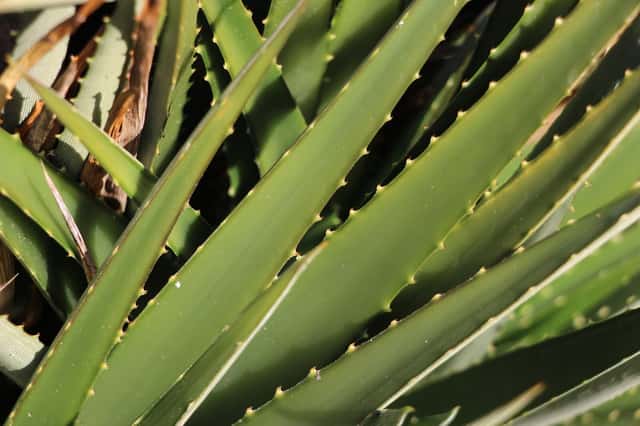
Sawblade Dyckia (Dyckia brevifolia) is a easy-care plant from the Bromeliaceae family. Dyckia brevifolia, commonly called sawblade dyckia or pineapple dyckia, is a compact succulent bromeliad native to the rocky riverbanks of the Itajaí-Açu River in Santa Catarina, southern Brazil. It forms dense, low rosettes of stiff, grayish-green to bronze leaves edged with sharp, saw-like teeth,...
Sawblade Dyckia grows up to 30cm, spread of 30cm, watering every 14 days, 7°C – 32°C. It is suitable for indoor environments and safe for pets.
Unlike many tropical plants, Sawblade Dyckia tolerates watering mistakes. Best for beginners. Unlike many popular species, Sawblade Dyckia is safe to keep around pets. Without adequate drainage, root rot can develop within 28 days.
How to Care for Sawblade Dyckia?
TLDR: Sawblade Dyckia needs Bright indirect, watering every 14 days, and temperatures between 7-32°C with 40-70% humidity.
How Often Should You Water Sawblade Dyckia?
Water only once the soil has dried out completely, roughly every 14 days during spring and summer, and cut back further in winter. This plant is very sensitive to soggy soil and root rot.
How Much Light Does Sawblade Dyckia Need?
Give it full sun to bright light for the best leaf color and compact growth; the foliage develops a striking bronze tone under strong direct sun. In low light it stretches and loses color.
What Is the Best Soil for Sawblade Dyckia?
Plant in a gritty, fast-draining mix, such as equal parts potting soil, coarse sand, and perlite, or a ready-made succulent/cactus mix. Avoid moisture-retentive soils.
What Pot Should You Use for Sawblade Dyckia?
Unglazed terracotta or clay pots with generous drainage holes help excess moisture evaporate and protect the roots from rot.
What Is Sawblade Dyckia and Where Does It Come From?
Dyckia brevifolia, commonly called sawblade dyckia or pineapple dyckia, is a compact succulent bromeliad native to the rocky riverbanks of the Itajaí-Açu River in Santa Catarina, southern Brazil. It forms dense, low rosettes of stiff, grayish-green to bronze leaves edged with sharp, saw-like teeth, an adaptation that gives the species its common name. As a rheophyte, it grows directly on rocks along fast-flowing rivers subject to periodic flooding, making it exceptionally drought- and sun-tolerant. In late spring to early summer it sends up flower spikes bearing small yellow-orange blooms. Due to habitat pressure along its native river system, wild populations are considered threatened.
How to Propagate Sawblade Dyckia?
Offset (pup) division
Always use clean, disinfected tools to avoid contamination, and let the cut surface callous over for a few hours before planting.
- 1 Wait until the offset (pup) is at least one-third the size of the parent plant
- 2 Using a clean, sharp knife, separate the offset from the mother plant, keeping as much of its root system as possible
- 3 If the offset has no roots, dip the base in rooting hormone before planting
- 4 Plant it in well-draining soil and keep lightly moist until it roots
- 5 Return to normal watering once new roots have established
Materials needed:
Seed propagation
Because most cultivated plants are hybrids, seedlings may not grow true to the parent plant.
- 1 Collect seeds from seed pods after flowering
- 2 Soak the seeds in water for 24 hours to soften the seed coat
- 3 Sow onto well-draining mix and cover with a thin layer of substrate
- 4 Keep the substrate lightly moist in a warm, bright spot
- 5 Wait 2 to 3 weeks for germination
Materials needed:
How Big Does Sawblade Dyckia Grow?
TLDR: Sawblade Dyckia can reach up to 30cm tall with Slow growth rate.
Max height
30cm
Spread
30cm
Growth rate
Slow
Foliage
Evergreen
Warning: Toxic Plant
This plant can be toxic if ingested. Keep out of reach of:
Plant Uses
Ornamental
Great for decoration
Ground Cover
Soil coverage
Is your plant showing symptoms?
Click on the symptom to discover possible causes:
What Diseases Commonly Affect Sawblade Dyckia?
TLDR: Sawblade Dyckia is susceptible to 5 known diseases. Monitor regularly for early detection.
Root Rot
Root rot is a serious fungal disease that affects the root system of plants, causing them to decay and die. It is primarily caused by overwatering, poor drainage, or soil-borne fungi such as Pythium, Phytophthora, Rhizoctonia, and Fusarium. The disease thrives in waterlogged conditions where roots are deprived of oxygen, making them susceptible to fungal infection.
Mealybugs
Mealybugs are small, soft-bodied insects covered with a white, waxy, cottony material. They are common pests of houseplants and outdoor plants in mild climates. These sap-sucking insects feed on plant tissue, causing damage, stunted growth, and can lead to plant death if left untreated. They produce sticky honeydew which attracts sooty mold.
Scale Insects
Scale insects are small sap-sucking pests that appear as brown, shell-like bumps on plant stems and leaves. There are over 25 species, divided into armored (hard) and unarmored (soft) scales. They feed by piercing plant tissue and extracting sap, which weakens the plant and can lead to yellowing, stunted growth, and even death if left untreated. They also excrete honeydew, which attracts ants and promotes sooty mold growth.
Leaf Spot
Leaf spot is a common fungal disease caused by various pathogens including Alternaria, Ascochyta, Colletotrichum, Septoria, and Venturia. It primarily affects leaves, causing discolored spots that can lead to premature leaf drop if left untreated.
Fun Facts
It is a rheophyte, growing anchored to rocks along the fast-flowing Itajaí-Açu River in southern Brazil.
Its sharp, saw-toothed leaf margins are the source of its common name, sawblade dyckia.
Wild populations of this species are considered threatened due to habitat degradation in its native river range.
Frequently asked questions
Does Dyckia brevifolia need a lot of water?
Can Dyckia brevifolia handle full sun?
Is Dyckia brevifolia toxic to humans or pets?
How do you propagate Dyckia brevifolia?
Compare with similar plants
| Attribute | Difficulty | Light | Watering | Pet Safe |
|---|---|---|---|---|
| Field Maple | Easy | Bright indirect | 14d | ✓ |
| Silver Birch | Easy | Direct sun | 14d | ✓ |
| Common Blanketflower | Easy | Direct sun | 10d | ✓ |
| Cushion Bush | Easy | Direct sun | 14d | ✓ |
Choose & Compare
Sources & References
- Identify & Treat Dyckia Succulent Diseases (Dyckia brevifolia)
- Dyckia Brevifolia Guide: How to Grow & Care for Sawblade
- Bromelia-lamina-de-serra - Dyckia brevifolia
- Cuidados imprescindibles para tu Dyckia brevifolia
- Biologia reprodutiva da reofita Dyckia brevifolia Baker (Bromeliaceae)
- Dyckia Bromeliad Care - Growing Dyckia Plants
- Learn How to Grow Dyckia Bromeliads





