Amaryllidaceae
Scarborough lily: Complete Care Guide
Cyrtanthus elatus
Prefers direct morning sunlight with afternoon shade (or bright indirect light indoors), regular watering during spring and summer—allowing the substrate surface to dry between waterings—and a drier rest period in winter. The soil should be light, rich, and very well-drained, based on acid-to-neutral compost, coarse sand, or grit. It is tolerant of being root-bound and actually flowers better under such conditions.
Every 7 days
Bright indirect
10° - 27°C
40% - 60%
Categories
What is Scarborough lily?
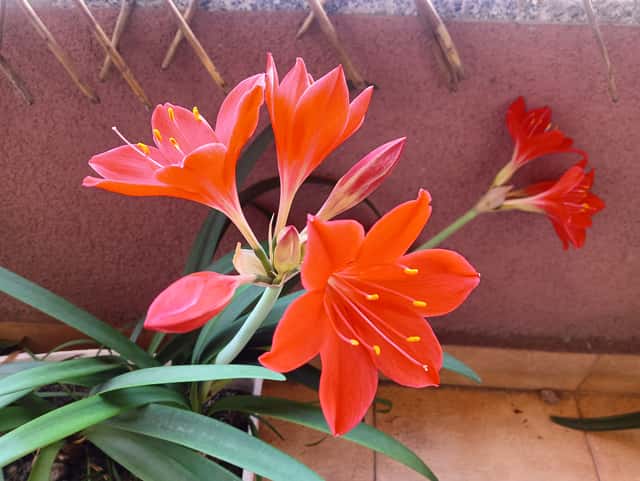
Scarborough lily (Cyrtanthus elatus) is a medium-care plant from the Amaryllidaceae family. Cyrtanthus elatus, popularly known as the Scarborough lily, is a perennial bulb in the Amaryllidaceae family, native to the mountainous coastal slopes of the Cape in southern South Africa (between Mossel Bay and Humansdorp). It produces upright flower stalks up to 65 cm tall with up to nine trumpet-...
Scarborough lily grows up to 65cm, spread of 40cm, watering every 7 days, 10°C – 27°C, 40–60% humidity. It is suitable for indoor environments and not safe for pets.
Without precautions, ingestion can cause irritation in pets. Keep out of reach of cats and dogs. Without adequate drainage, root rot can develop within 14 days.
How to Care for Scarborough lily?
TLDR: Scarborough lily needs Bright indirect, watering every 7 days, and temperatures between 10-27°C with 40-60% humidity.
How Often Should You Water Scarborough lily?
Water generously as soon as growth resumes in the spring and maintain weekly waterings in the summer, always letting the top layer of the substrate dry out between sessions. Significantly reduce frequency in the autumn and keep nearly dry during the winter dormancy to prevent bulb rot.
How Much Light Does Scarborough lily Need?
Prefers full morning sun with light afternoon shade outdoors; indoors, place near a window with bright filtered light, avoiding intense direct midday sun which can scorch the leaves.
What Is the Best Soil for Scarborough lily?
Use a light and very well-drained substrate—a mix of loam, coarse sand or grit, and acid-to-neutral organic compost (pH between 5.5 and 7.0)—to prevent waterlogging and bulb rot.
What Pot Should You Use for Scarborough lily?
Prefer a terracotta pot with drainage holes, sized appropriately for the bulb—this lily flowers best when slightly root-bound, so avoid oversized pots; repot into a slightly larger container only every 2-3 years.
Care Schedule
Fertilize
Every 14 days
Repot
Every 1095 days
What Is Scarborough lily and Where Does It Come From?
Cyrtanthus elatus, popularly known as the Scarborough lily, is a perennial bulb in the Amaryllidaceae family, native to the mountainous coastal slopes of the Cape in southern South Africa (between Mossel Bay and Humansdorp). It produces upright flower stalks up to 65 cm tall with up to nine trumpet-shaped flowers in shades of scarlet red, pink, or, rarely, white, which bloom from late spring to autumn. Cultivated as an ornamental container plant for nearly 250 years, it earned its common name after naturalizing on the coastal cliffs of Scarborough, England, in the 19th century.
How to Propagate Scarborough lily?
Bulb offset division
- Offsets may take 2 to 3 years to reach flowering size.
- Avoid separating offsets that are still very small or lack their own roots.
- 1 Uprooting
In early spring, before new growth begins, carefully remove the main bulb from the pot or soil.
- 2 Separation
Detach the offsets (daughter bulbs) formed around the base of the mother bulb, keeping roots intact whenever possible.
- 3 Planting
Plant each offset in an individual pot with light, well-drained substrate, leaving the shoulder of the bulb slightly above the soil surface.
- 4 Initial watering
Water moderately after planting and keep in a location with filtered light until established.
Materials needed:
How Big Does Scarborough lily Grow?
TLDR: Scarborough lily can reach up to 65cm tall with Medium growth rate.
Max height
65cm
Spread
40cm
Growth rate
Medium
Foliage
Deciduous
Warning: Toxic Plant
This plant can be toxic if ingested. Keep out of reach of:
Plant Uses
Ornamental
Great for decoration
Is your plant showing symptoms?
Click on the symptom to discover possible causes:
What Diseases Commonly Affect Scarborough lily?
TLDR: Scarborough lily is susceptible to 8 known diseases. Monitor regularly for early detection.
Root Rot
Root rot is a serious fungal disease that affects the root system of plants, causing them to decay and die. It is primarily caused by overwatering, poor drainage, or soil-borne fungi such as Pythium, Phytophthora, Rhizoctonia, and Fusarium. The disease thrives in waterlogged conditions where roots are deprived of oxygen, making them susceptible to fungal infection.
Mealybugs
Mealybugs are small, soft-bodied insects covered with a white, waxy, cottony material. They are common pests of houseplants and outdoor plants in mild climates. These sap-sucking insects feed on plant tissue, causing damage, stunted growth, and can lead to plant death if left untreated. They produce sticky honeydew which attracts sooty mold.
Caterpillars
Caterpillars are the larval stage of moths and butterflies that feed voraciously on plant foliage, stems, flowers, and fruits. Common species include cabbage loopers, tomato hornworms, armyworms, and cutworms. These pests can cause extensive damage by consuming large amounts of plant tissue in a short time. They vary in size from small (1/4 inch) to large (5 inches), with colors ranging from green to brown, often featuring stripes or spots. Caterpillars are highly mobile and can quickly spread throughout gardens, making them one of the most destructive common pests.
Aphids
Aphids are small, soft-bodied, pear-shaped insects (1/16 to 1/8 inch long) that feed by sucking nutrient-rich sap from plants. They reproduce rapidly and can quickly weaken plants, causing distorted growth and transmitting plant viruses. Aphids come in various colors including green, black, red, yellow, brown, and gray. They secrete honeydew, a sticky substance that attracts ants and encourages sooty mold growth.
Meaning & Symbolism
Associated with resilience and unexpected beauty due to its blooming on exposed rocky slopes of the Cape, the Scarborough lily is seen as a symbol of overcoming adversity and beauty that flourishes even in harsh conditions. Its bright red flowers also evoke passion and vitality.
Compare with similar plants
| Attribute | Difficulty | Light | Watering | Pet Safe |
|---|---|---|---|---|
| Dark Fieldcap | Medium | Low light | 2d | ⚠️ |
| Azalea | Medium | Partial shade | 3d | ⚠️ |
| Muriel's Bamboo | Medium | Partial shade | 3d | ✓ |
| Bougainvillea | Medium | Direct sun | 7d | ⚠️ |
Choose & Compare
Sources & References
- Cyrtanthus elatus | PlantZAfrica (SANBI)
- Cyrtanthus elatus | RHS
- Cyrtanthus elatus or Scarborough lily | Care and Growing
- Common Fire Lily Succulent Pests (Cyrtanthus elatus)
- Guide to Growing Fire Lily Succulent in a Pot (Cyrtanthus elatus)
- Complete guide to identifying, growing, and caring for vallota (Cyrtanthus elatus)




