Geraniaceae
Scarlet Geranium (Pelargonium inquinans) Care Guide
Pelargonium inquinans
A tough, water-wise shrub that thrives in full sun with well-draining soil. Let the soil dry out between waterings and protect it from hard frost.
Every 10 days
Direct sun
-2° - 35°C
% - %
Categories
What is Scarlet Geranium?
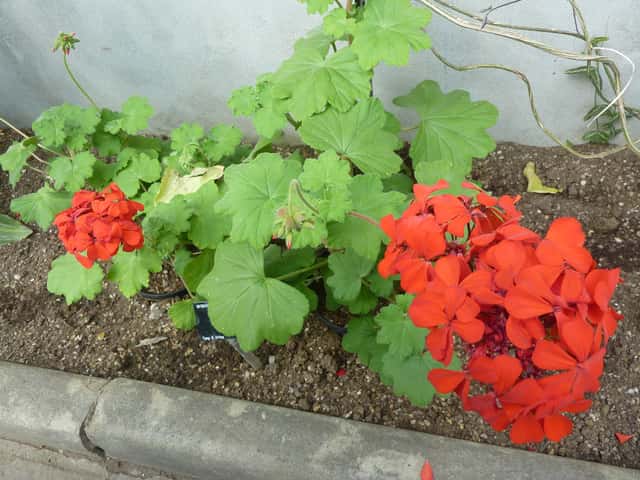
Scarlet Geranium (Pelargonium inquinans) is a easy-care plant from the Geraniaceae family. Pelargonium inquinans is a soft, woody shrub native to the Eastern Cape, KwaZulu-Natal and Mpumalanga provinces of South Africa, where it grows along coastal scrub and clay-soil margins. It forms a rounded bush up to 2 m tall, with velvety, orbicular leaves that leave a brown stain on the fingers wh...
Scarlet Geranium grows up to 2.0m, spread of 100cm, watering every 10 days, -2°C – 35°C. It is suitable for indoor environments and not safe for pets.
Unlike many tropical plants, Scarlet Geranium tolerates watering mistakes. Best for beginners. Without precautions, ingestion can cause irritation in pets. Keep out of reach of cats and dogs. Without adequate drainage, root rot can develop within 20 days.
How to Care for Scarlet Geranium?
TLDR: Scarlet Geranium needs Direct sun, watering every 10 days, and temperatures between -2-35°C with 40-70% humidity.
How Often Should You Water Scarlet Geranium?
Water deeply only when the top of the soil has dried out, roughly every 10 days; this drought-tolerant shrub dislikes soggy roots.
How Much Light Does Scarlet Geranium Need?
Give it as much direct sun as possible, at least 6 hours a day, for the best flowering.
What Is the Best Soil for Scarlet Geranium?
Use a well-draining sandy or loamy mix; it tolerates acidic, neutral and alkaline soils.
What Pot Should You Use for Scarlet Geranium?
A terracotta or unglazed clay pot with drainage holes suits this drought-tolerant shrub best.
Care Schedule
Fertilize
Every 30 days
Repot
Every 365 days
What Is Scarlet Geranium and Where Does It Come From?
Pelargonium inquinans is a soft, woody shrub native to the Eastern Cape, KwaZulu-Natal and Mpumalanga provinces of South Africa, where it grows along coastal scrub and clay-soil margins. It forms a rounded bush up to 2 m tall, with velvety, orbicular leaves that leave a brown stain on the fingers when touched, the source of its Latin name inquinans, meaning to soil. Clusters of 5 to 30 bright scarlet-red flowers, occasionally pink, salmon or white, appear almost year-round. Introduced to Europe in the early 1700s, it is one of the two wild ancestors, alongside Pelargonium zonale, of the modern zonal geraniums grown in gardens worldwide.
How to Propagate Scarlet Geranium?
Stem cutting
Use clean, sharp tools and avoid overwatering the cutting, which can cause rot before roots form.
- 1 Take a 10-15 cm cutting from a healthy stem tip in spring or early summer.
- 2 Remove the lower leaves and let the cut end callus (dry) for a day.
- 3 Insert the cutting into a sandy, well-draining rooting medium.
- 4 Keep in bright, indirect light and lightly moist until roots form, about 4 weeks.
Materials needed:
Seed
Do not bury seeds too deep - shallow sowing gives the best germination rate.
- 1 Sow seeds 2-3 mm deep in a well-draining seed mix.
- 2 Keep the mix consistently moist and in a warm, bright spot.
- 3 Germination and establishment take about 4 weeks.
- 4 Seed-grown plants tend to be more vigorous than cutting-grown ones.
Materials needed:
How Big Does Scarlet Geranium Grow?
TLDR: Scarlet Geranium can reach up to 2.0m tall with Medium growth rate.
Max height
2.0m
Spread
1.0m
Growth rate
Medium
Foliage
Evergreen
Warning: Toxic Plant
This plant can be toxic if ingested. Keep out of reach of:
Plant Uses
Ornamental
Great for decoration
Medicinal
Medicinal properties
Medicinal Uses
- Traditional crushed-leaf remedy for headaches and flu
- Traditional natural body deodorant
Is your plant showing symptoms?
Click on the symptom to discover possible causes:
What Diseases Commonly Affect Scarlet Geranium?
TLDR: Scarlet Geranium is susceptible to 8 known diseases. Monitor regularly for early detection.
Bacterial Blight
Bacterial blight is a serious plant disease caused by pathogenic bacteria that enters plants through wounds or natural openings. It spreads rapidly in warm, wet conditions and can cause significant damage to leaves, stems, and flowers. The bacteria are transmitted by water splash, contaminated tools, and insects.
Gray Mold (Botrytis Blight)
Gray mold, caused by the fungus Botrytis cinerea, is one of the most common fungal diseases in plants. It affects over 200 plant species, including ornamentals, vegetables, fruits, and houseplants. The disease thrives in cool, humid conditions with poor air circulation, causing grayish spots and soft rot on infected tissues.
Pythium Root Rot
Pythium root rot is a serious fungal disease caused by various Pythium species including P. aphanidermatum, P. ultimum, and P. irregulare. These water molds are present in practically all cultivated soils and attack plant roots under wet conditions, causing rapid wet rot that can extend into the stem. The disease is favored by poor drainage, overwatering, and specific temperatures depending on the species.
Rust
Rust is a common fungal disease caused by fungi in the order Pucciniales that affects a wide variety of plants. The disease gets its name from the characteristic orange, yellow, or reddish-brown pustules that appear on leaves, resembling metal rust. This obligate fungal parasite requires living plants to survive and can cause significant economic losses in agricultural crops.
Fun Facts
Its species name inquinans means to stain in Latin, because the velvety leaves leave a brown mark on fingers that touch them.
Along with Pelargonium zonale, it is one of the two wild South African species behind virtually all modern zonal garden geraniums.
It has been cultivated in Europe since at least 1714, when it grew in the London garden of Bishop Henry Compton.
Frequently asked questions
Is Pelargonium inquinans the same as a regular geranium?
Is the scarlet geranium toxic to pets?
How often should I water Pelargonium inquinans?
Can Pelargonium inquinans survive frost?
Compare with similar plants
| Attribute | Difficulty | Light | Watering | Pet Safe |
|---|---|---|---|---|
| Field Maple | Easy | Bright indirect | 14d | ✓ |
| Silver Birch | Easy | Direct sun | 14d | ✓ |
| Common Blanketflower | Easy | Direct sun | 10d | ✓ |
| Cushion Bush | Easy | Direct sun | 14d | ✓ |
Choose & Compare
Sources & References
- Pelargonium inquinans | PlantZAfrica (SANBI)
- Pelargonium inquinans - Wikipedia
- Toxic and Non-toxic Plants: Geranium | ASPCA
- pests & diseases Pelargoniums - GeraniumsOnline
- Pelargonium inquinans (PELIQ) | EPPO Global Database
- Geranium pests, diseases and other problems - Thompson & Morgan
- Crop Vignette: Geraniums and Pelargoniums - IR-4 Project





