Asteraceae
Scentless Chamomile: Medicinal Uses & Care Tips
Tripleurospermum inodorum
Scentless chamomile is a robust and low-maintenance plant that thrives best in full sun on well-drained, slightly alkaline soil. It is non-toxic to humans and animals and is easy to grow from seed. Water regularly, but allow the top layer of soil to dry out between waterings to avoid root rot.
Every 6 days
Bright indirect
2° - 25°C
40% - 70%
Categories
What is Scentless Chamomile?
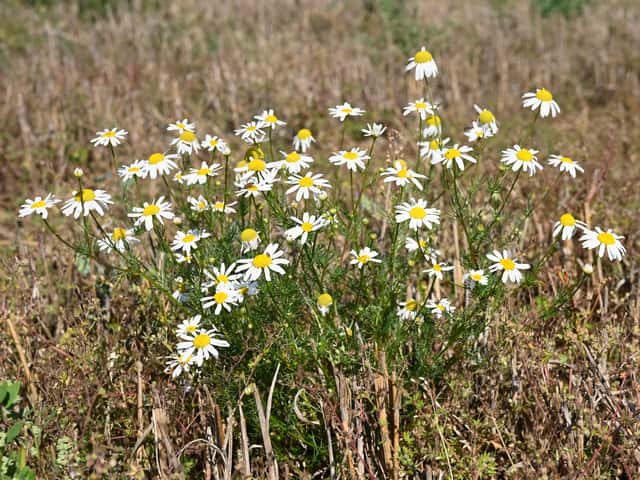
Scentless Chamomile (Tripleurospermum inodorum) is a easy-care plant from the Asteraceae family. Scentless chamomile (Tripleurospermum inodorum) is an annual or biennial herb from the Asteraceae family, native to Eurasia and widely distributed in cultivated fields, roadsides, and waste ground. The plant is characterized by fine, feathery leaves and classic white daisy-like flowers with a yellow...
Scentless Chamomile grows up to 80cm, spread of 40cm, watering every 6 days, 2°C – 25°C, 40–70% humidity. It is not suitable for indoor environments and safe for pets.
Unlike many tropical plants, Scentless Chamomile tolerates watering mistakes. Best for beginners. Unlike many popular species, Scentless Chamomile is safe to keep around pets.
How to Care for Scentless Chamomile?
TLDR: Scentless Chamomile needs Bright indirect, watering every 6 days, and temperatures between 2-25°C with 40-70% humidity.
How Often Should You Water Scentless Chamomile?
Water the plant when the top 2–3 cm of soil is dry. It tolerates short periods of drought but prefers consistent moisture. Avoid overwatering and stagnant water, as root rot is the most common cause of problems. Preferably use rainwater or dechlorinated water.
How Much Light Does Scentless Chamomile Need?
Scentless chamomile requires full sun for optimal growth and flowering. Place it in a sunny spot with at least 6 hours of direct light daily. In partial shade, the plant will grow, but flowers will be fewer and stems weaker.
What Is the Best Soil for Scentless Chamomile?
Prefers light, well-drained loamy soil with good air circulation and a pH of 7.0–8.0 (slightly alkaline). Adding compost before planting is recommended. The plant tolerates nutrient-poor and disturbed soil but thrives best in moderately nutrient-rich soil.
Care Schedule
Fertilize
Every 90 days
What Is Scentless Chamomile and Where Does It Come From?
Scentless chamomile (Tripleurospermum inodorum) is an annual or biennial herb from the Asteraceae family, native to Eurasia and widely distributed in cultivated fields, roadsides, and waste ground. The plant is characterized by fine, feathery leaves and classic white daisy-like flowers with a yellow central disc, 3–5 cm in diameter. It grows 20–80 cm tall and blooms from June to November. Unlike true chamomile, it completely lacks the characteristic apple scent – hence the name.
How to Propagate Scentless Chamomile?
How Big Does Scentless Chamomile Grow?
TLDR: Scentless Chamomile can reach up to 80cm tall with Fast growth rate.
Max height
80cm
Spread
40cm
Growth rate
Fast
Foliage
Deciduous
Plant Uses
Ornamental
Great for decoration
Medicinal
Medicinal properties
Medicinal Uses
- Traditional use for gastrointestinal issues and inflammatory conditions
- Contains apigenin and luteolin – flavonoids with antioxidant and anti-inflammatory properties
- Historically used in natural medicine, though the effects are not clinically well-documented
Is your plant showing symptoms?
Click on the symptom to discover possible causes:
What Diseases Commonly Affect Scentless Chamomile?
TLDR: Scentless Chamomile is susceptible to 8 known diseases. Monitor regularly for early detection.
Powdery Mildew
Powdery mildew is a common fungal disease caused by various fungi species including Erysiphe, Podosphaera, Oïdium, and Leveillula. It affects over 10,000 plant species worldwide. The disease thrives in warm, dry climates with high humidity and appears as a distinctive white powdery coating on plant surfaces.
Root Rot
Root rot is a serious fungal disease that affects the root system of plants, causing them to decay and die. It is primarily caused by overwatering, poor drainage, or soil-borne fungi such as Pythium, Phytophthora, Rhizoctonia, and Fusarium. The disease thrives in waterlogged conditions where roots are deprived of oxygen, making them susceptible to fungal infection.
Aphids
Aphids are small, soft-bodied, pear-shaped insects (1/16 to 1/8 inch long) that feed by sucking nutrient-rich sap from plants. They reproduce rapidly and can quickly weaken plants, causing distorted growth and transmitting plant viruses. Aphids come in various colors including green, black, red, yellow, brown, and gray. They secrete honeydew, a sticky substance that attracts ants and encourages sooty mold growth.
Caterpillars
Caterpillars are the larval stage of moths and butterflies that feed voraciously on plant foliage, stems, flowers, and fruits. Common species include cabbage loopers, tomato hornworms, armyworms, and cutworms. These pests can cause extensive damage by consuming large amounts of plant tissue in a short time. They vary in size from small (1/4 inch) to large (5 inches), with colors ranging from green to brown, often featuring stripes or spots. Caterpillars are highly mobile and can quickly spread throughout gardens, making them one of the most destructive common pests.
Compare with similar plants
| Attribute | Difficulty | Light | Watering | Pet Safe |
|---|---|---|---|---|
| Field Maple | Easy | Bright indirect | 14d | ✓ |
| Silver Birch | Easy | Direct sun | 14d | ✓ |
| Common Blanketflower | Easy | Direct sun | 10d | ✓ |
| Cushion Bush | Easy | Direct sun | 14d | ✓ |





