Cactaceae
Christmas Cactus: Pet-Safe Plant
Schlumbergera
Give it bright, indirect light away from harsh midday sun. Water once the top third of the potting mix dries out, and never let the pot sit in standing water. It prefers moderate to high humidity and temperatures between 15-27°C (59-81°F). Cooler nights and shorter days in autumn trigger bud formation.
Every 10 days
Bright indirect
15° - 27°C
40% - 70%
Categories
What is Christmas Cactus?
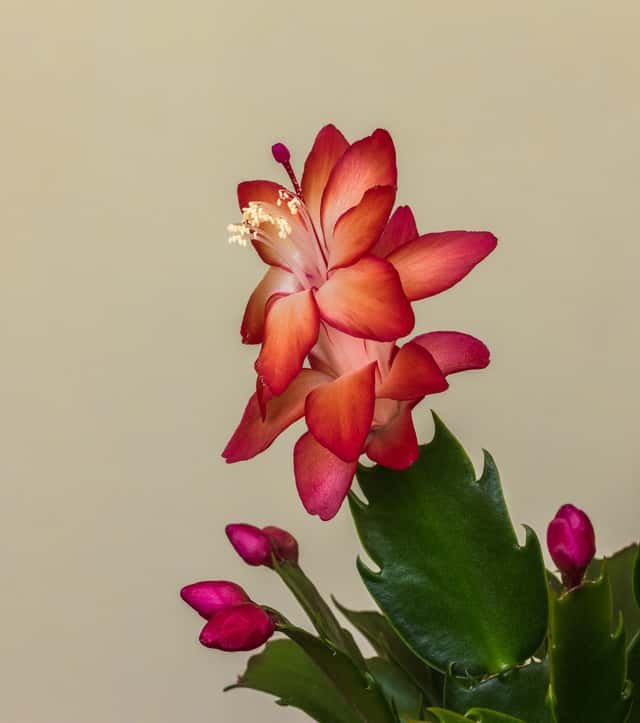
Christmas Cactus (Schlumbergera) is a easy-care plant from the Cactaceae family. Schlumbergera is an epiphytic cactus native to the humid coastal rainforests of southeastern Brazil, where it grows on tree branches and rock crevices in dappled shade. Unlike desert cacti, its flattened, segmented stems (cladodes) store some water but need humidity and indirect light to thrive. Gro...
Christmas Cactus grows up to 45cm, spread of 60cm, watering every 10 days, 15°C – 27°C, 40–70% humidity. It is suitable for indoor environments and safe for pets.
Unlike many tropical plants, Christmas Cactus tolerates watering mistakes. Best for beginners. Unlike many popular species, Christmas Cactus is safe to keep around pets. Without adequate drainage, root rot can develop within 20 days.
How to Care for Christmas Cactus?
TLDR: Christmas Cactus needs Bright indirect, watering every 10 days, and temperatures between 15-27°C with 40-70% humidity.
How Often Should You Water Christmas Cactus?
Let the top of the soil dry between waterings and always empty the saucer — soggy roots are the number one cause of stem and root rot in this plant.
How Much Light Does Christmas Cactus Need?
Place near a window with filtered light; direct sun can scorch the flat segments, while too little light prevents flower buds from forming.
What Is the Best Soil for Christmas Cactus?
Use a light, fast-draining mix — a blend of potting soil with perlite or coarse sand, similar to an orchid or succulent mix, works best.
What Pot Should You Use for Christmas Cactus?
A shallow, well-draining ceramic or plastic pot suits it best, since its epiphytic root system is naturally shallow.
Care Schedule
Fertilize
Every 30 days
Rotate
Every 14 days
Repot
Every 730 days
What Is Christmas Cactus and Where Does It Come From?
Schlumbergera is an epiphytic cactus native to the humid coastal rainforests of southeastern Brazil, where it grows on tree branches and rock crevices in dappled shade. Unlike desert cacti, its flattened, segmented stems (cladodes) store some water but need humidity and indirect light to thrive. Grown worldwide as a popular houseplant, it produces showy tubular flowers in red, pink, white, orange, and purple during fall and winter.
How Big Does Christmas Cactus Grow?
TLDR: Christmas Cactus can reach up to 45cm tall with Slow growth rate.
Max height
45cm
Spread
60cm
Growth rate
Slow
Foliage
Evergreen
Plant Uses
Ornamental
Great for decoration
Is your plant showing symptoms?
Click on the symptom to discover possible causes:
What Diseases Commonly Affect Christmas Cactus?
TLDR: Christmas Cactus is susceptible to 10 known diseases. Monitor regularly for early detection.
Root Rot
Root rot is a serious fungal disease that affects the root system of plants, causing them to decay and die. It is primarily caused by overwatering, poor drainage, or soil-borne fungi such as Pythium, Phytophthora, Rhizoctonia, and Fusarium. The disease thrives in waterlogged conditions where roots are deprived of oxygen, making them susceptible to fungal infection.
Overwatering
Overwatering occurs when plants receive too much water, depriving roots of oxygen and causing root rot. This environmental stress is one of the most common causes of houseplant death, as waterlogged soil prevents roots from breathing and functioning properly.
Phytophthora Root Rot
Disease caused by fungus-like organisms (oomycetes) that live in soil and can survive for years. It affects roots, stem, and crown of plants, being especially severe in waterlogged or poorly drained soils. It is the second most common cause of root rot in trees and shrubs.
Fusarium Wilt
Fusarium is a soil-borne fungus that primarily attacks the roots and vascular tissues of plants. It enters through small wounds or stressed roots, is favored by warm temperatures and waterlogging, and then obstructs the flow of sap. Symptoms include yellowing, often on only one side of the plant, wilting even with moist soil, stunted growth, and, when cutting the stem, internal brown streaks. It frequently affects tomatoes, peppers, eggplants, basil, cucumbers, and zucchini, as well as ornamentals like carnations and cyclamen. In potted plants, it can manifest as root rot with a darkened crown.
Meaning & Symbolism
Named for its habit of blooming around the winter holidays, the Christmas cactus is a traditional gift symbolizing togetherness, hospitality, and good fortune for the year ahead.
Compare with similar plants
| Attribute | Difficulty | Light | Watering | Pet Safe |
|---|---|---|---|---|
| Field Maple | Easy | Bright indirect | 14d | ✓ |
| Silver Birch | Easy | Direct sun | 14d | ✓ |
| Common Blanketflower | Easy | Direct sun | 10d | ✓ |
| Cushion Bush | Easy | Direct sun | 14d | ✓ |
Choose & Compare
Sources & References
- Schlumbergera (Christmas Cactus, Crab Cactus, Holiday Cactus) - NC State Extension Plant Toolbox
- Christmas Cactus Care: How to Grow and Make Schlumbergera Bloom Indoors
- Christmas Cactus (Schlumbergera spp.) - Stem and Root Rots - PNW Pest Management Handbooks
- The Most Common Christmas Cactus Pests and Diseases
- Schlumbergera - Wikipedia





