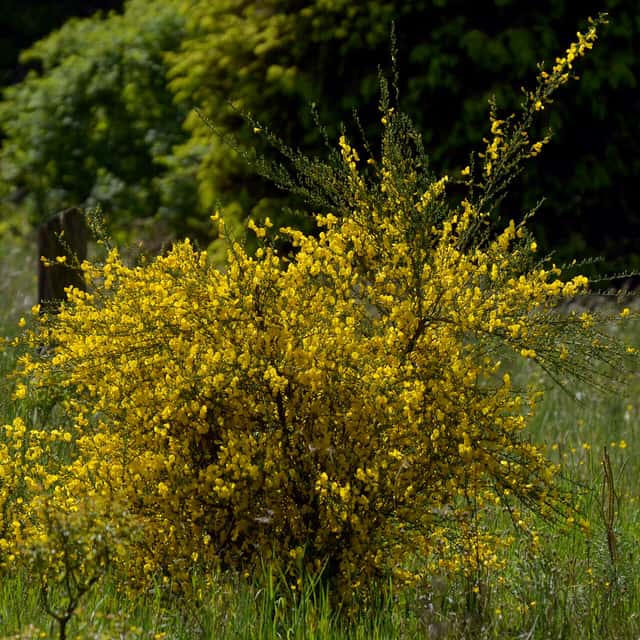
Fabaceae
Scotch broom: Ground Cover Plant
Cytisus scoparius
Scotch broom is exceptionally low-maintenance: it thrives even in dry, nutrient-poor, well-draining soil and flowers most profusely in full sun. Once established, it is drought-tolerant; therefore, overwatering and heavy, waterlogged soil are more dangerous to it than dry spells. It is advisable to prune it back after flowering to encourage a dense, floriferous habit, and older plants benefit from a light application of nutrients every few years.
Every 14 days
Direct sun
-20° - 35°C
30% - 70%
Categories
What is Scotch broom?
Scotch broom (Cytisus scoparius) is a easy-care plant from the Fabaceae family. Scotch broom (Cytisus scoparius) is a deciduous shrub in the legume family (Fabaceae) that grows 50–250 cm tall. Its green, five-angled, slender branches continue to photosynthesize even in winter; its small, quickly shedding leaves are undivided at the top and trifoliate at the bottom. In May and J...
Scotch broom grows up to 2.5m, spread of 250cm, watering every 14 days, -20°C – 35°C, 30–70% humidity. It is not suitable for indoor environments and not safe for pets.
Unlike many tropical plants, Scotch broom tolerates watering mistakes. Best for beginners. Without precautions, ingestion can cause irritation in pets. Keep out of reach of cats and dogs.
How to Care for Scotch broom?
TLDR: Scotch broom needs Direct sun, watering every 14 days, and temperatures between -20-35°C with 30-70% humidity.
How Often Should You Water Scotch broom?
Water regularly during the first year while the root system is establishing; thereafter, only provide water during prolonged droughts—constantly wet soil leads to root rot.
How Much Light Does Scotch broom Need?
Plant in a full sun location; 6–8 hours of direct sunlight daily is required for abundant flowering. It can survive in partial shade but will produce fewer blooms.
What Is the Best Soil for Scotch broom?
Prefers loose, sandy, slightly acidic (pH 4.5–6.5), well-draining soil; avoid calcareous (lime-rich), heavy, or waterlogged soils.
What Pot Should You Use for Scotch broom?
Primarily an outdoor shrub, but young specimens can be grown in large pots with ample drainage holes and a sandy-gravelly drainage layer until they are transplanted to their final location.
Care Schedule
Fertilize
Every 730 days
What Is Scotch broom and Where Does It Come From?
Scotch broom (Cytisus scoparius) is a deciduous shrub in the legume family (Fabaceae) that grows 50–250 cm tall. Its green, five-angled, slender branches continue to photosynthesize even in winter; its small, quickly shedding leaves are undivided at the top and trifoliate at the bottom. In May and June, bright golden-yellow, pea-like flowers appear, forming dense, fragrant clusters along the stems. The flattened seed pods that develop from the flowers turn black upon ripening. Native to Western and Central Europe, it thrives in sunny habitats with dry, sandy, acidic soil—such as hillsides and sand dunes. Due to its hardiness and rapid growth, it has naturalized in many areas and is considered invasive in several regions.
How Big Does Scotch broom Grow?
TLDR: Scotch broom can reach up to 2.5m tall with Fast growth rate.
Max height
2.5m
Spread
2.5m
Growth rate
Fast
Foliage
Deciduous
Warning: Toxic Plant
This plant can be toxic if ingested. Keep out of reach of:
Plant Uses
Ornamental
Great for decoration
Medicinal
Medicinal properties
Edible
Can be consumed
Ground Cover
Soil coverage
Medicinal Uses
- Flowering shoot tips traditionally used for blood pressure regulation and circulation stimulation
- Base material for decoctions with diuretic effects
- Folk remedy used to promote uterine contractions after childbirth—only under expert supervision due to its toxic alkaloid content
Culinary Uses
- Flower buds were once pickled in vinegar and consumed as a caper substitute
- Roasted seeds were used as a coffee substitute
- Young green shoots were historically used to flavor beer
Is your plant showing symptoms?
Click on the symptom to discover possible causes:
What Diseases Commonly Affect Scotch broom?
TLDR: Scotch broom is susceptible to 5 known diseases. Monitor regularly for early detection.
Aphids
Aphids are small, soft-bodied, pear-shaped insects (1/16 to 1/8 inch long) that feed by sucking nutrient-rich sap from plants. They reproduce rapidly and can quickly weaken plants, causing distorted growth and transmitting plant viruses. Aphids come in various colors including green, black, red, yellow, brown, and gray. They secrete honeydew, a sticky substance that attracts ants and encourages sooty mold growth.
Spider Mites
Spider mites are tiny arachnids (less than 1/20 inch long) related to spiders and ticks that feed on plant sap. They thrive in hot, dry conditions and can cause significant damage to ornamental and vegetable plants. During severe infestations, crop losses can reach 14% or higher as these pests disrupt vital plant processes including photosynthesis, carbon dioxide absorption, and transpiration.
Powdery Mildew
Powdery mildew is a common fungal disease caused by various fungi species including Erysiphe, Podosphaera, Oïdium, and Leveillula. It affects over 10,000 plant species worldwide. The disease thrives in warm, dry climates with high humidity and appears as a distinctive white powdery coating on plant surfaces.
Root Rot
Root rot is a serious fungal disease that affects the root system of plants, causing them to decay and die. It is primarily caused by overwatering, poor drainage, or soil-borne fungi such as Pythium, Phytophthora, Rhizoctonia, and Fusarium. The disease thrives in waterlogged conditions where roots are deprived of oxygen, making them susceptible to fungal infection.
Meaning & Symbolism
The golden-yellow flowers of Scotch broom symbolize renewal and resilience. According to tradition, the English Royal House of Plantagenet derived its name and emblem from this plant (Latin 'planta genista'). In rural areas, brooms tied from its branches became symbols of cleanliness and simplicity.
Compare with similar plants
| Attribute | Difficulty | Light | Watering | Pet Safe |
|---|---|---|---|---|
| Field Maple | Easy | Bright indirect | 14d | ✓ |
| Silver Birch | Easy | Direct sun | 14d | ✓ |
| Common Blanketflower | Easy | Direct sun | 10d | ✓ |
| Cushion Bush | Easy | Direct sun | 14d | ✓ |
Choose & Compare
Sources & References
- Cytisus scoparius | NC State Extension Gardener Plant Toolbox
- Cytisus scoparius - PFAF Plant Database
- Scotch broom Care Guide - ForwardPlant
- Seprűzanót – Wikipédia
- Seprűzanót: így igénytelen növény - Édenkert.hu
- Cytisus scoparius (SAOSC) Pests - EPPO Global Database
- Scotch Broom (Cytisus scoparius) - How to Grow & Care Guide





