Araceae
Shingle Plant (Monstera dubia)
Monstera dubia
It needs a flat, moist surface to climb, such as a cork plank or moss pole. It likes bright light without direct sun, humid air, warmth and a light mix that never stays soggy. Growth is slow.
Every 7 days
Partial shade
15° - 29°C
60% - %
Categories
What is Shingle plant?
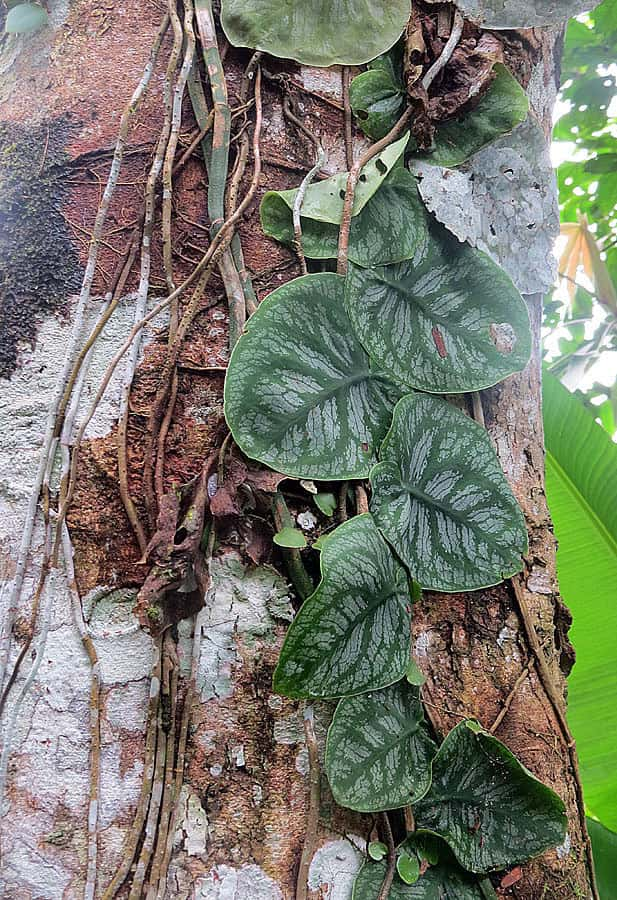
Shingle plant (Monstera dubia) is a medium-care plant from the Araceae family. Monstera dubia is a climbing aroid in the family Araceae, native to the rainforests of Central and South America. While young, it presses its leaves flat against a tree trunk, each one overlapping the next like shingles on a roof. These juvenile leaves are small, heart-shaped, dark green with silver...
Shingle plant grows up to watering every 7 days, 15°C – 29°C. It is suitable for indoor environments and not safe for pets.
Without precautions, ingestion can cause irritation in pets. Keep out of reach of cats and dogs. Without adequate drainage, root rot can develop within 14 days.
How to Care for Shingle plant?
TLDR: Shingle plant needs Partial shade, watering every 7 days, and temperatures between 15-29°C with 60-70% humidity.
How Often Should You Water Shingle plant?
Water when the top 2 to 5 cm of mix is dry, about once a week. Keep the moss on the pole damp too, because that is where the aerial roots attach. Empty the saucer after watering: soggy soil rots the roots.
How Much Light Does Shingle plant Need?
Bright, indirect light near a window, out of strong midday sun, which scorches the thin leaves. In low light it stops growing.
What Is the Best Soil for Shingle plant?
A chunky aroid mix: potting soil with orchid bark, perlite and sphagnum moss in roughly equal parts. Slightly acidic, pH 5.5 to 6.5.
What Pot Should You Use for Shingle plant?
A pot with a drainage hole and a cork plank or moss pole fixed firmly in it. Many growers keep it in a terrarium or greenhouse cabinet for humidity.
Care Schedule
Fertilize
Every 35 days
What Is Shingle plant and Where Does It Come From?
Monstera dubia is a climbing aroid in the family Araceae, native to the rainforests of Central and South America. While young, it presses its leaves flat against a tree trunk, each one overlapping the next like shingles on a roof. These juvenile leaves are small, heart-shaped, dark green with silver patterning. As the vine climbs into brighter light, the leaves grow large and develop holes and splits like those of Monstera deliciosa. Indoors you almost always see only the juvenile stage, climbing a plank or pole.
How to Propagate Shingle plant?
Stem cutting
Keep the cutting warm and humid. Attach it to the support straight away so it goes back to growing flat.
- 1 Cut a piece of stem with at least one node and one leaf
- 2 Place it in water or damp moss
- 3 Once roots appear, plant it against a plank or pole
Materials needed:
How Big Does Shingle plant Grow?
TLDR: Shingle plant can reach up to ?cm tall with Slow growth rate.
Growth rate
Slow
Foliage
Evergreen
Warning: Toxic Plant
This plant can be toxic if ingested. Keep out of reach of:
Plant Uses
Ornamental
Great for decoration
Is your plant showing symptoms?
Click on the symptom to discover possible causes:
What Diseases Commonly Affect Shingle plant?
TLDR: Shingle plant is susceptible to 10 known diseases. Monitor regularly for early detection.
Root Rot
Root rot is a serious fungal disease that affects the root system of plants, causing them to decay and die. It is primarily caused by overwatering, poor drainage, or soil-borne fungi such as Pythium, Phytophthora, Rhizoctonia, and Fusarium. The disease thrives in waterlogged conditions where roots are deprived of oxygen, making them susceptible to fungal infection.
Overwatering
Overwatering occurs when plants receive too much water, depriving roots of oxygen and causing root rot. This environmental stress is one of the most common causes of houseplant death, as waterlogged soil prevents roots from breathing and functioning properly.
Spider Mites
Spider mites are tiny arachnids (less than 1/20 inch long) related to spiders and ticks that feed on plant sap. They thrive in hot, dry conditions and can cause significant damage to ornamental and vegetable plants. During severe infestations, crop losses can reach 14% or higher as these pests disrupt vital plant processes including photosynthesis, carbon dioxide absorption, and transpiration.
Mealybugs
Mealybugs are small, soft-bodied insects covered with a white, waxy, cottony material. They are common pests of houseplants and outdoor plants in mild climates. These sap-sucking insects feed on plant tissue, causing damage, stunted growth, and can lead to plant death if left untreated. They produce sticky honeydew which attracts sooty mold.
Fun Facts
The name dubia means "doubtful": early botanists were not sure which genus the plant belonged to.
The young plant grows toward the darkest part of the forest, because that is usually where a tree trunk is.
Juvenile and adult leaves look so different they could pass for two separate plants.
Frequently asked questions
How often should I water a shingle plant?
Why won't my Monstera dubia stick to its pole?
Is Monstera dubia toxic to cats and dogs?
Will it get leaves with holes?
Compare with similar plants
| Attribute | Difficulty | Light | Watering | Pet Safe |
|---|---|---|---|---|
| Dark Fieldcap | Medium | Low light | 2d | ⚠️ |
| Azalea | Medium | Partial shade | 3d | ⚠️ |
| Muriel's Bamboo | Medium | Partial shade | 3d | ✓ |
| Bougainvillea | Medium | Direct sun | 7d | ⚠️ |




