Primulaceae
Shoebutton ardisia: Perfect Plant for Beginners
Ardisia elliptica
Low-maintenance tropical houseplant thriving in bright indirect light and well-draining, organic-rich soil. Keep soil consistently moist but never waterlogged, as root rot is the primary failure mode. Prefers warm temperatures (18–29°C / 65–85°F) and moderate-to-high humidity (45–65%). Feed with balanced fertilizer every 4–6 weeks during growing season. Suitable for both indoor and outdoor cultivation in USDA Hardiness Zones 10–11.
Every 8 days
Partial shade
18° - 29°C
45% - 65%
Categories
What is Shoebutton ardisia?
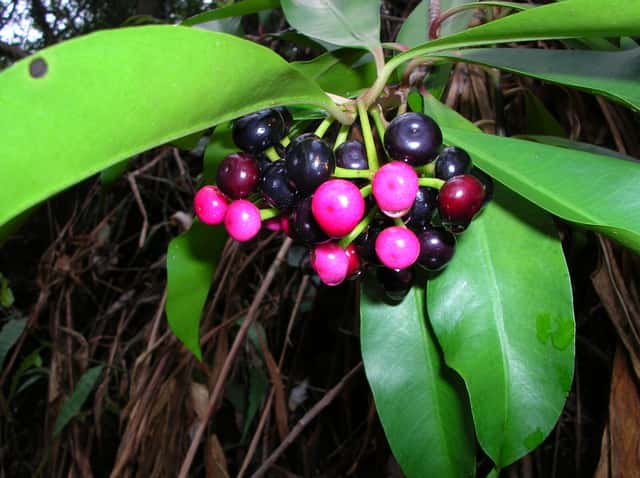
Shoebutton ardisia (Ardisia elliptica) is a easy-care plant from the Primulaceae family. Tropical evergreen shrub native to the western coast of India, Sri Lanka, Indochina, Malaysia, Indonesia, and New Guinea. Grows 1.5–3 meters indoors with glossy, dark-green coriaceous foliage. Produces small pale-pink to white flowers in spring in compact clusters. Flowers are followed by distinctiv...
Shoebutton ardisia grows up to 3.0m, spread of 250cm, watering every 8 days, 18°C – 29°C, 45–65% humidity. It is suitable for indoor environments and not safe for pets.
Unlike many tropical plants, Shoebutton ardisia tolerates watering mistakes. Best for beginners. Without precautions, ingestion can cause irritation in pets. Keep out of reach of cats and dogs. Without adequate drainage, root rot can develop within 16 days.
How to Care for Shoebutton ardisia?
TLDR: Shoebutton ardisia needs Partial shade, watering every 8 days, and temperatures between 18-29°C with 45-65% humidity.
How Often Should You Water Shoebutton ardisia?
Water when top 1–2cm of soil begins to dry; typical frequency is every 8–9 days but varies with pot size and light exposure. Highly susceptible to root rot from overwatering—the most common cause of plant decline.
How Much Light Does Shoebutton ardisia Need?
Thrives in bright, indirect light, especially east-facing windows. Tolerates partial shade and even low light, but growth slows, foliage fades, and leaf drop may occur. Avoid intense direct sun from western or southern exposures, which can scorch leaves and reduce humidity.
What Is the Best Soil for Shoebutton ardisia?
Use well-draining potting mix containing peat moss, perlite, or vermiculite for aeration. Enrich with organic matter (coco coir). Optimal pH 5.5–6.5 (slightly acidic) for nutrient uptake. Refresh soil annually.
What Pot Should You Use for Shoebutton ardisia?
Terracotta or ceramic pot with drainage holes; breathable ceramics help prevent soil overwatering by allowing evaporation.
Care Schedule
Fertilize
Every 35 days
Misting
Every 3 days
Rotate
Every 14 days
Repot
Every 365 days
What Is Shoebutton ardisia and Where Does It Come From?
Tropical evergreen shrub native to the western coast of India, Sri Lanka, Indochina, Malaysia, Indonesia, and New Guinea. Grows 1.5–3 meters indoors with glossy, dark-green coriaceous foliage. Produces small pale-pink to white flowers in spring in compact clusters. Flowers are followed by distinctive drupes (5–9mm across) that progress from green to brilliant red when immature, eventually turning deep purple-black at maturity, persisting on the plant for months. Highly invasive in many tropical regions including Florida and Hawaii due to rapid seed multiplication via bird dispersal. Listed as a noxious weed in several jurisdictions.
How Big Does Shoebutton ardisia Grow?
TLDR: Shoebutton ardisia can reach up to 3.0m tall with Medium growth rate.
Max height
3.0m
Spread
2.5m
Growth rate
Medium
Foliage
Evergreen
Warning: Toxic Plant
This plant can be toxic if ingested. Keep out of reach of:
Plant Uses
Ornamental
Great for decoration
Medicinal Uses
- Leaf decoction for diarrhea with fever
- Traditional diabetes management (Type 2)
- Relief of retrosternal pain (chest pain behind breastbone) and heartburn
- Folk remedy for liver poisoning, scabies, and intestinal worms
Culinary Uses
- Raw leaves in salads (traditional in Malaysia and Indonesia)
Is your plant showing symptoms?
Click on the symptom to discover possible causes:
What Diseases Commonly Affect Shoebutton ardisia?
TLDR: Shoebutton ardisia is susceptible to 6 known diseases. Monitor regularly for early detection.
Root Rot
Root rot is a serious fungal disease that affects the root system of plants, causing them to decay and die. It is primarily caused by overwatering, poor drainage, or soil-borne fungi such as Pythium, Phytophthora, Rhizoctonia, and Fusarium. The disease thrives in waterlogged conditions where roots are deprived of oxygen, making them susceptible to fungal infection.
Leaf Spot
Leaf spot is a common fungal disease caused by various pathogens including Alternaria, Ascochyta, Colletotrichum, Septoria, and Venturia. It primarily affects leaves, causing discolored spots that can lead to premature leaf drop if left untreated.
Powdery Mildew
Powdery mildew is a common fungal disease caused by various fungi species including Erysiphe, Podosphaera, Oïdium, and Leveillula. It affects over 10,000 plant species worldwide. The disease thrives in warm, dry climates with high humidity and appears as a distinctive white powdery coating on plant surfaces.
Scale Insects
Scale insects are small sap-sucking pests that appear as brown, shell-like bumps on plant stems and leaves. There are over 25 species, divided into armored (hard) and unarmored (soft) scales. They feed by piercing plant tissue and extracting sap, which weakens the plant and can lead to yellowing, stunted growth, and even death if left untreated. They also excrete honeydew, which attracts ants and promotes sooty mold growth.
Compare with similar plants
| Attribute | Difficulty | Light | Watering | Pet Safe |
|---|---|---|---|---|
| Field Maple | Easy | Bright indirect | 14d | ✓ |
| Silver Birch | Easy | Direct sun | 14d | ✓ |
| Common Blanketflower | Easy | Direct sun | 10d | ✓ |
| Cushion Bush | Easy | Direct sun | 14d | ✓ |
Choose & Compare
Sources & References
- Ardisia Plant Care: What to Know - Healthy Houseplants
- Ardisia Elliptica Plant Care: Water, Light, Nutrients | Greg App
- Ardisia elliptica - Plant Finder | Missouri Botanical Garden
- Shoebutton (Ardisia Elliptica) Plant Care & How to Grow, Water
- Shoe-button Ardisia: Complete Guide | GardenWorld
- Plant FAQs: Ardisia Elliptica - Shoebutton Ardisia
- How To Grow Ardisia elliptica | EarthOne
- Shoebutton Ardisia - Invasive Plant Atlas of the United States
- Ardisia elliptica - Wikipedia
- Ardisia Hardiness Zones Ultimate Guide | Greg App
- Marlberries and Ardisias kin - Eat The Weeds
- Chemical Standardization and Anti-Proliferative Activity of Ardisia elliptica Fruit | NCBI





