Plantaginaceae
Hebe Pagei: Ground Cover Plant
Hebe pinguifolia
Hebe Pagei is an easy-to-grow plant, resistant to drought, wind, and urban air pollution. It grows best in full sun or light partial shade, in well-drained soil with a neutral to slightly alkaline pH. Maintenance is primarily limited to removing spent flower spikes and frost-damaged shoots.
Every 10 days
Bright indirect
5° - 28°C
40% - 70%
Categories
What is Hebe Pagei?
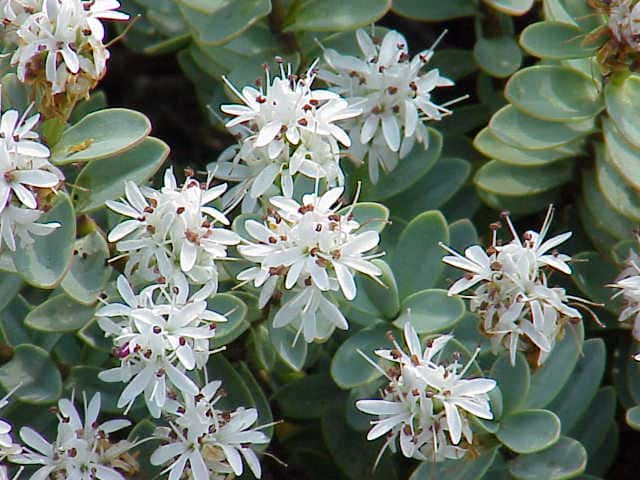
Hebe Pagei (Hebe pinguifolia) is a easy-care plant from the Plantaginaceae family. Hebe Pagei is a low-growing, prostrate variety of evergreen shrub from the Plantaginaceae family, originally native to New Zealand. It forms compact, dome-shaped mounds up to approximately 40 cm in height and 90 cm in spread, covered with small, oval, gray-blue leaves featuring a characteristic waxy...
Hebe Pagei grows up to 40cm, spread of 90cm, watering every 10 days, 5°C – 28°C, 40–70% humidity. It is not suitable for indoor environments and not safe for pets.
Unlike many tropical plants, Hebe Pagei tolerates watering mistakes. Best for beginners. Without precautions, ingestion can cause irritation in pets. Keep out of reach of cats and dogs.
How to Care for Hebe Pagei?
TLDR: Hebe Pagei needs Bright indirect, watering every 10 days, and temperatures between 5-28°C with 40-70% humidity.
How Often Should You Water Hebe Pagei?
Water moderately, allowing the substrate to dry out between waterings — the plant tolerates drought well, whereas excess moisture combined with poor drainage promotes root rot.
How Much Light Does Hebe Pagei Need?
Best planted in a full sun location; the plant also tolerates light partial shade, but too much shade weakens the abundance of flowering and the compactness of its habit.
What Is the Best Soil for Hebe Pagei?
Requires well-drained soil — sandy, loamy, chalky, or humus-rich — with a neutral to alkaline pH; avoid waterlogged sites and areas where water stagnates.
What Pot Should You Use for Hebe Pagei?
When growing in a container, choose a wide, shallow pot with numerous drainage holes and a drainage layer of gravel or expanded clay at the bottom.
Care Schedule
Fertilize
Every 180 days
What Is Hebe Pagei and Where Does It Come From?
Hebe Pagei is a low-growing, prostrate variety of evergreen shrub from the Plantaginaceae family, originally native to New Zealand. It forms compact, dome-shaped mounds up to approximately 40 cm in height and 90 cm in spread, covered with small, oval, gray-blue leaves featuring a characteristic waxy coating (hence the epithet pinguifolia — thick-leaved). From late spring to early summer, small white flowers appear in short spikes, which are frequently visited by bees. The Pagei variety has earned the RHS Award of Garden Merit for its reliability and resistance to harsh conditions, including salty coastal air.
How to Propagate Hebe Pagei?
How Big Does Hebe Pagei Grow?
TLDR: Hebe Pagei can reach up to 40cm tall with Slow growth rate.
Max height
40cm
Spread
90cm
Growth rate
Slow
Foliage
Evergreen
Warning: Toxic Plant
This plant can be toxic if ingested. Keep out of reach of:
Plant Uses
Ornamental
Great for decoration
Ground Cover
Soil coverage
Is your plant showing symptoms?
Click on the symptom to discover possible causes:
What Diseases Commonly Affect Hebe Pagei?
TLDR: Hebe Pagei is susceptible to 5 known diseases. Monitor regularly for early detection.
Downy Mildew
Downy mildew is a fungal-like disease caused by oomycetes (water molds) that thrives in cool, wet conditions. It affects a wide range of plants, causing yellowing leaves with fuzzy white-gray growth underneath, leading to defoliation and reduced yields if left untreated.
Leaf Spot
Leaf spot is a common fungal disease caused by various pathogens including Alternaria, Ascochyta, Colletotrichum, Septoria, and Venturia. It primarily affects leaves, causing discolored spots that can lead to premature leaf drop if left untreated.
Root Rot
Root rot is a serious fungal disease that affects the root system of plants, causing them to decay and die. It is primarily caused by overwatering, poor drainage, or soil-borne fungi such as Pythium, Phytophthora, Rhizoctonia, and Fusarium. The disease thrives in waterlogged conditions where roots are deprived of oxygen, making them susceptible to fungal infection.
Powdery Mildew
Powdery mildew is a common fungal disease caused by various fungi species including Erysiphe, Podosphaera, Oïdium, and Leveillula. It affects over 10,000 plant species worldwide. The disease thrives in warm, dry climates with high humidity and appears as a distinctive white powdery coating on plant surfaces.
Compare with similar plants
| Attribute | Difficulty | Light | Watering | Pet Safe |
|---|---|---|---|---|
| Field Maple | Easy | Bright indirect | 14d | ✓ |
| Silver Birch | Easy | Direct sun | 14d | ✓ |
| Common Blanketflower | Easy | Direct sun | 10d | ✓ |
| Cushion Bush | Easy | Direct sun | 14d | ✓ |





